Take a billion people who speak as many as 23 different languages with 1652 dialects, with all the major religions in the world represented by them and what you get is one of the most diverse countries in the world and one with “no strict rule about anything.” For instance, when we were going from the airport to our B&B, the guide told us the lane markers on the pavement were only for decoration – no one follows them.
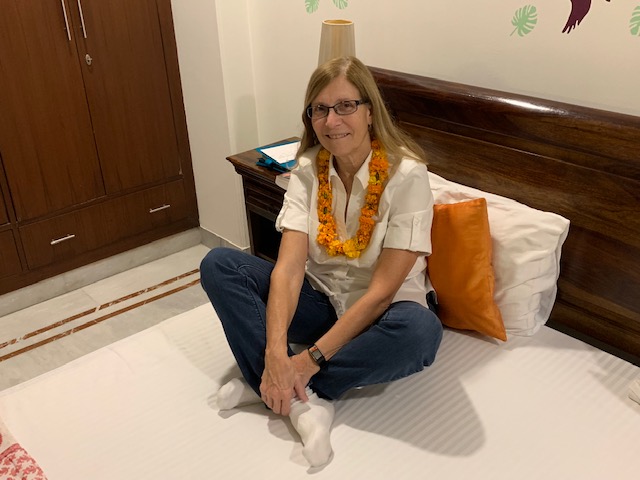
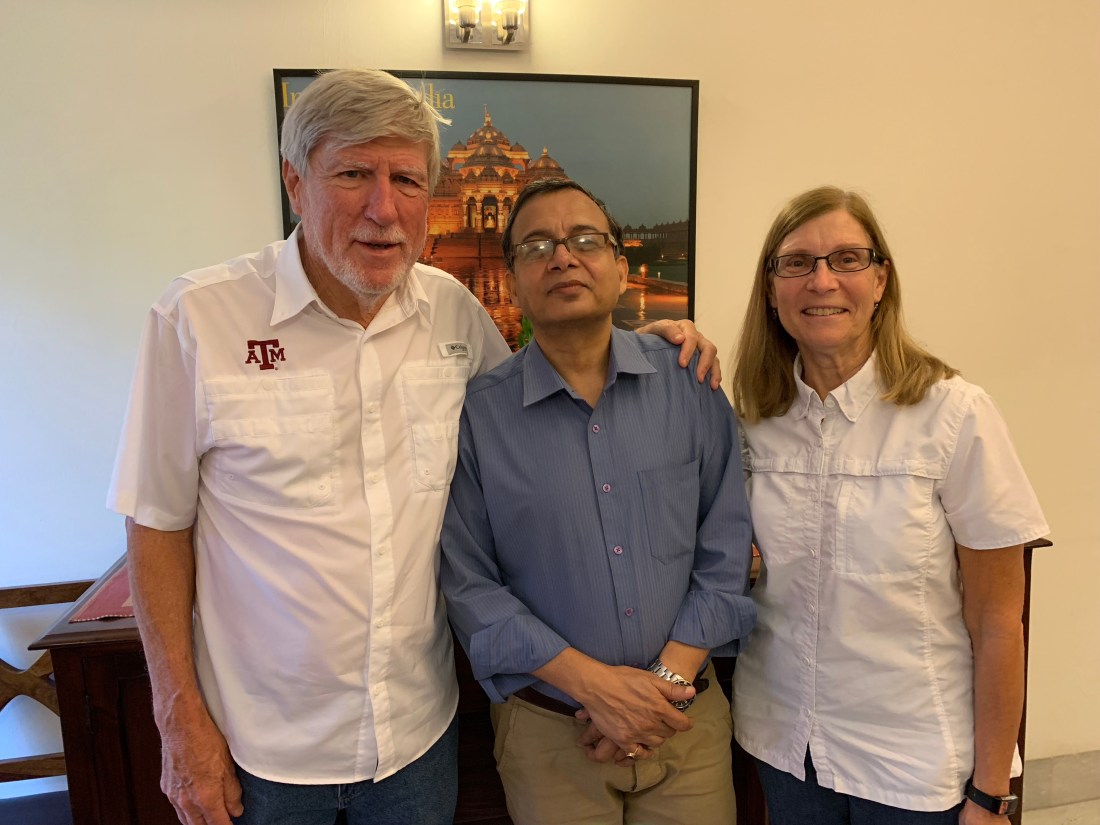
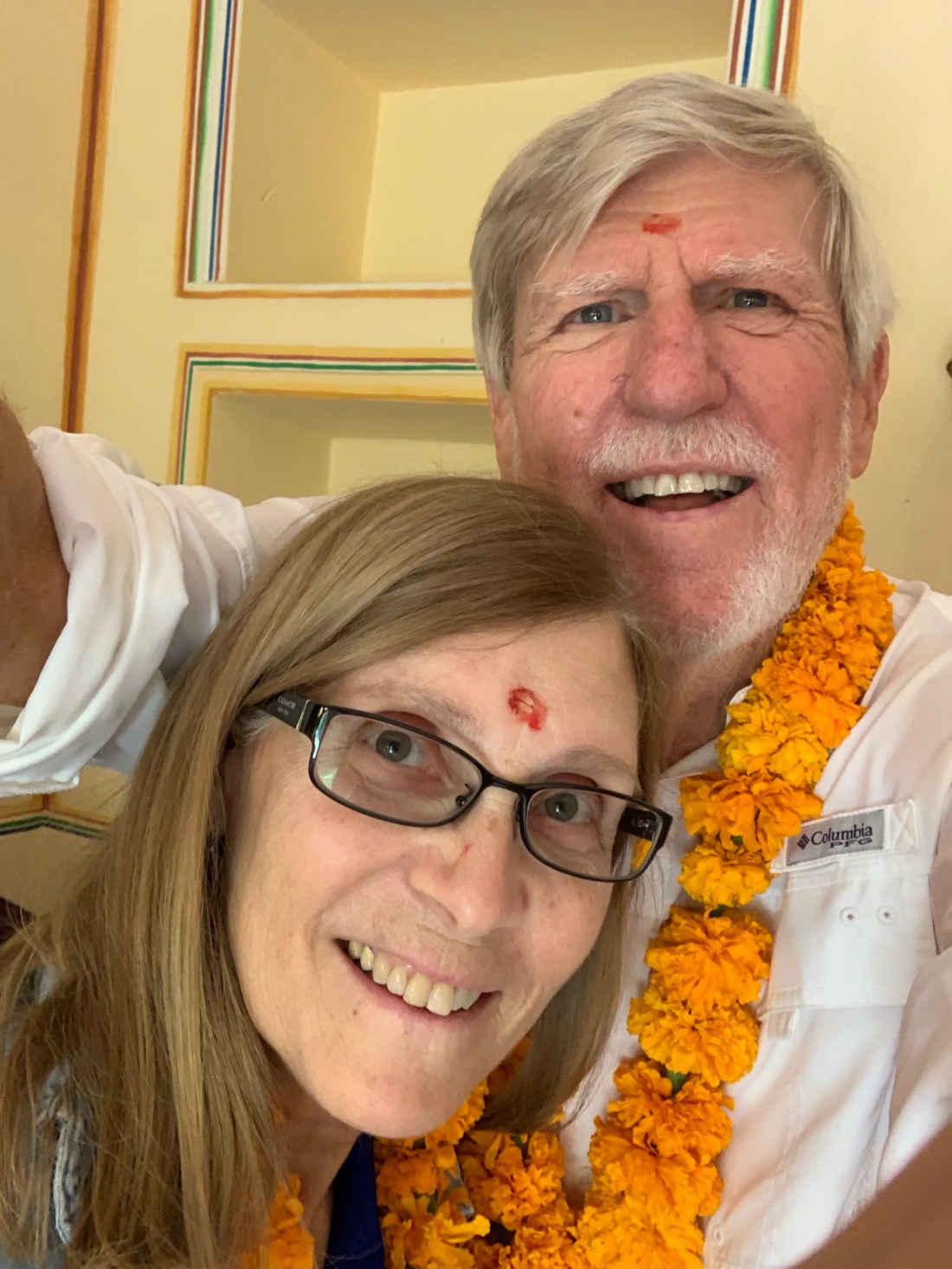
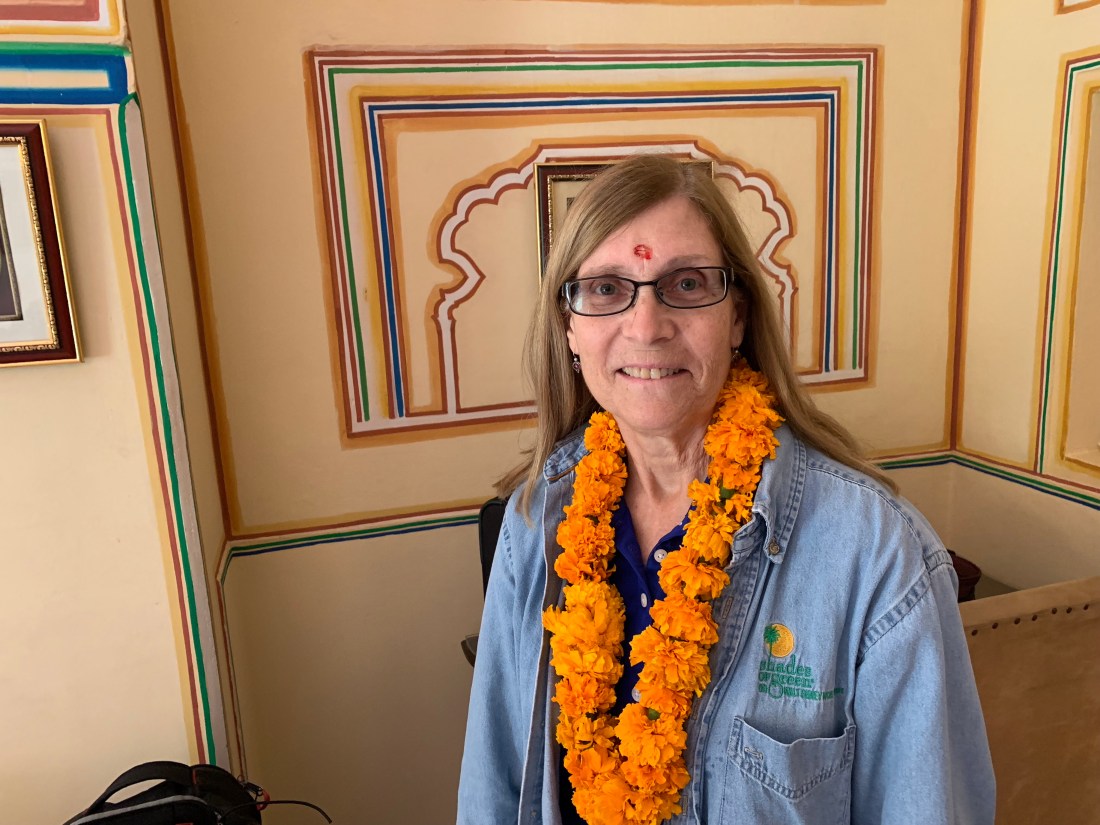
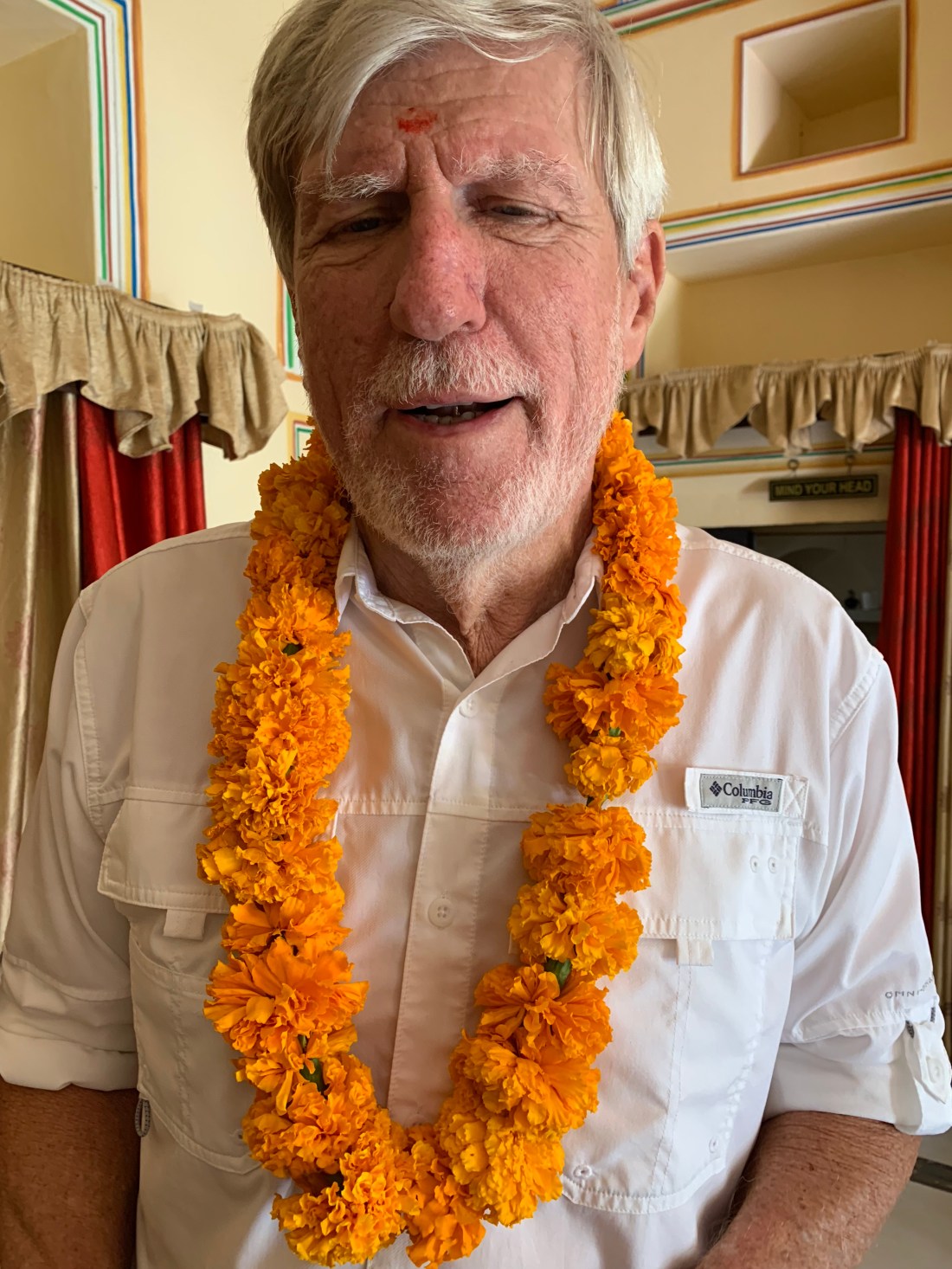
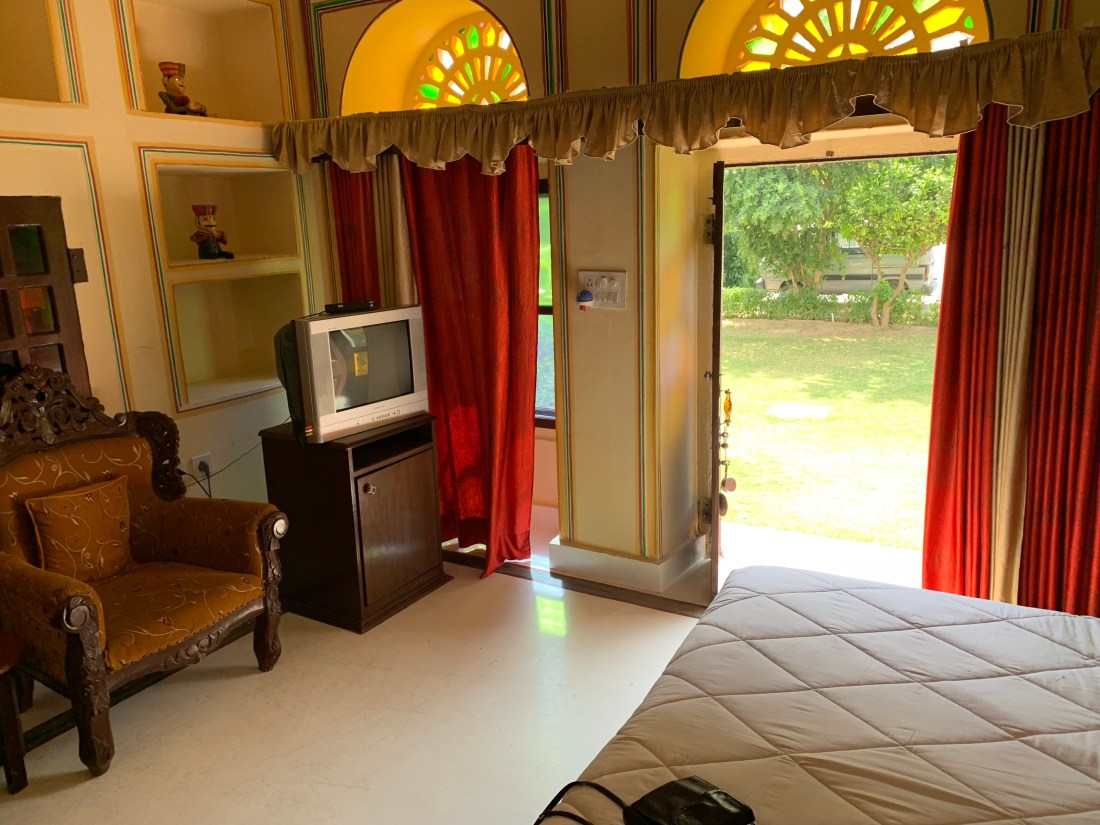
We arrived to our hotel few hours ago after a 14 1/2 hour flight. The flowers on the “necklace” are Marigolds given to us when we arrived — Think “The Best Exotic Marigold Hotel” movie!
It is now 9pm India time and it is 11:30am in Florida. India has a 30 minute Time Zone changes. We have had dinner and we are going to bed. We hope to pass on some interesting things about India with some pictures of our travels and the children we will be working with in the schools.
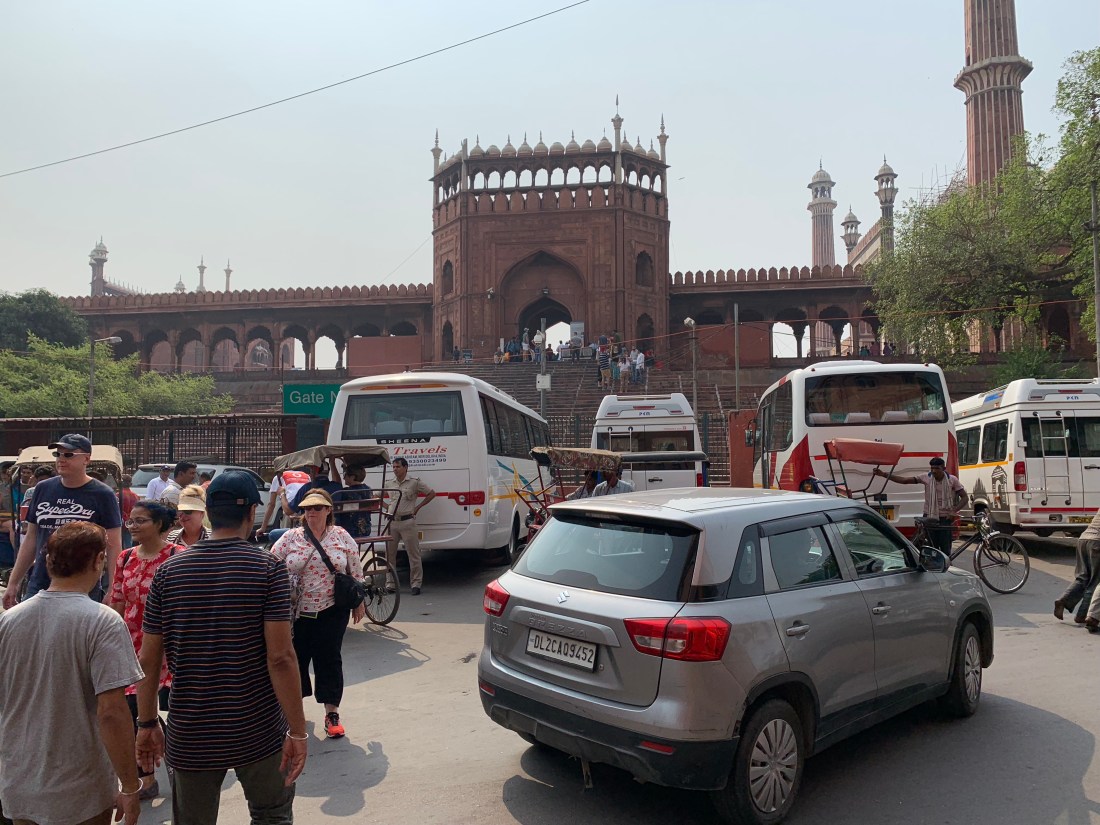
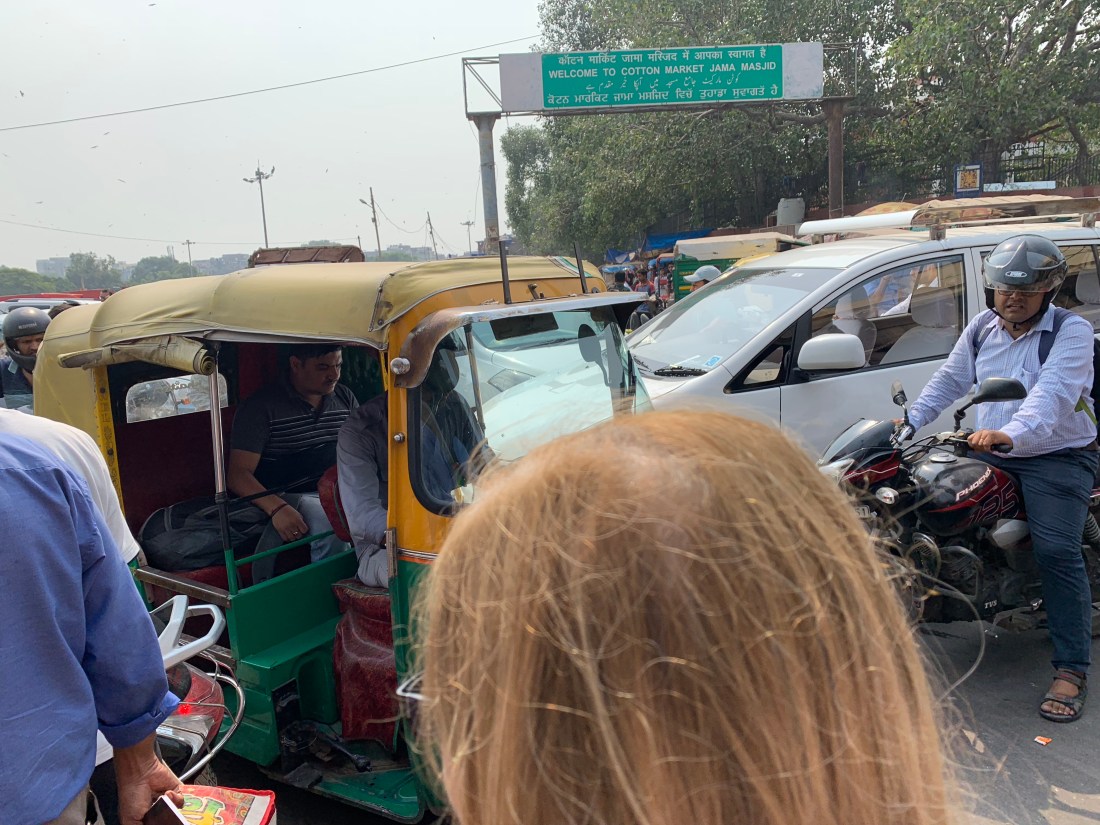
Today we did not teach, so we took off to tour Old Delhi. Our first stop was Jama Masjid which is the largest mosque in India, with a courtyard capable of holding 25,000 devotees. It was built between 1644 and 1658 with two red sand stone and white marble minarets, 40 meters in height. No shoes allowed and women required to wear a prayer gown the mosque provides. No photos are allowed inside the mosque.
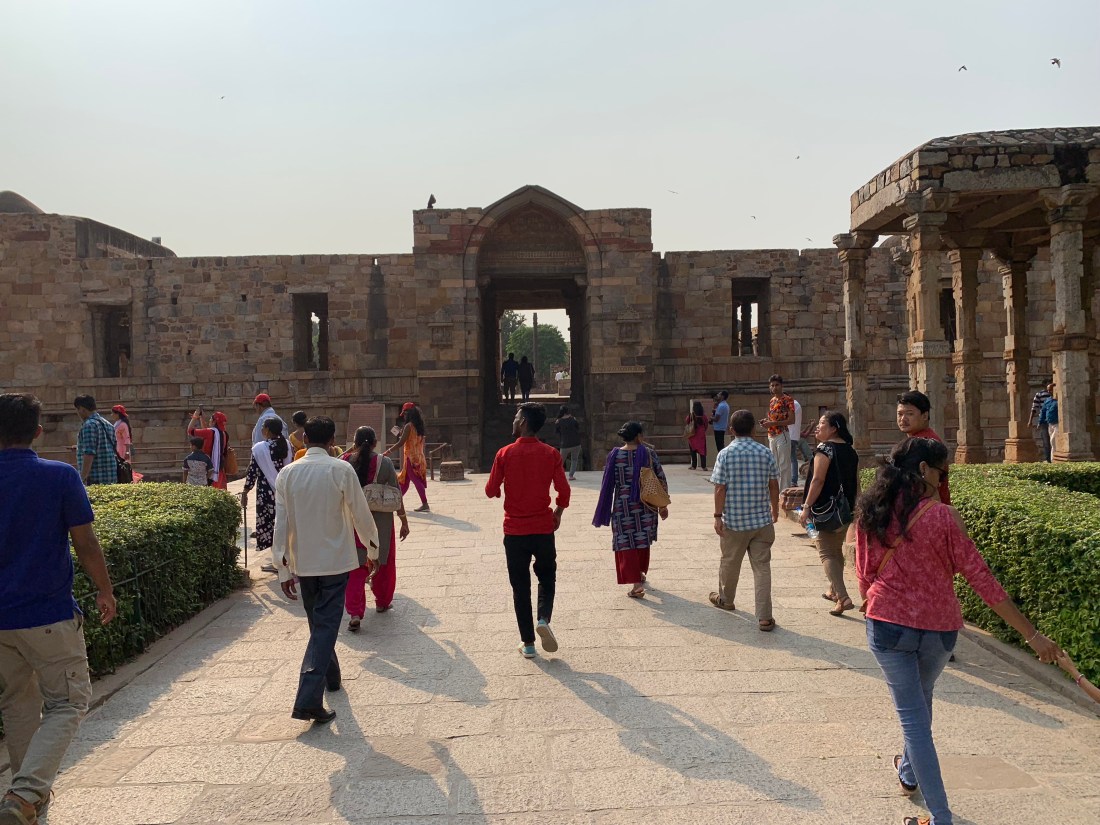
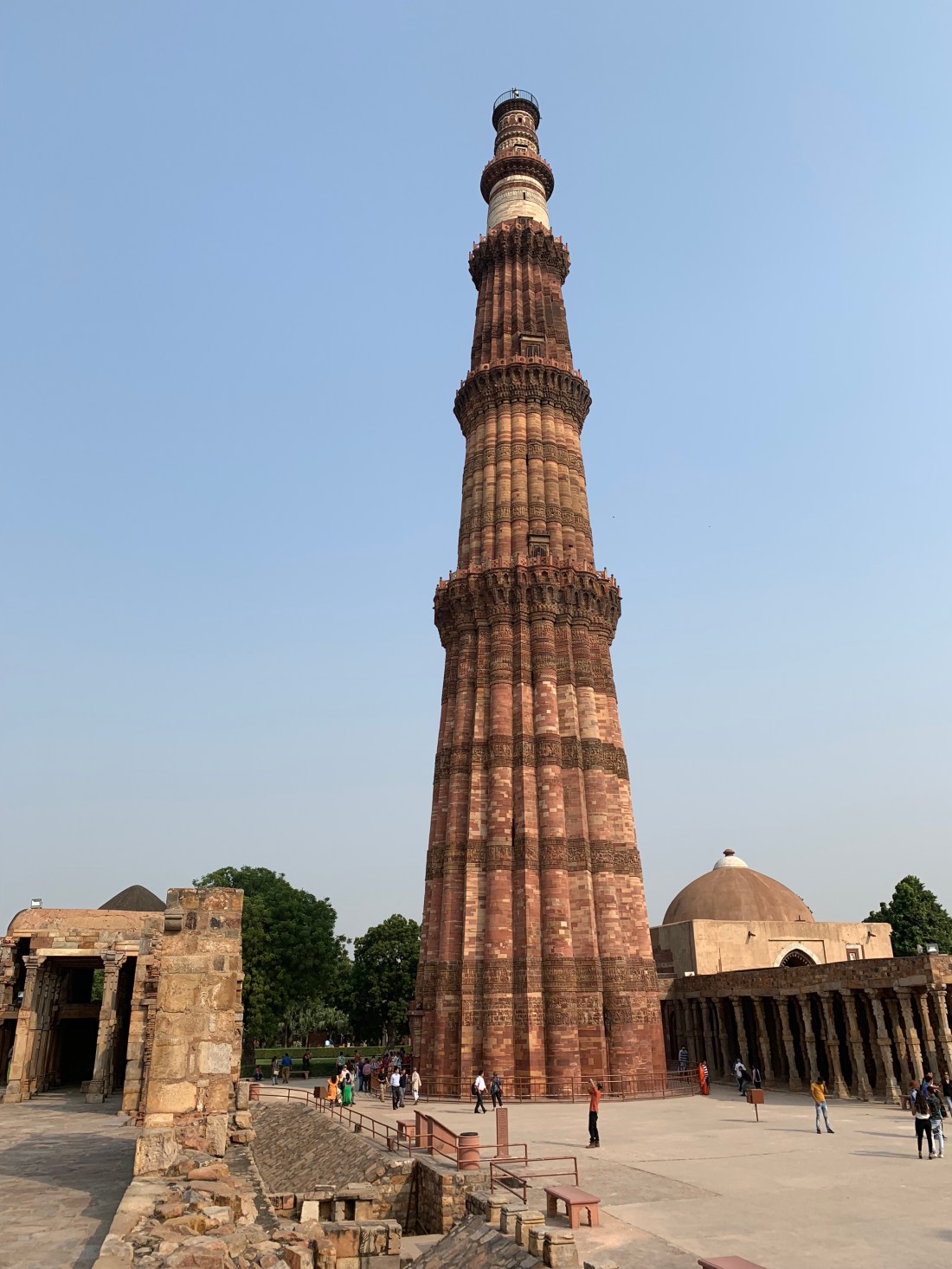
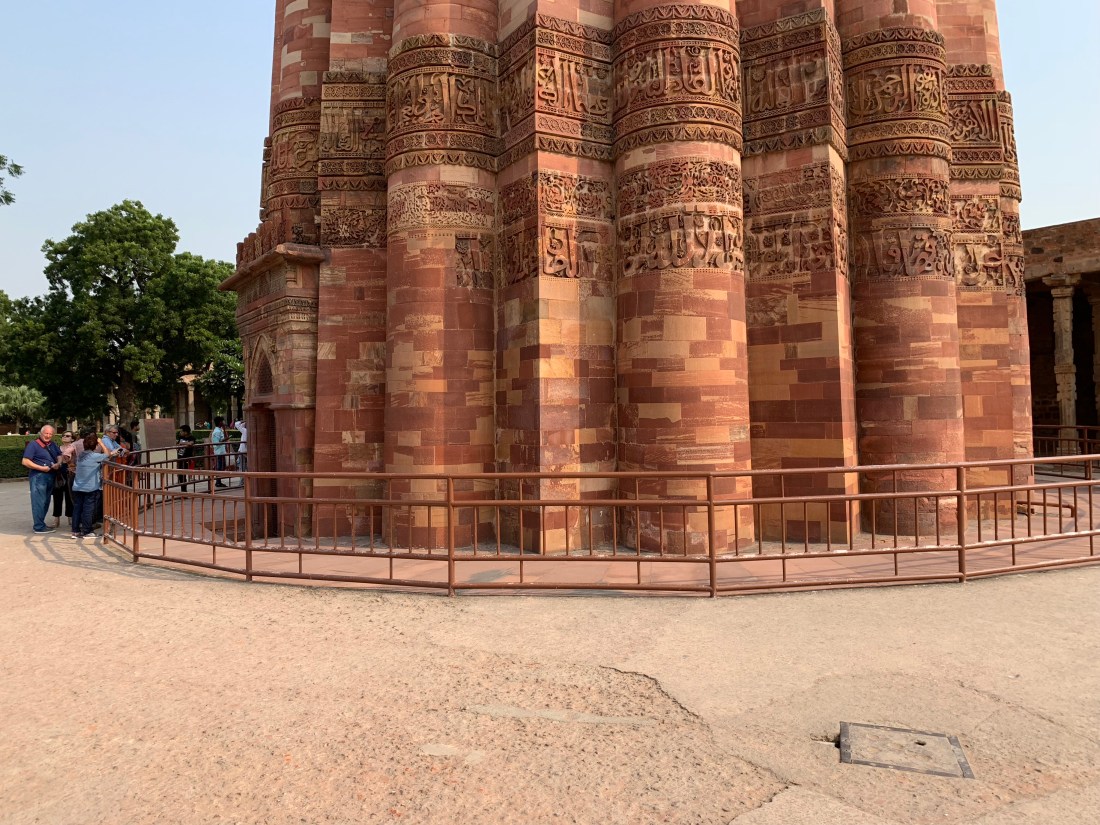
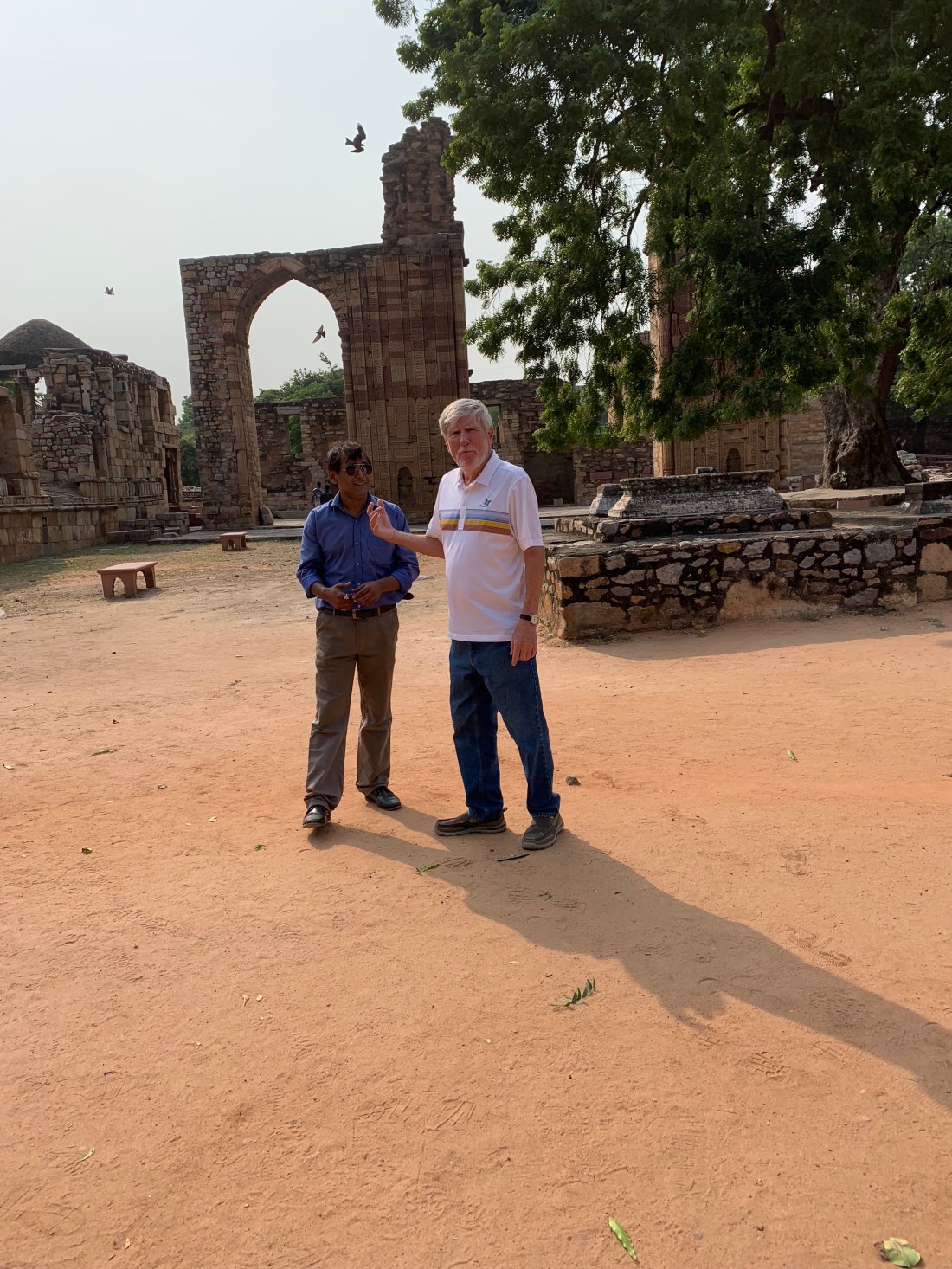
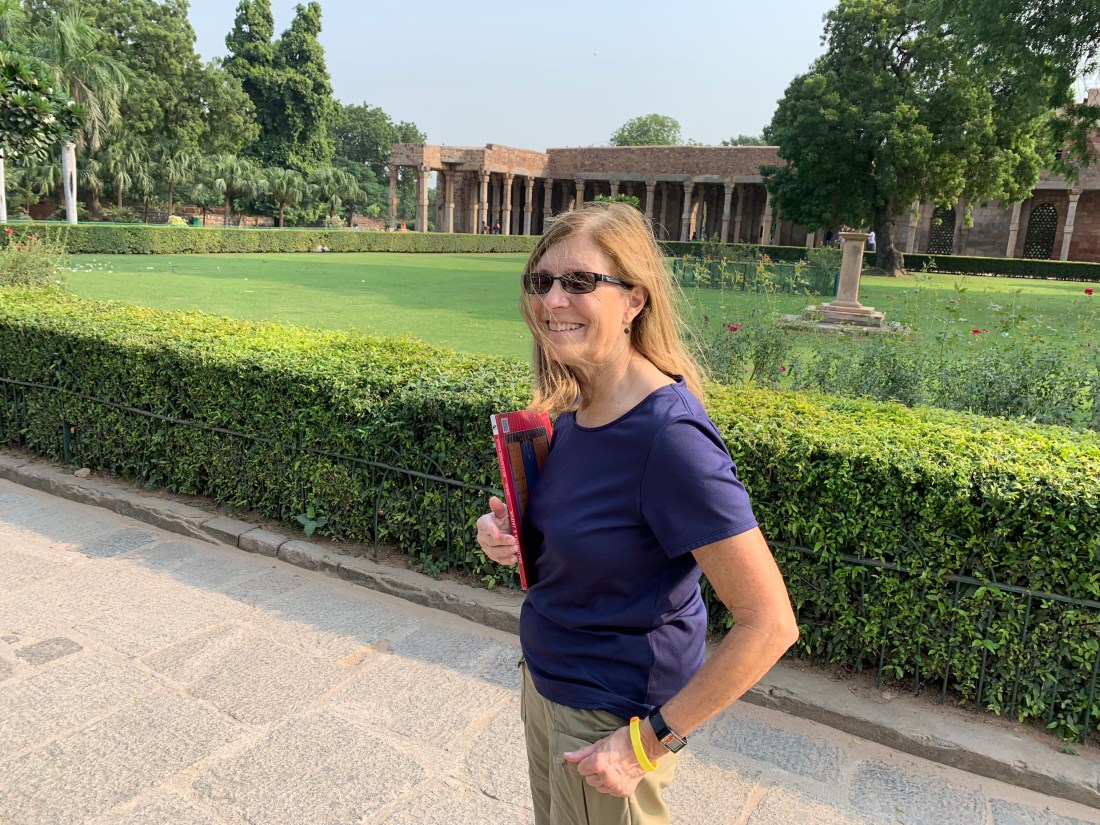
Then on to Qatar Minar which is a UNESCO World Heritage Site. It was constructed in 1192 by Qutub-Ud-Din Aibak. It has a height of 237.8 feet with 379 stairs. It is a wonderful example of Indo-Islamic Afghan architecture and is the tallest brick minaret in the world. It is amazing. Photos do not do it justice.
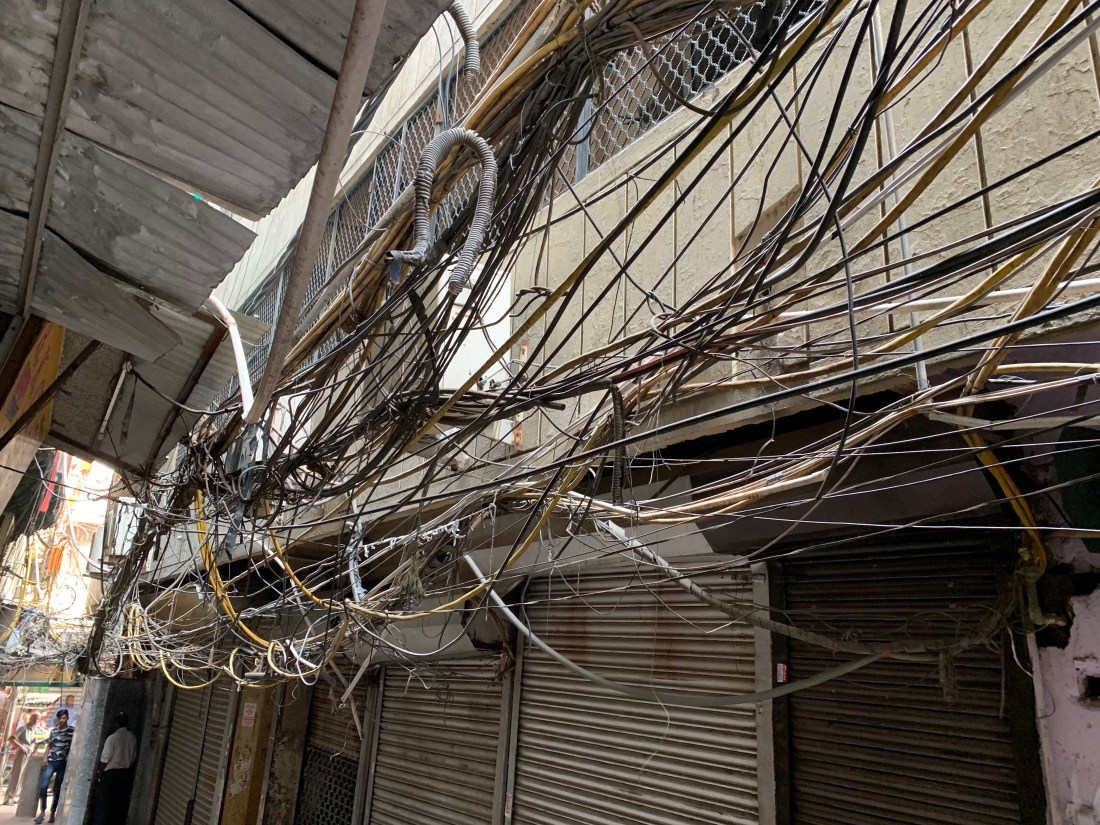
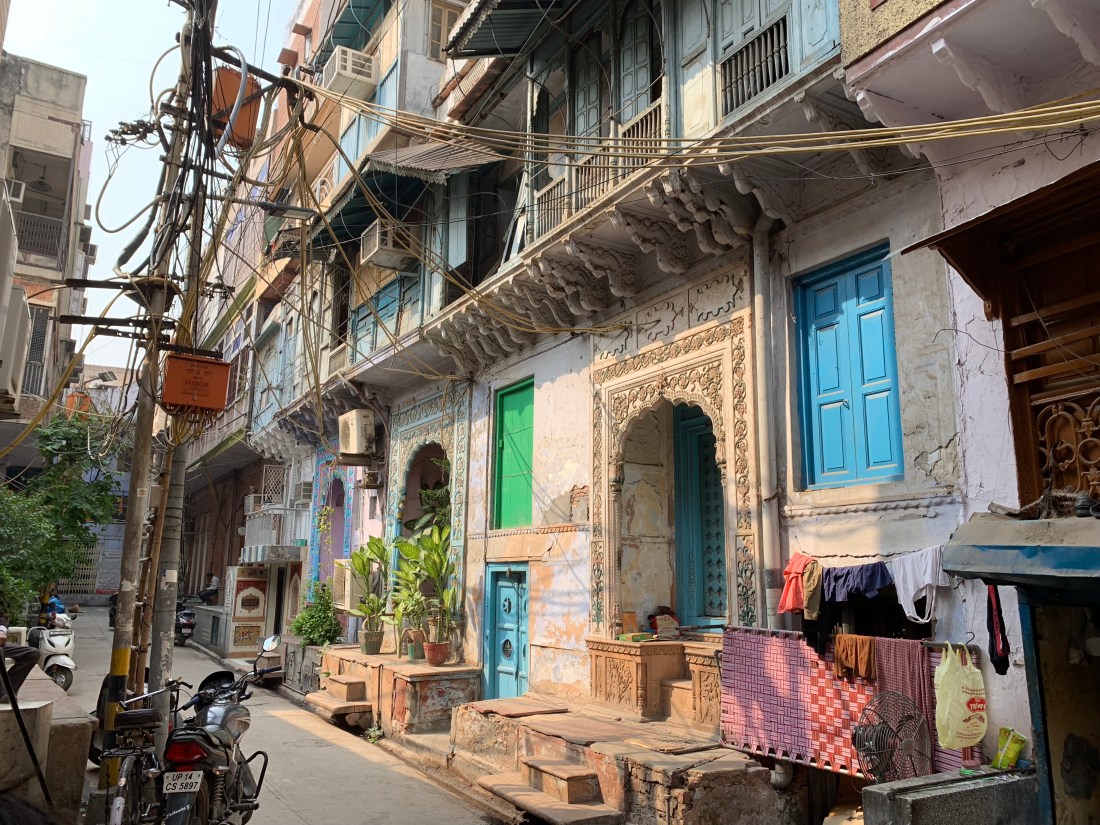
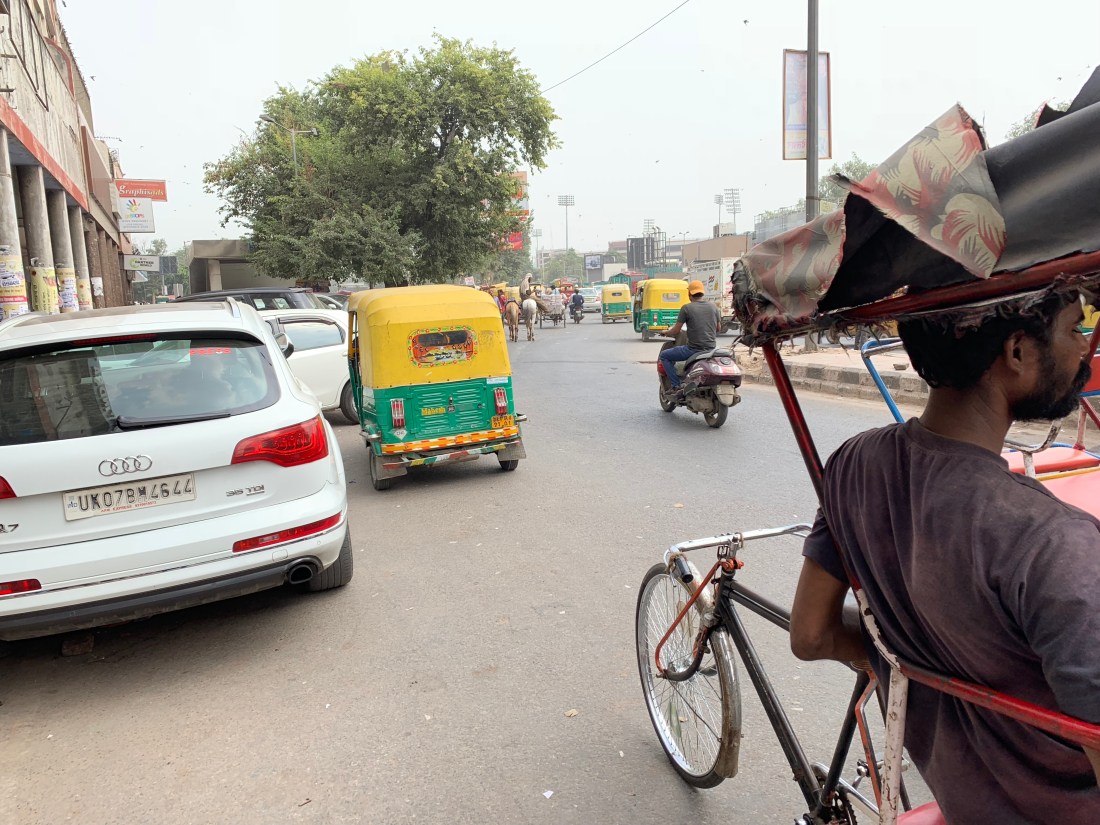
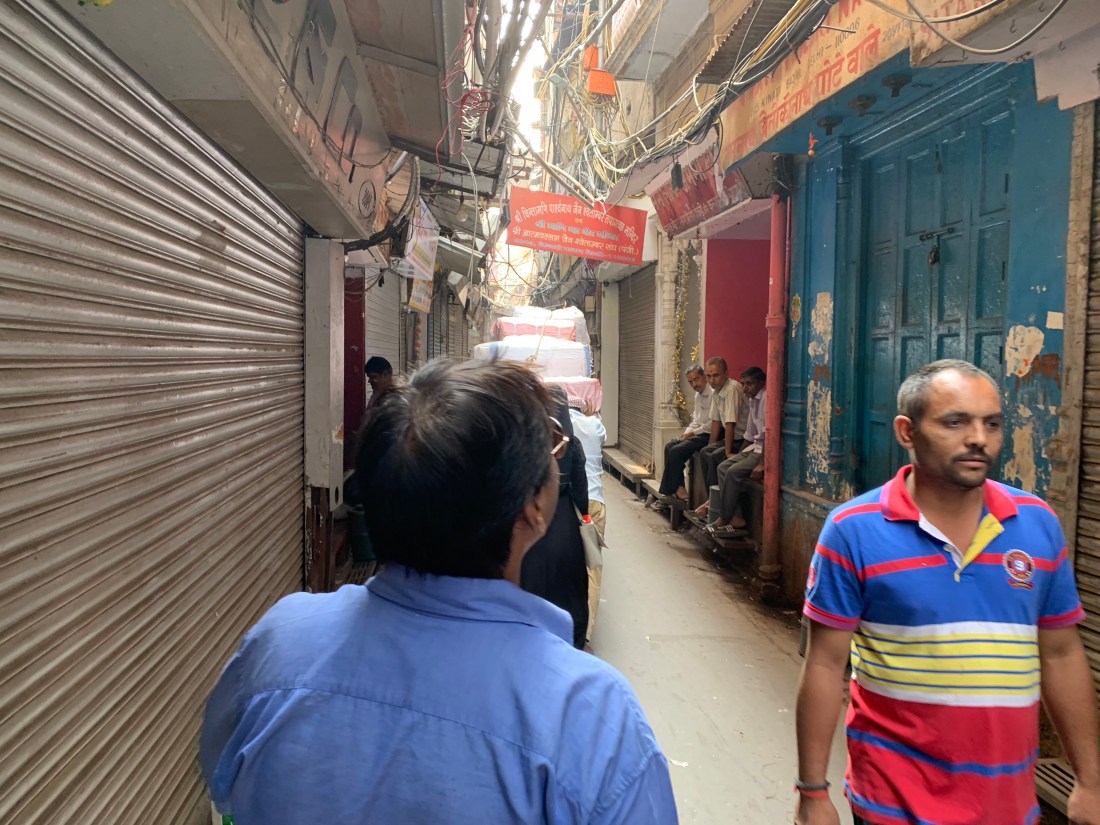
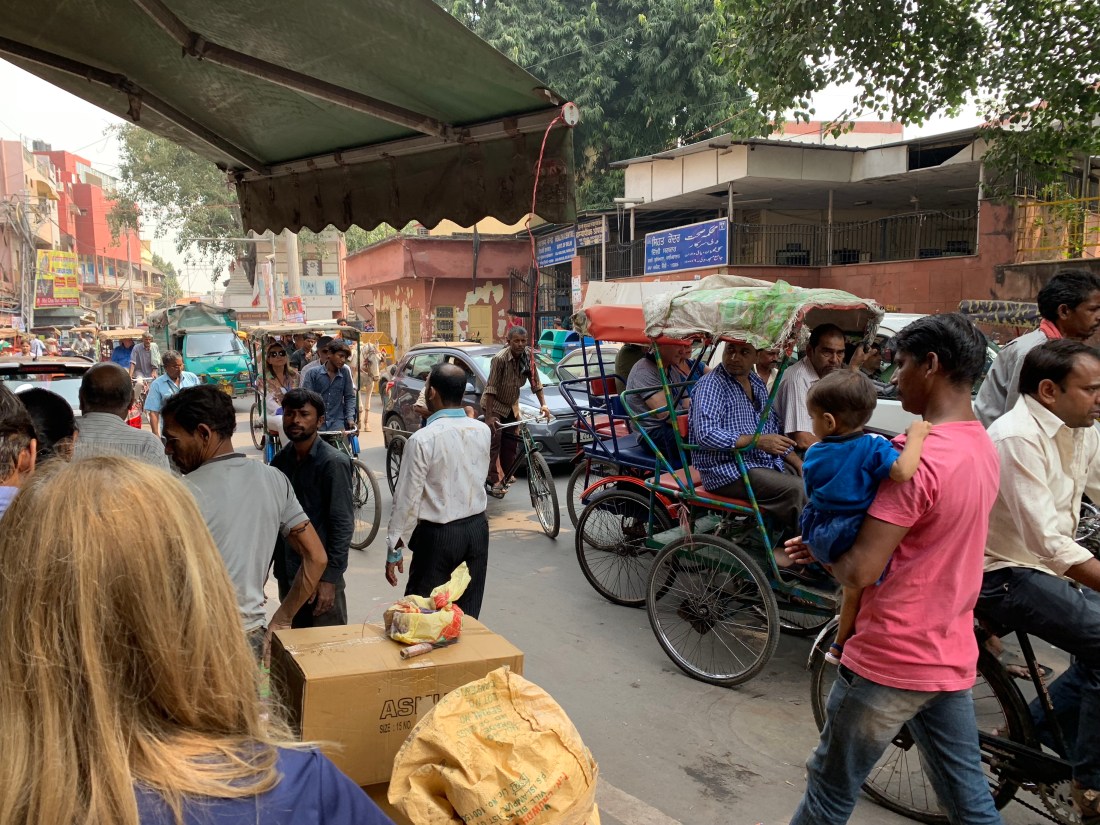
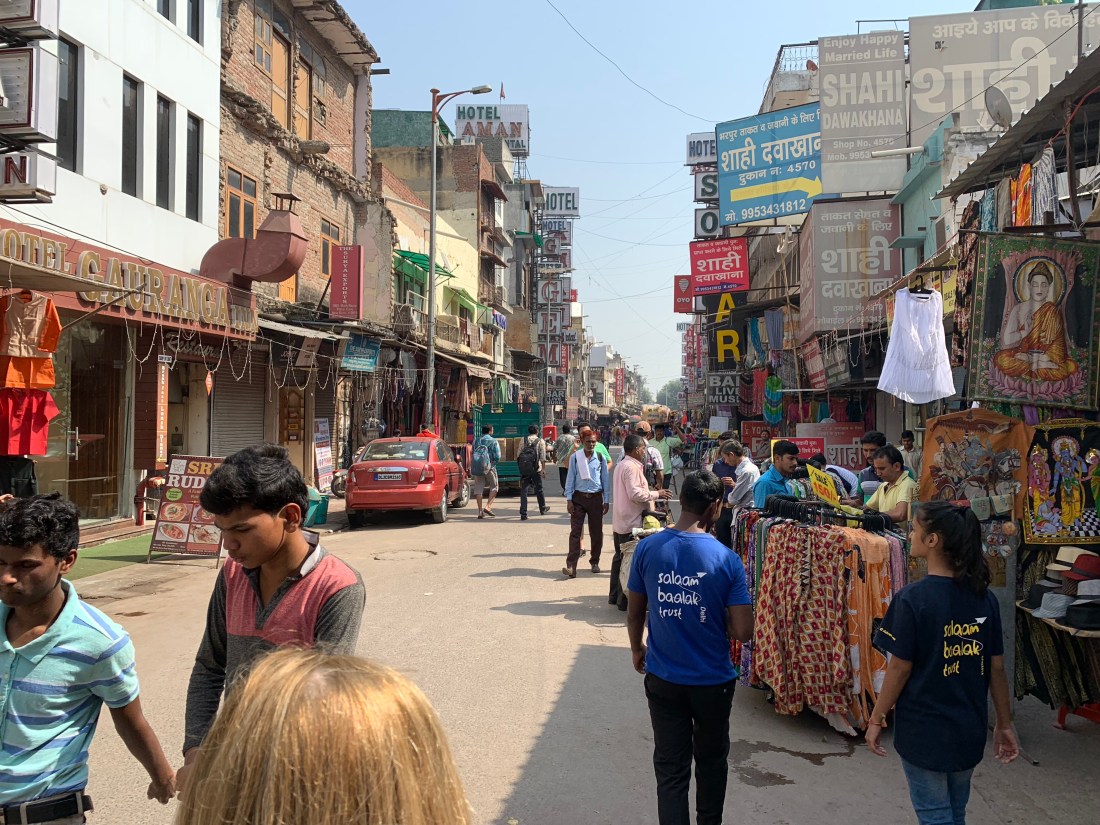
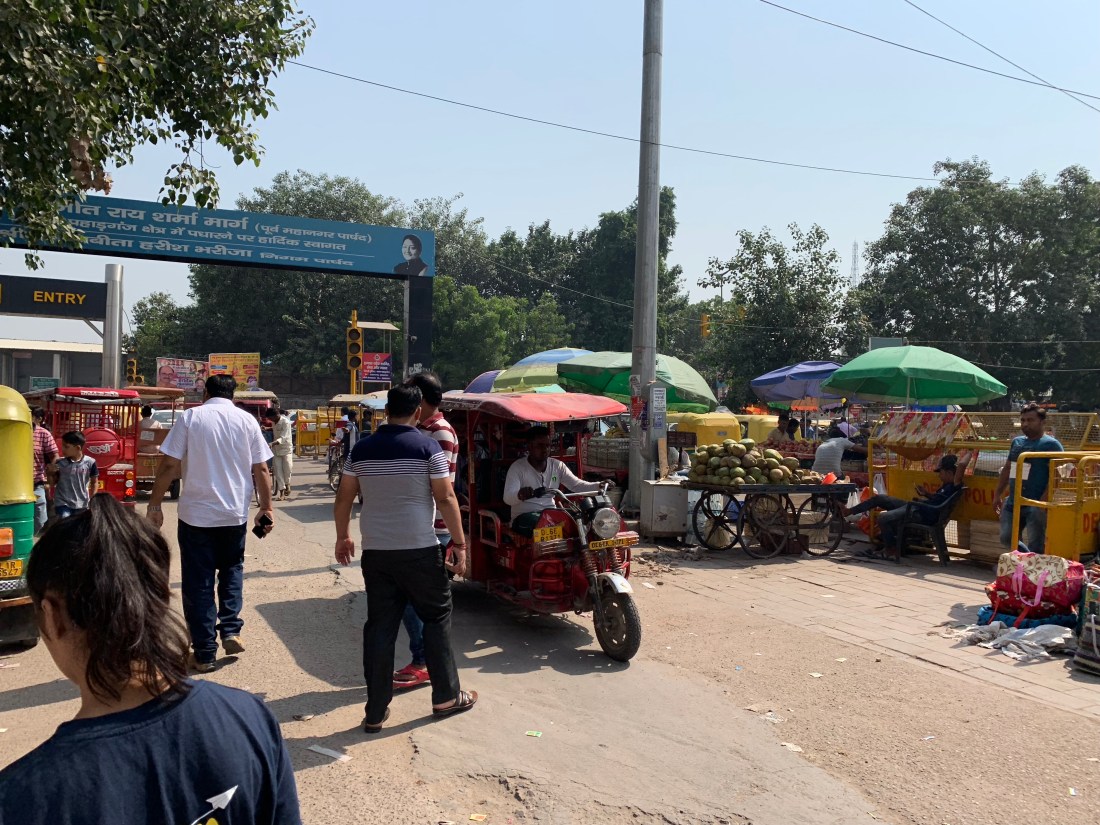
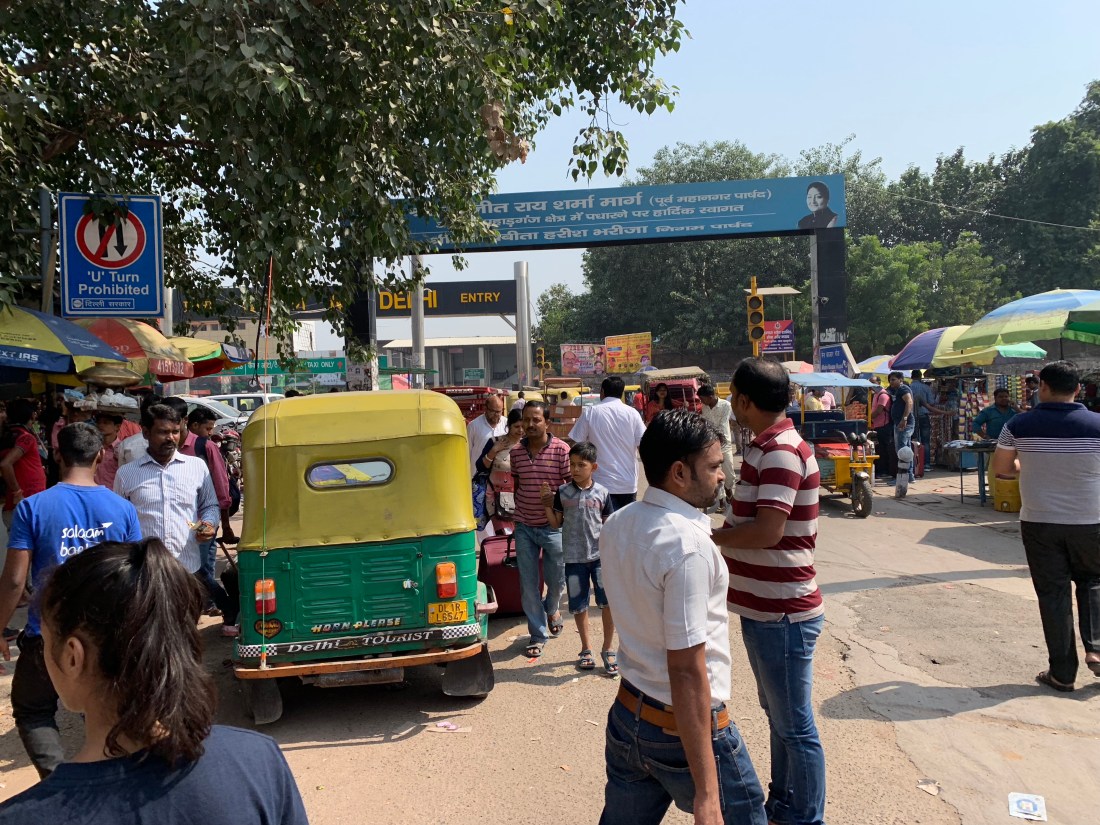
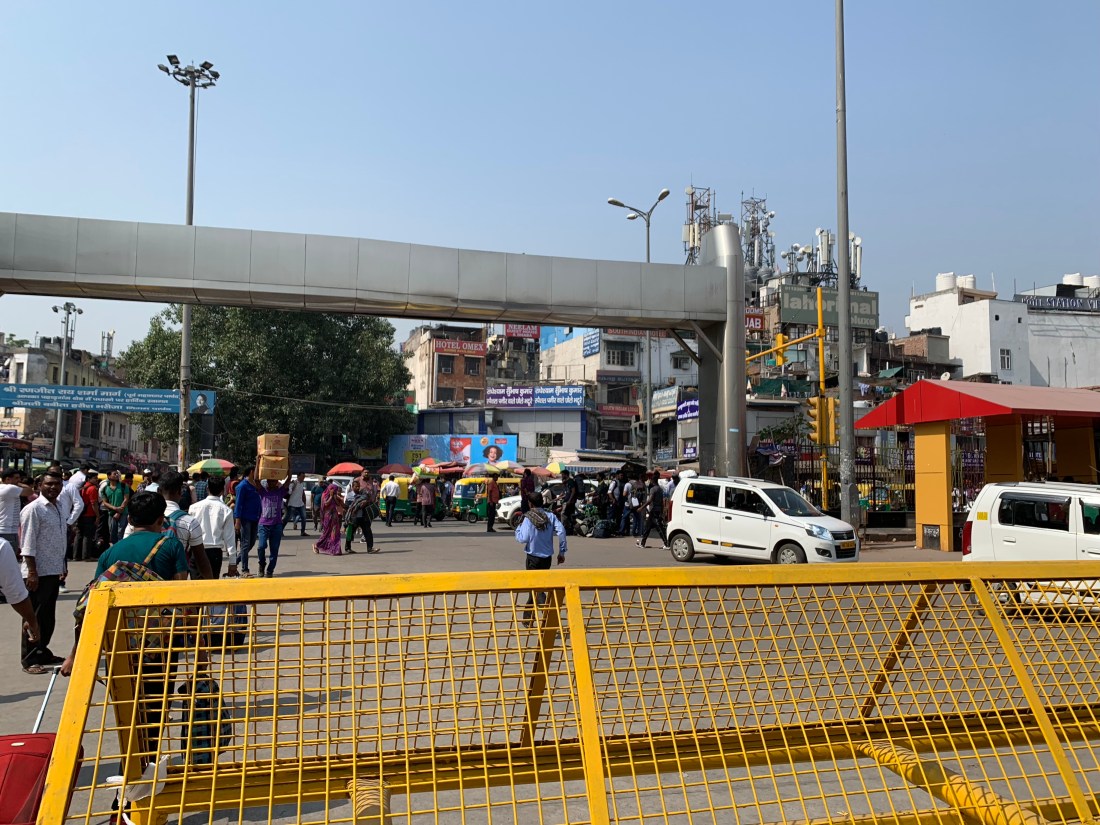
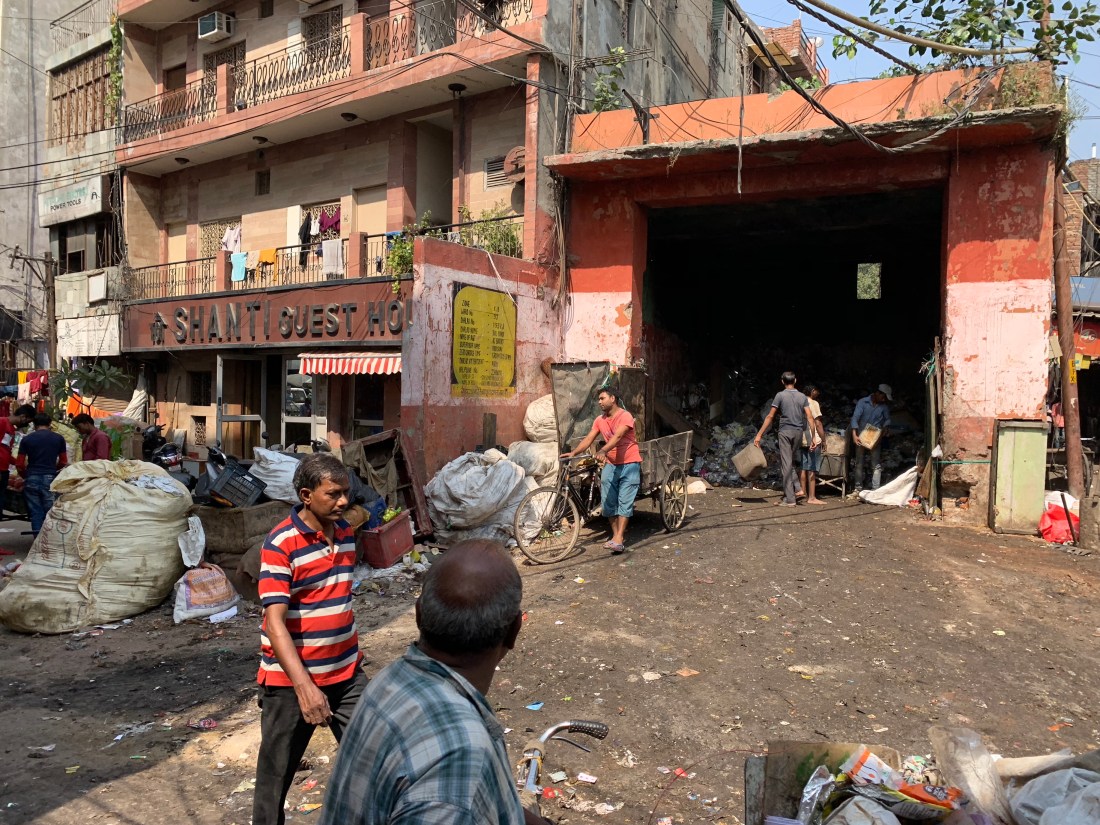
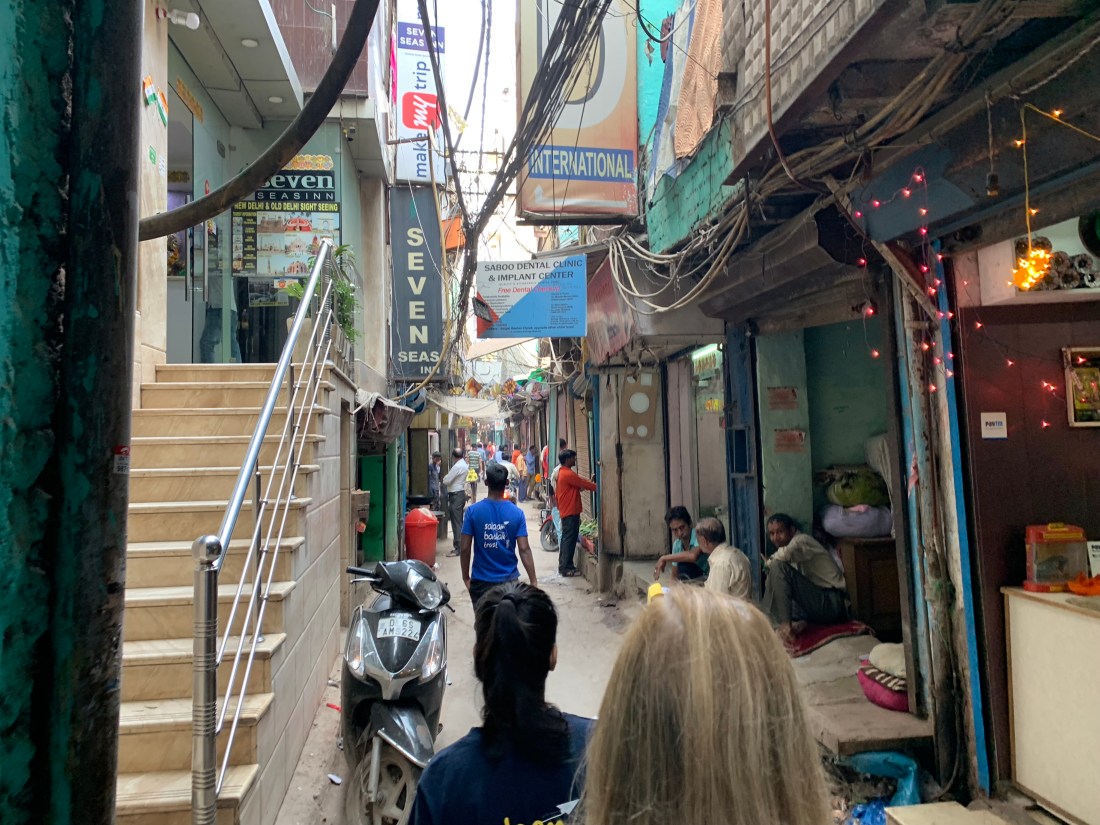
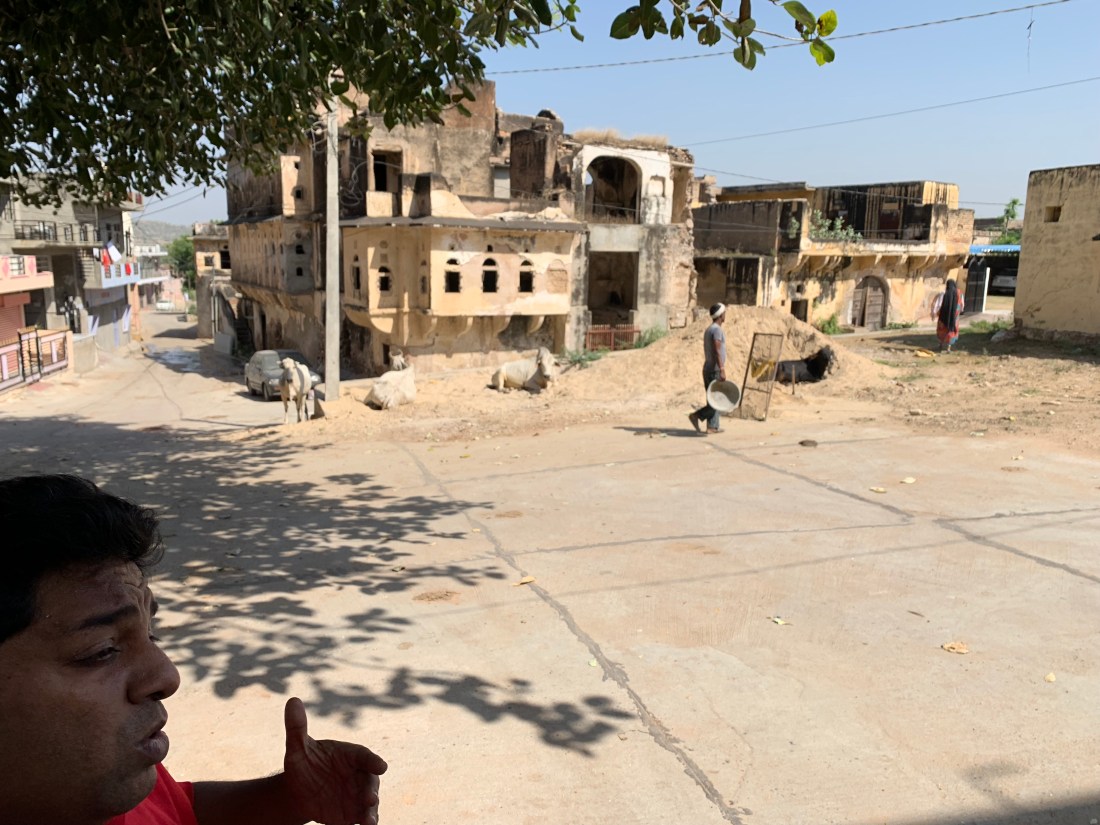
We walked around in Old Delhi. It was very crowded and a lot of traffic. As you can see from many of the pictures “AT&T” did not do a very good job with the wires!!!
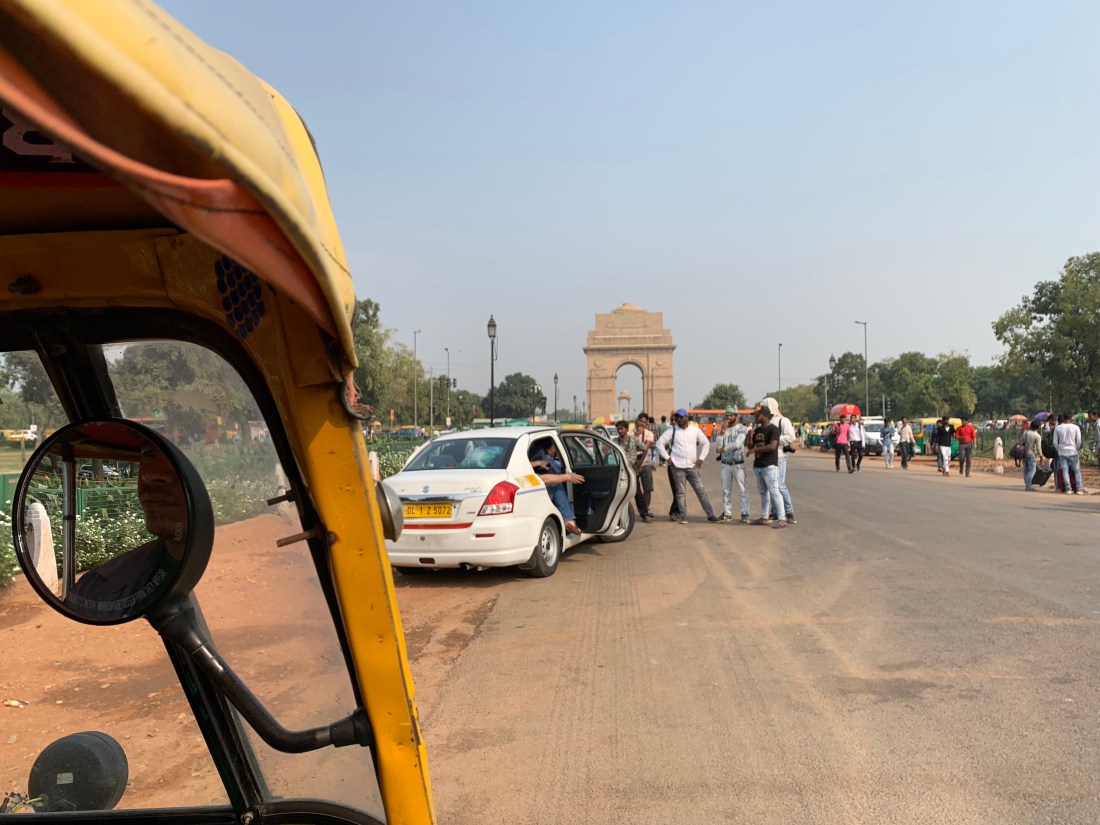
Some of the pictures were taken from inside of the Tuk-Tuk and others taken while walking around trying not to get run over by the Tuk-Tuks.
We are having a great time. We love India more and more each day!!
A very different kind of day. It began with a lecture on Gandhi. The lecturer was a professor from Delhi University who spoke for over an hour. His topic, “Relevance Of Gandhi In Today’s World”, was fascinating and we kind of wished the lecture would last the rest of the day.
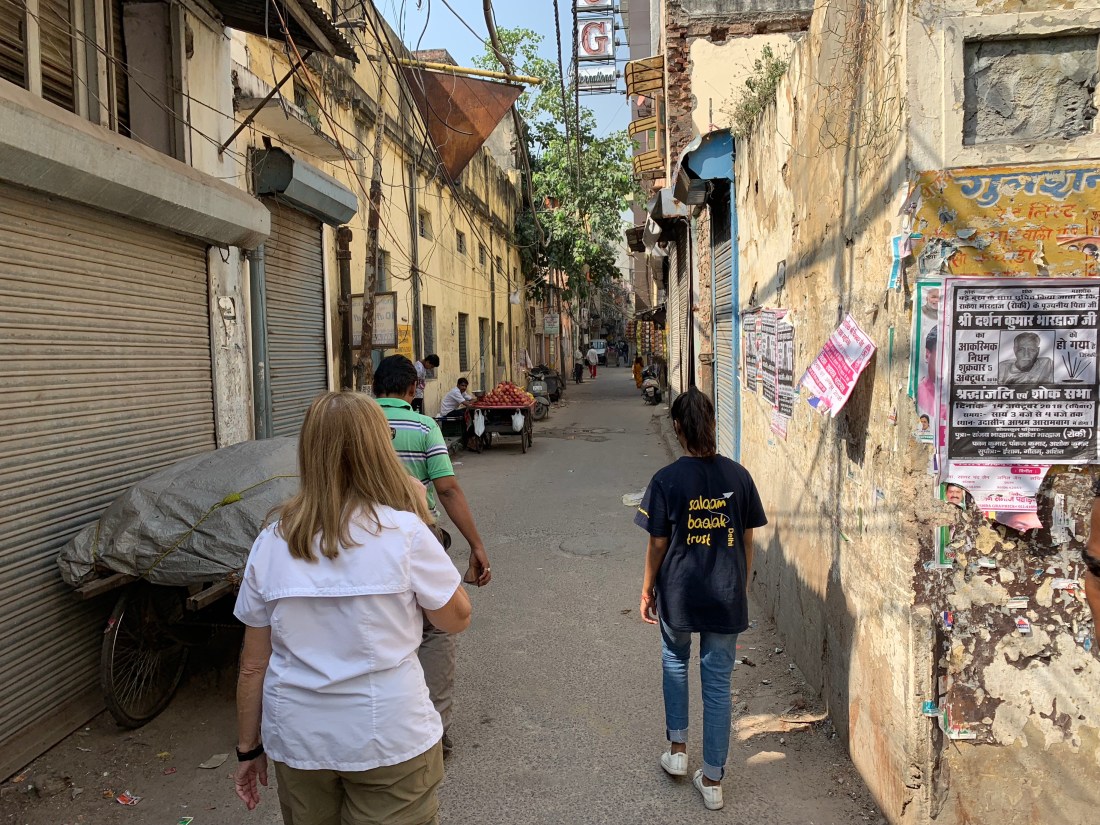
Next we moved on to a truly incredible experience. We were taken on what was described as a “city walk”. Well, it certainly was not a tourist’s view of the city…. We are here, after all, to work with some of India’s children who have been abandoned. So our “city walk” was led by two (2) of those children. Sheetl and Izaz took us from our rather comfortable B&B in Delhi into the world they know well, the back streets of Delhi filled with children who have no homes and no place to go.
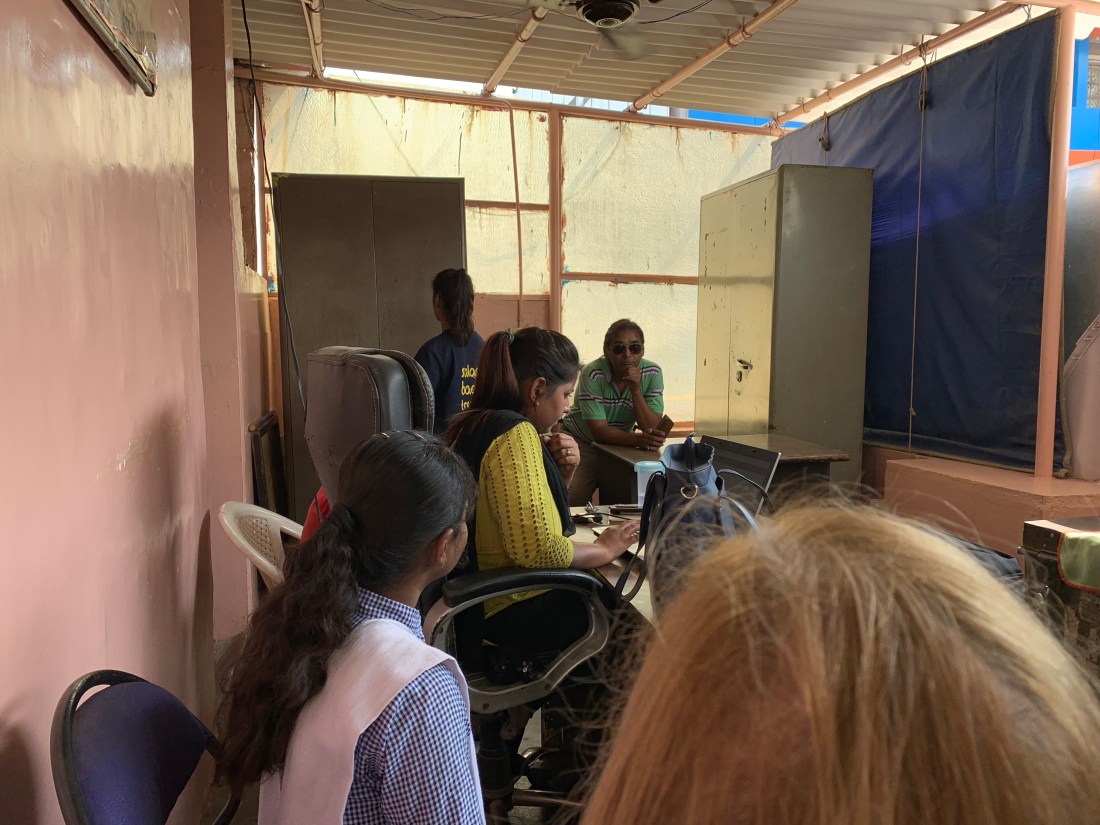
The background information about this walk is one which many of you may remember. Several years ago a documentary from India titled “Salaam Bombay” (directed by Meera Nair) received tremendous recognition at the Oscars. The movie focused on the abused children of the slums of India (sort of like the true story of “Slum Dog Millionaire”). After that film was a tremendous success, she (Meera Nair) used the funds from the movie to begin an NGO called the Salaam Baalak Trust. Our guides for the “walk”, Sheetl and Izaz, are participants in the services provided by the Salaam Baalak Trust. They both were lovely, spoke excellent English and Hindi, were very open about their stories, and showed us clearly how they (and others) lived on the streets of the big cities in India. Most importantly, they showed us what the Salaam Baalak Trust does to aid children in India, helping them to find a way to an education and a future. We now feel we might have a slightly better idea about the lives of the children we will be teaching and what these children are up against in their struggle to survive.
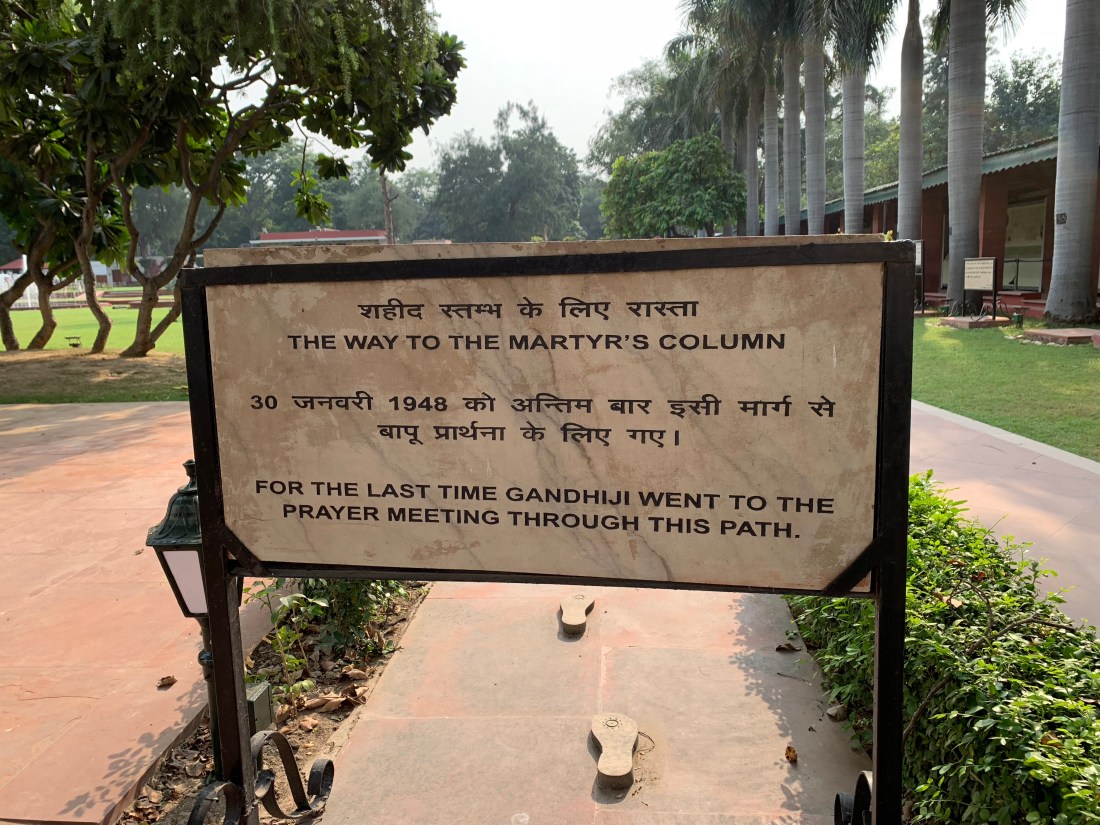
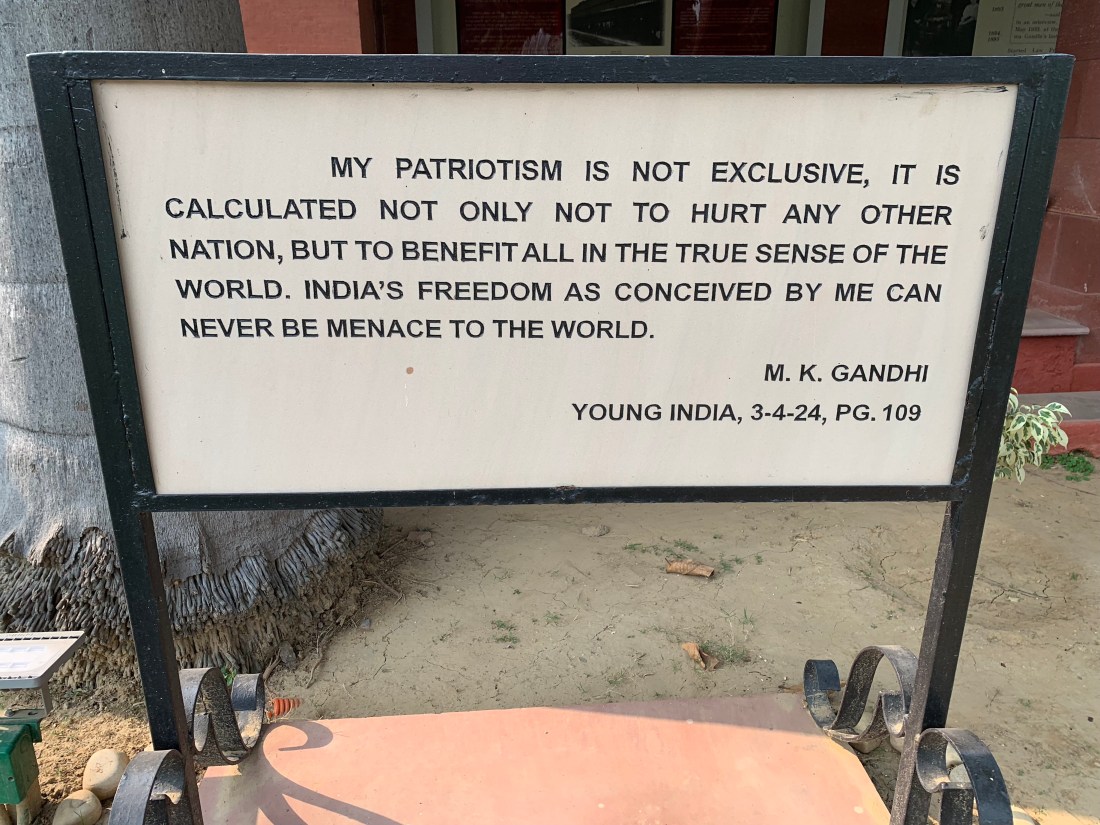
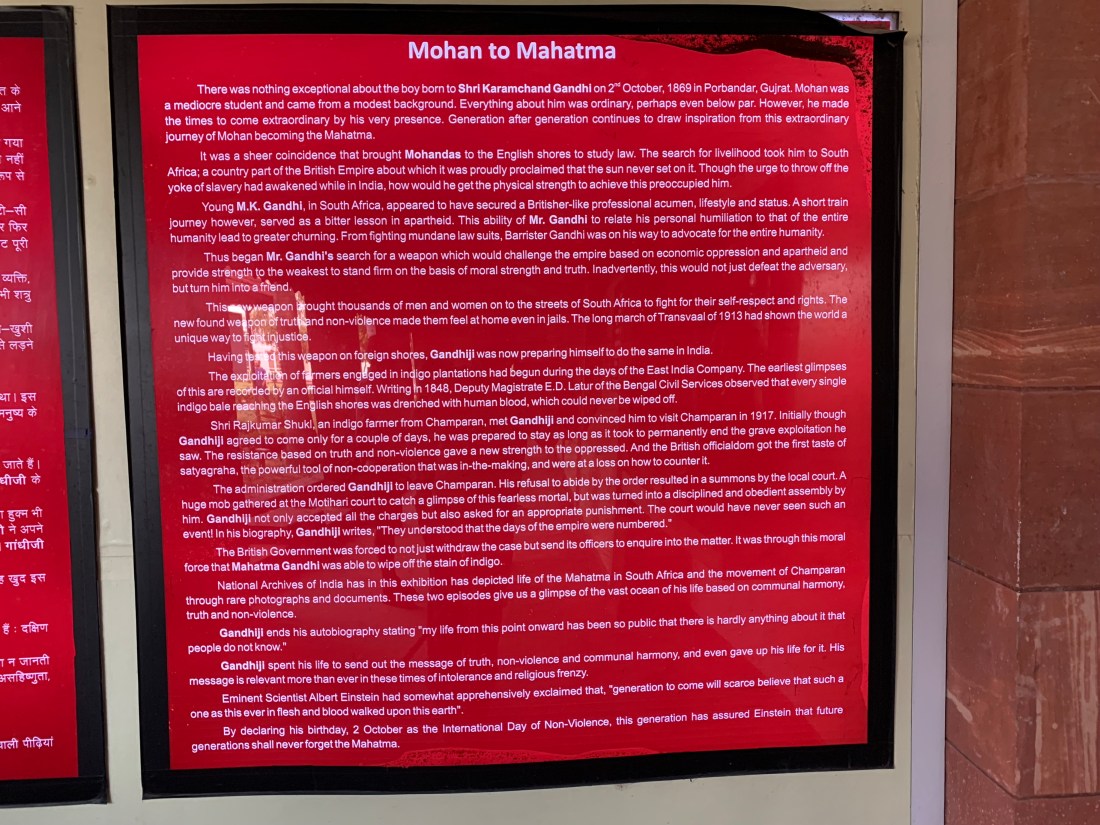
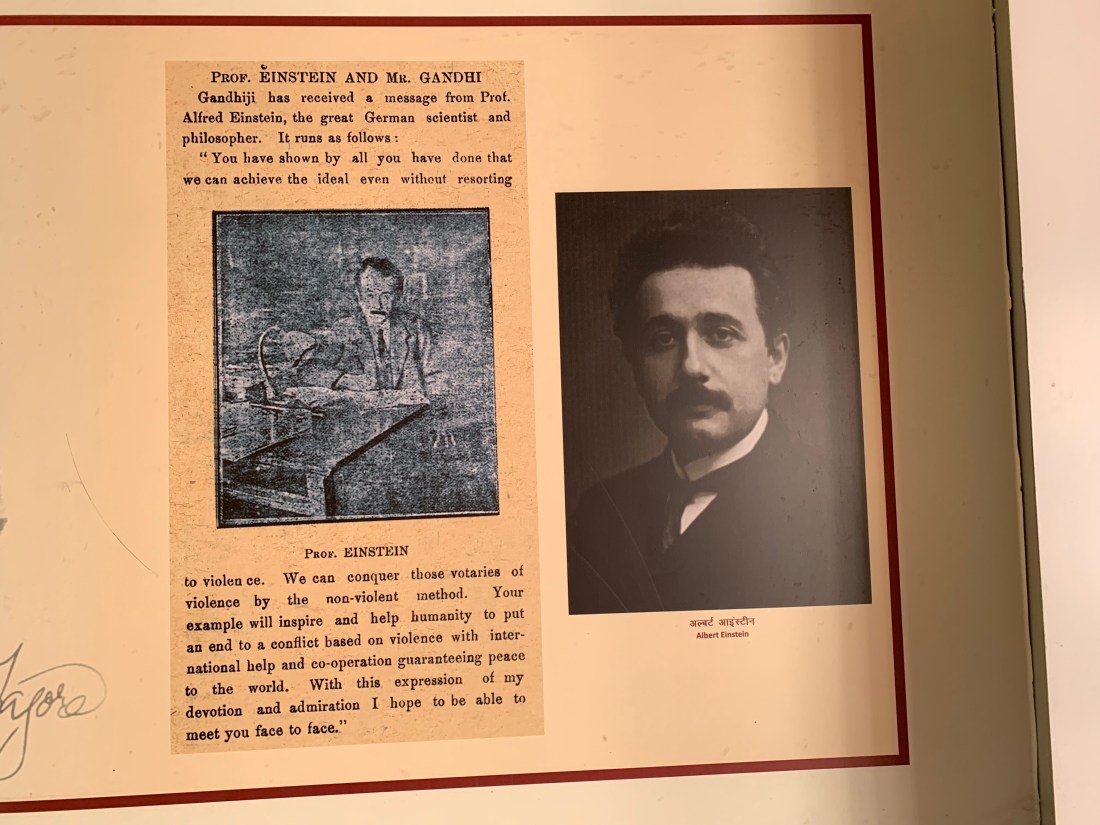
Our day ended at Gandhi Smriti, the location where Mahatma Gandhi spent the last 144 days of his life and was assassinated on 30 January 1948. All who view these lovely grounds and the park area around it can see the preserved room where Gandhi lived. Also, many of his quotations are displayed in the area (some of these quotations are displayed in our photos)
A challenging day, a difficult day, but a powerful day in many ways.
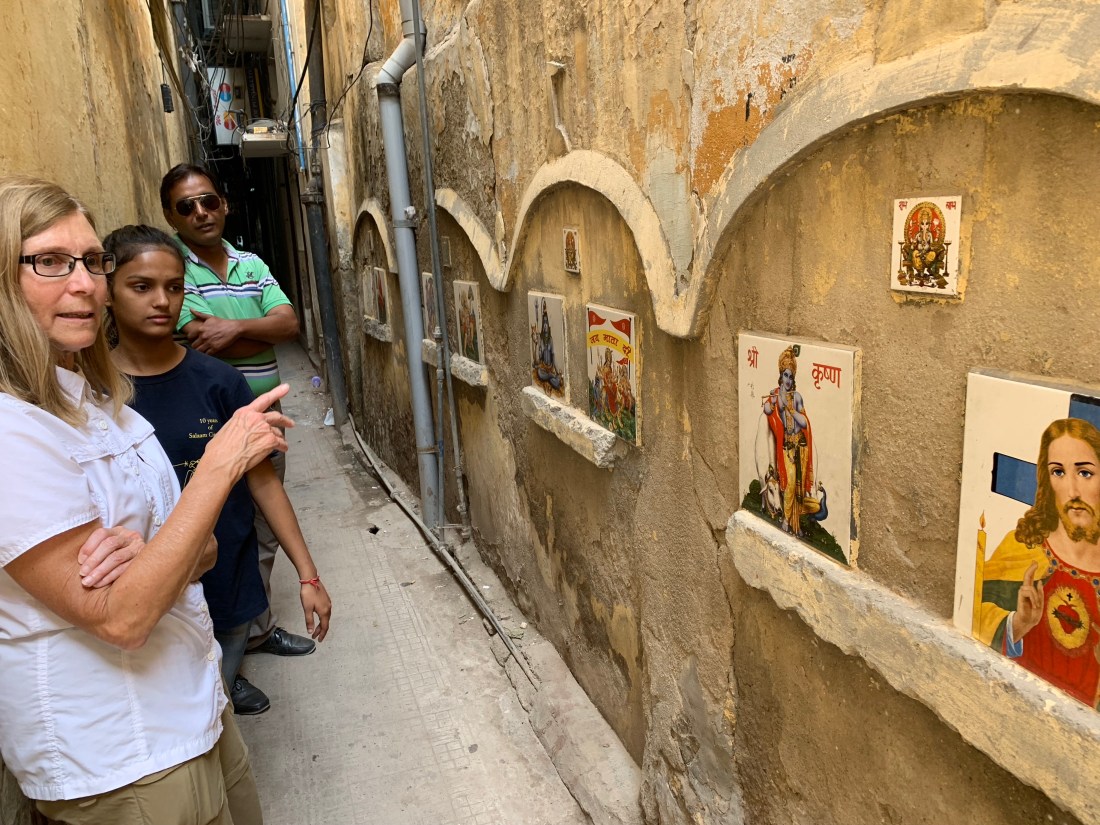
(P.S. — A quick, funny note to add: The photo below shows a wall with various pictures of Religious God/Gods/Goddesses. In the midst of one of the alleys in the slum areas in which we were walking there was one small alleyway which was often used for a urinal by passing males. When the community was beginning to try to “clean things up” in that alley, they could not stop this use by the passing men. Then they thought of a solution: If we put tile pictures of Religious Icons on the wall where the men would pee, then these men would be ashamed to be “seen peeing in public” by their God/Goddess/Gods and would no longer use this alleyway as a urinal. It worked !!!!)
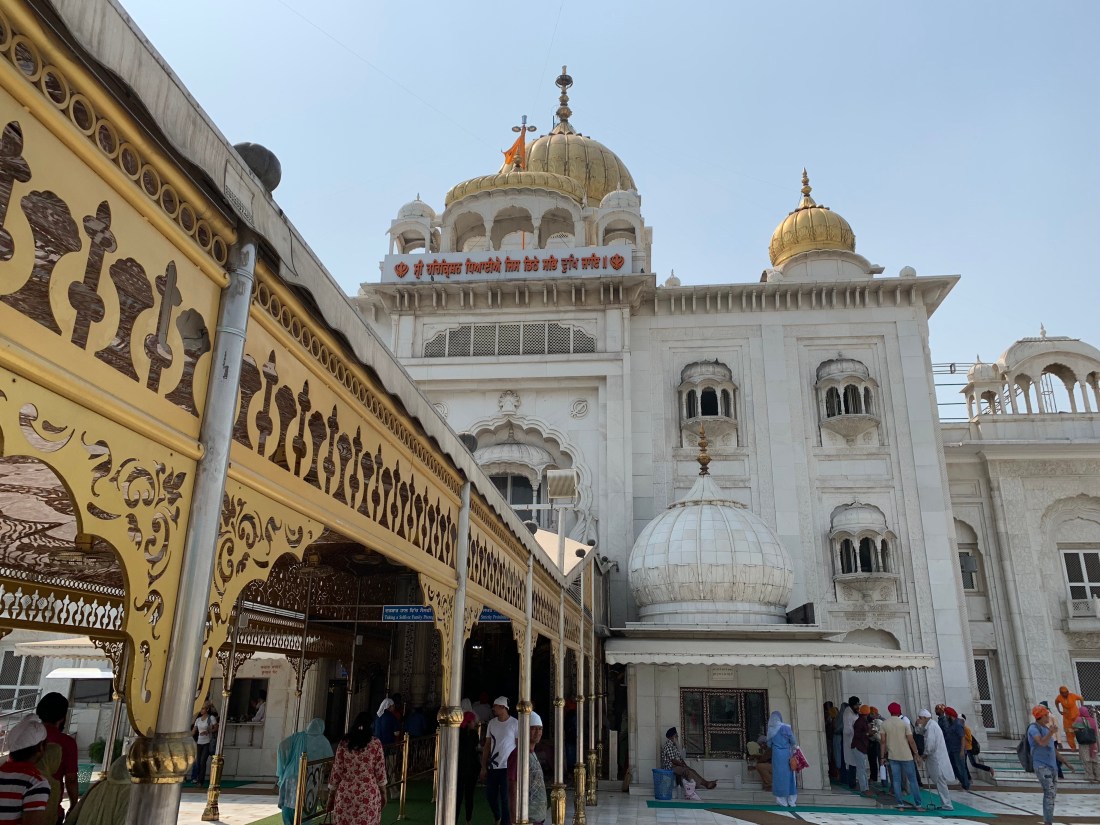
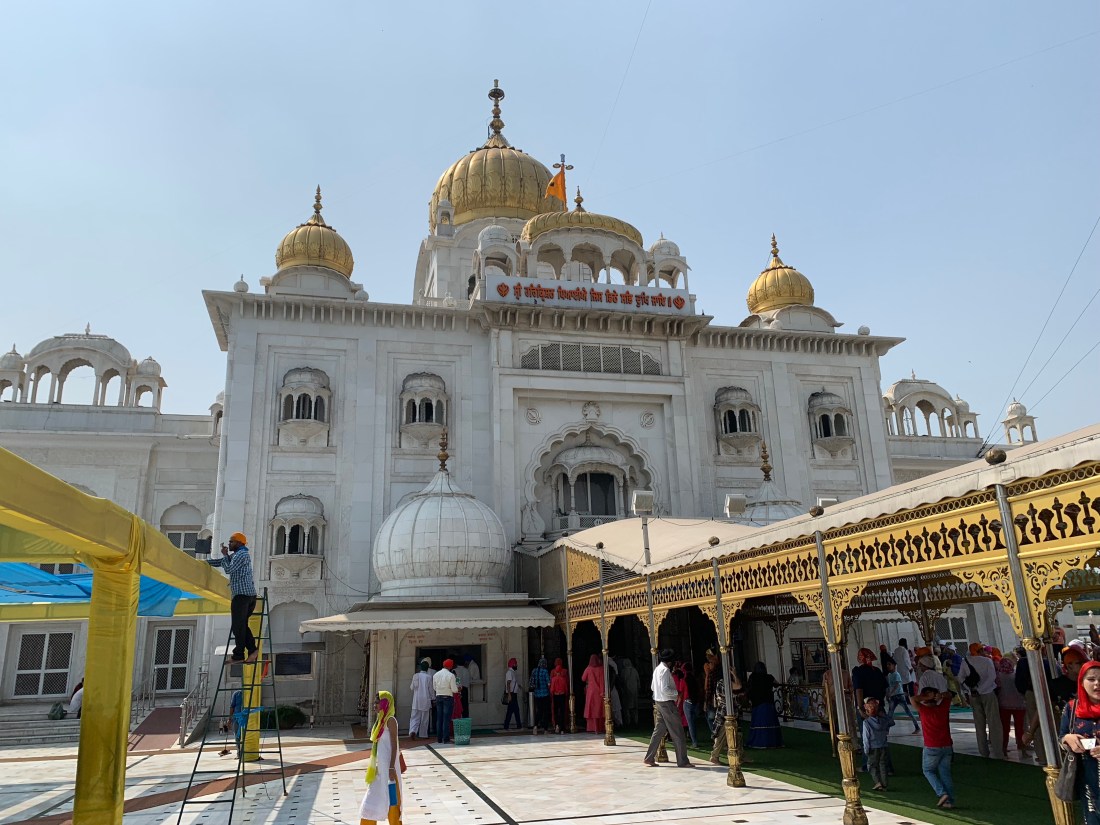
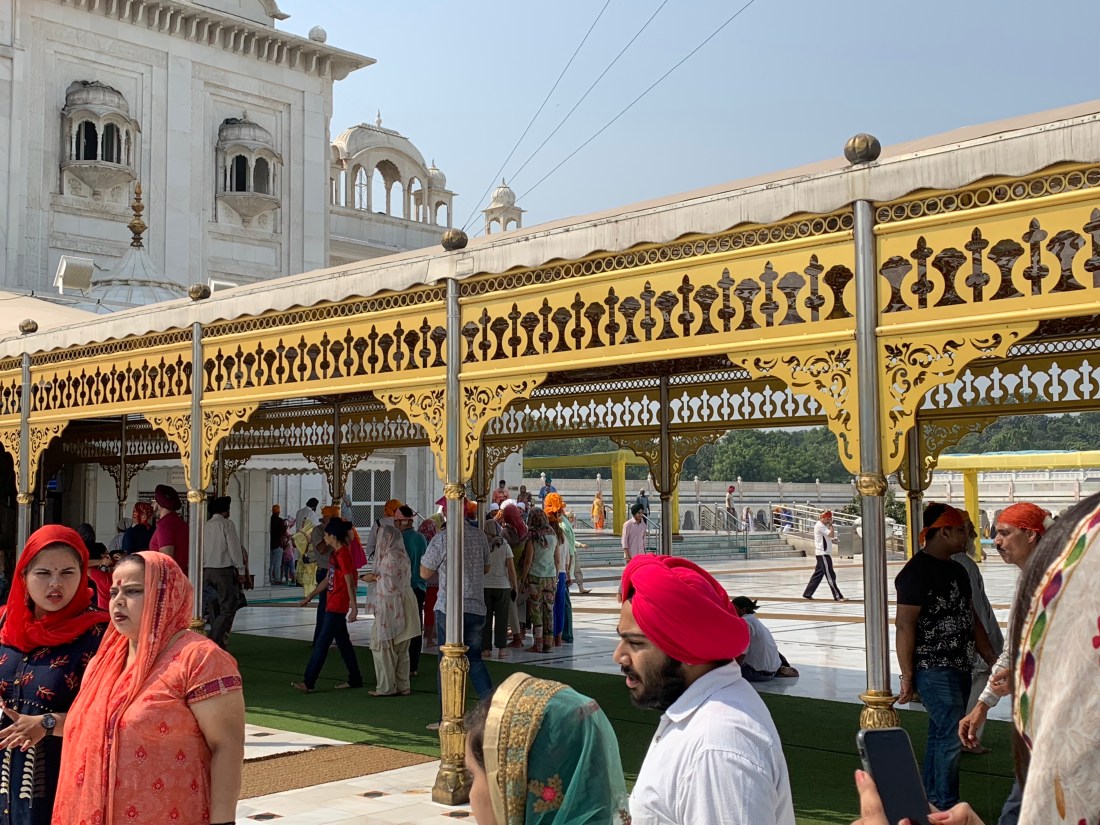
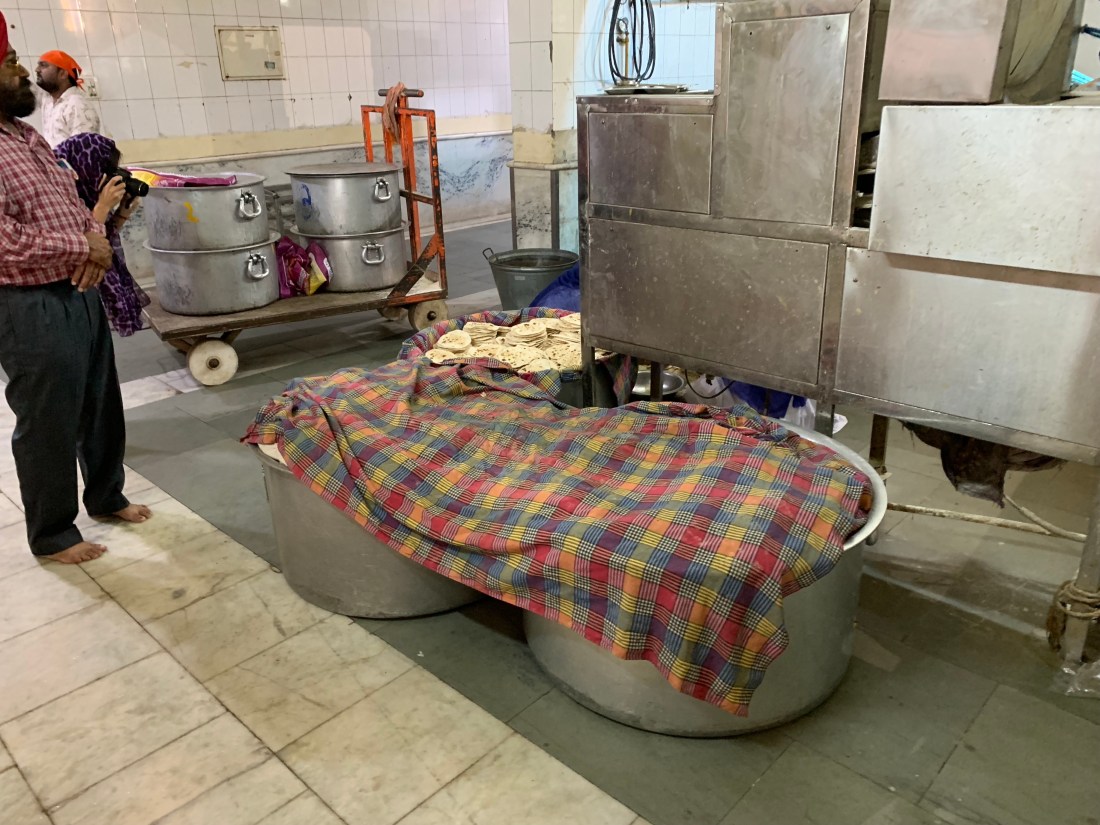
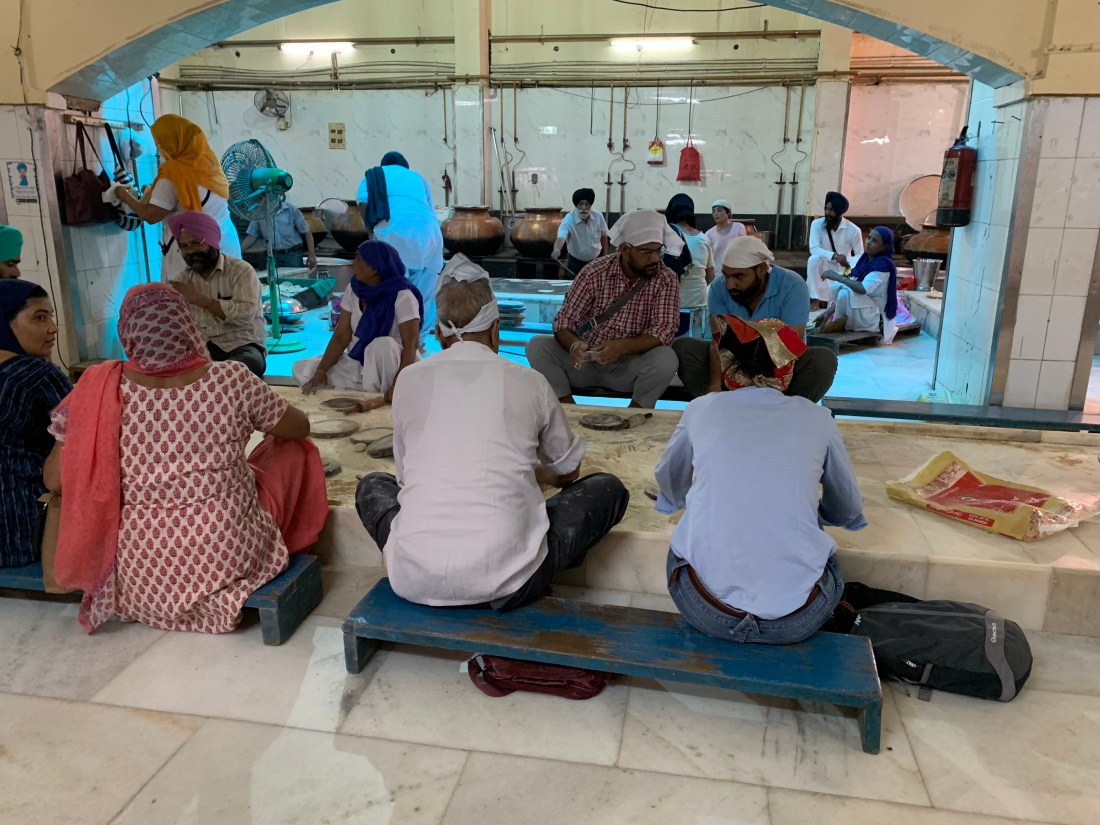
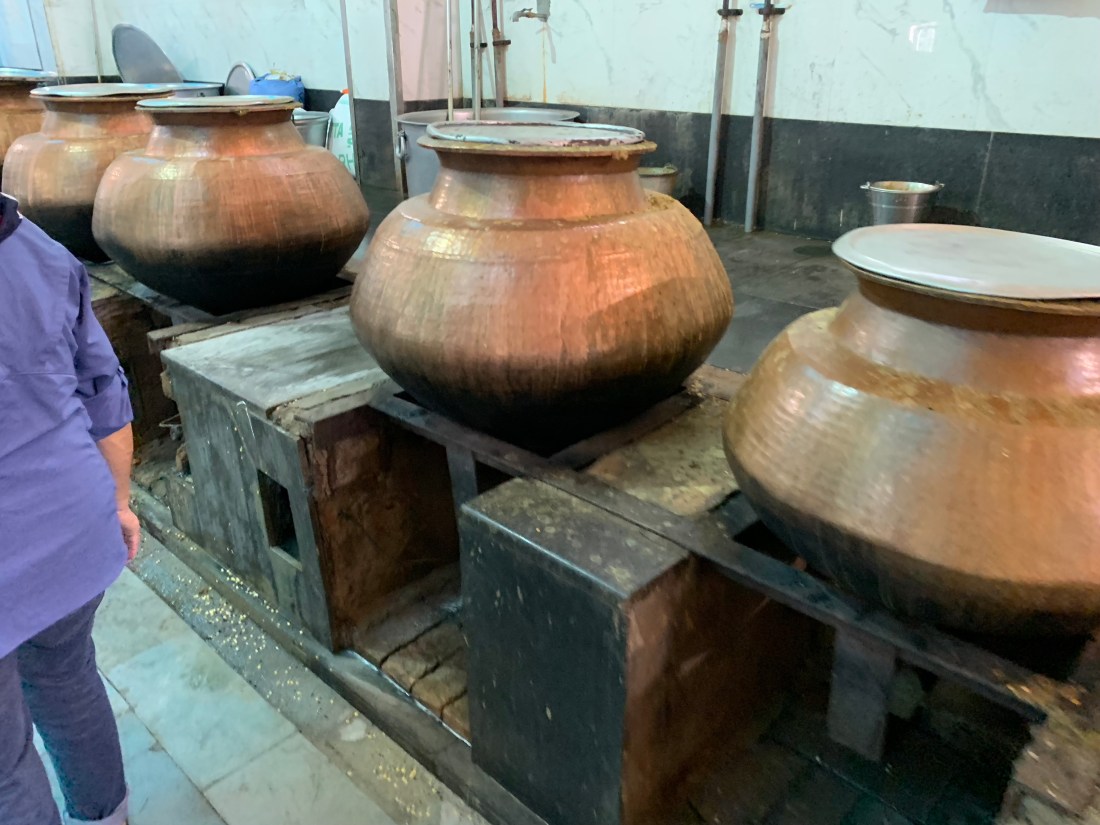
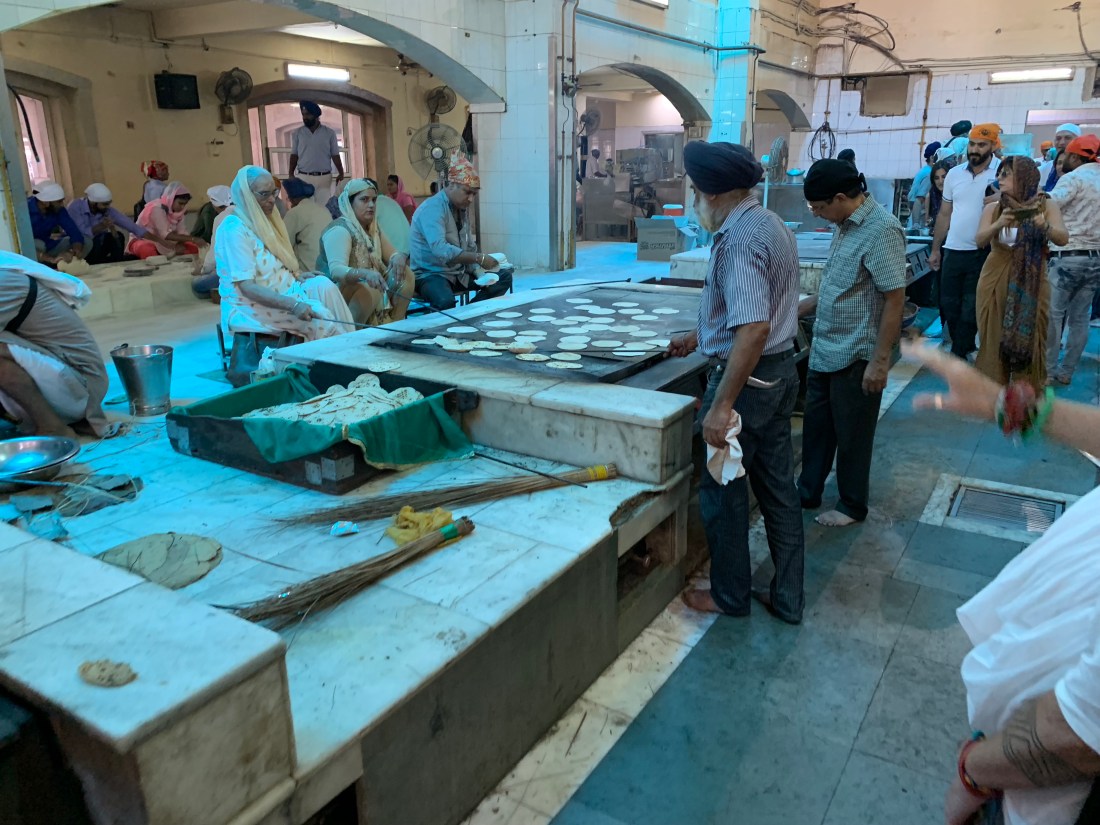
This is our last “touring day” in Delhi. After breakfast at our “Homestay” (India vocabulary for a B&B), we left to visit the most prominent Sikh Gurudwara, or Sikh house of worship, in Delhi. It was originally a “bungalow” (India vocabulary for a large, expansive private home) belonging to Raja Jai Singh, a 17th Century Indian ruler. It is open to people of all faiths, castes or creeds. The premises house a sacred pond in which devotees bathe. They believe that this will wash off all of their misdeeds and thus allow them to attain peace of mind. The women bathe in an enclosed area, while the men submerge themselves at any of the edges of the pond. The most interesting thing to see, however, is the “Langars” or community kitchen. The Sikhs and various other volunteers are continuously cooking in order to feed thousands and thousands of people every day, regardless of caste, color, sex or class. It is a wonderful example of the prodigious hospitality of the Sikhs.
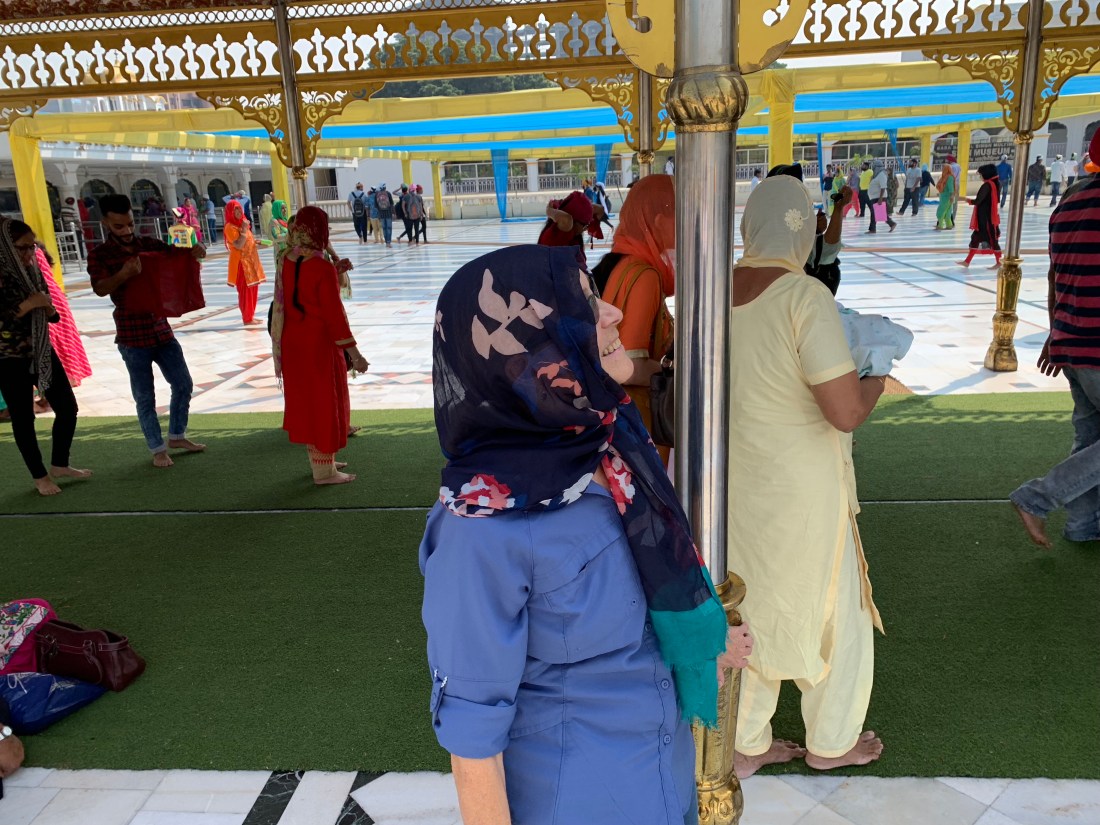
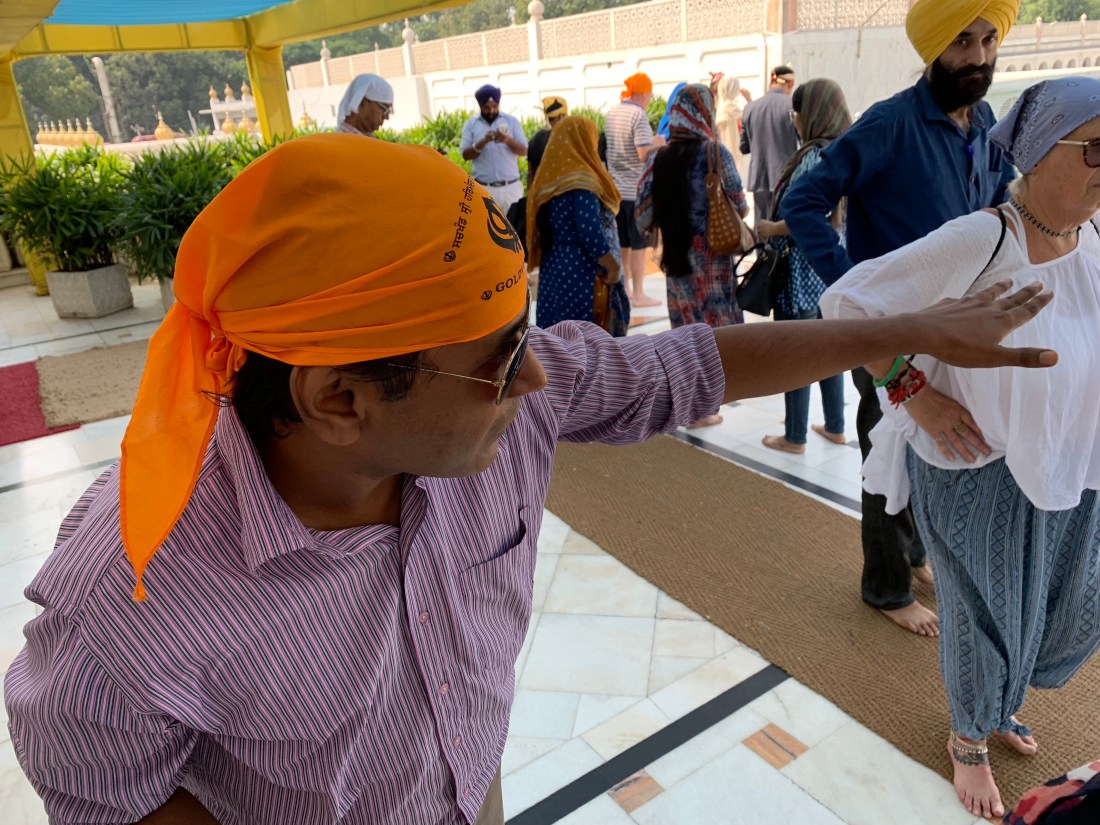
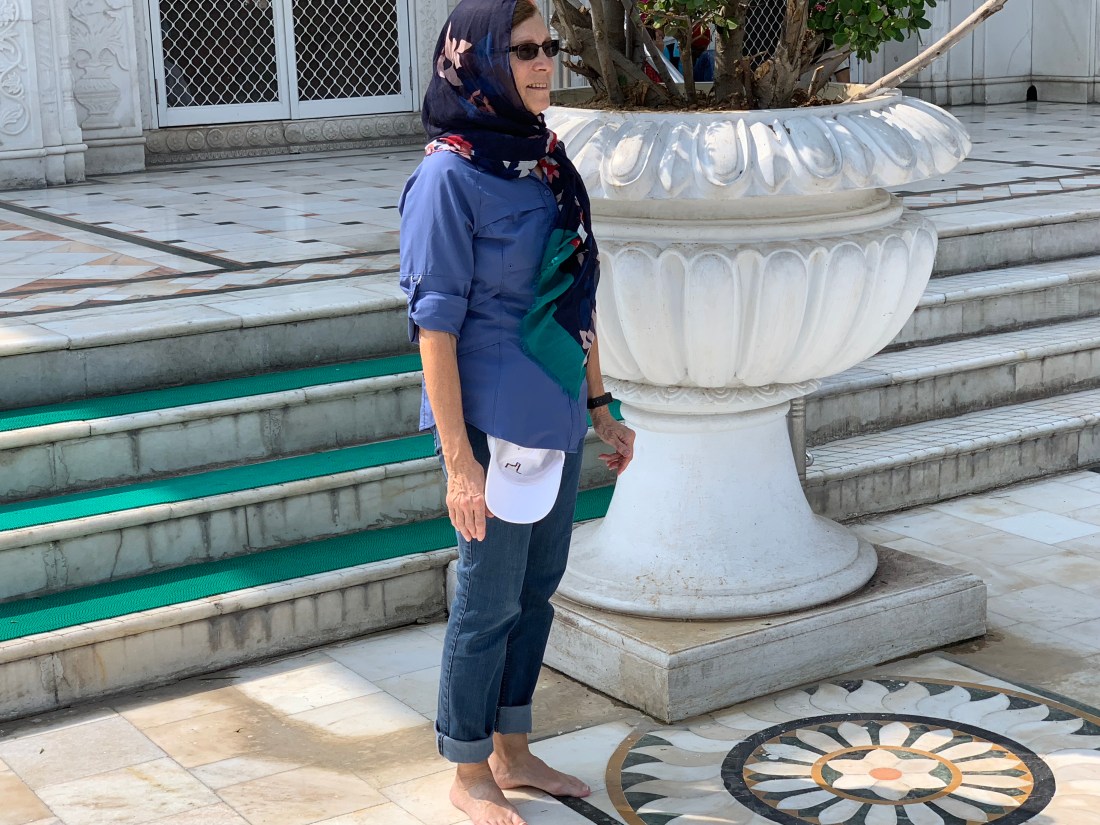
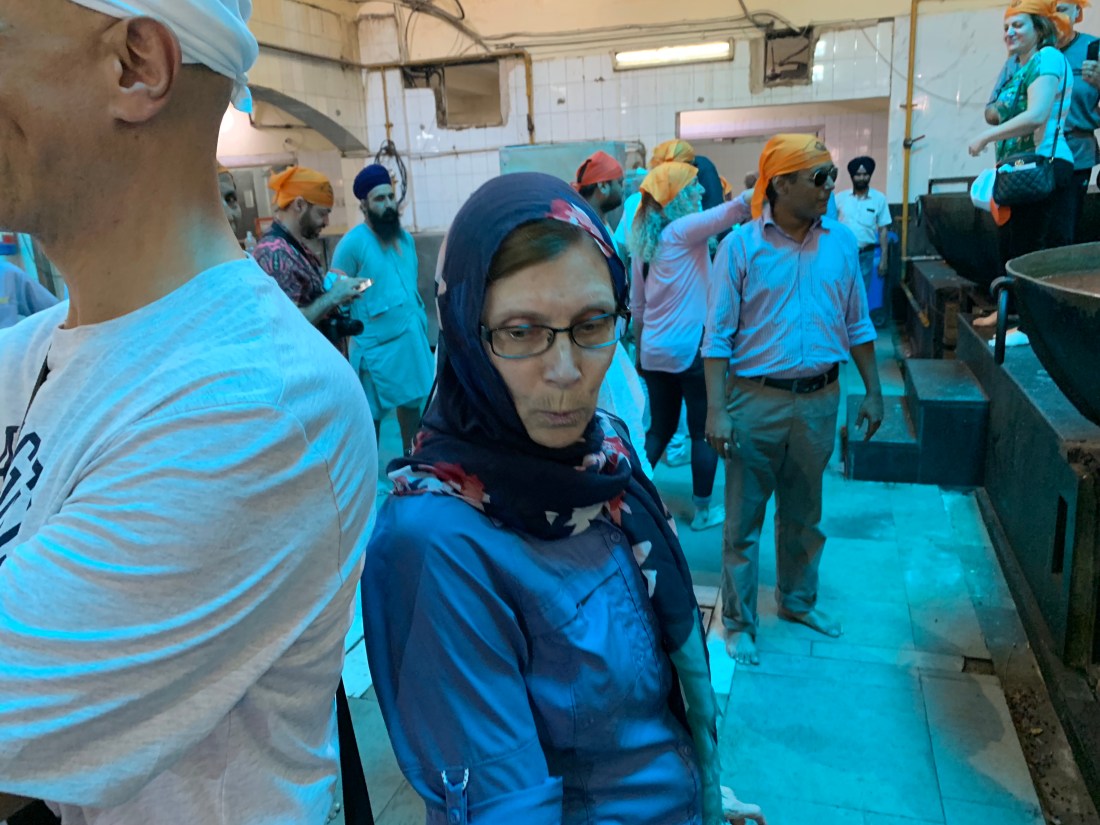
As you can easily see, our heads are covered and our feet our bare as we observe services in the Sikh Temple. We were also allowed to watch the volunteers prepare many of the foods for those waiting to be fed. Please note the size of the copper kettles for soups and other vegetarian dishes, as well as the large number of individuals hand-making breads such a Naan for those waiting to be eat.
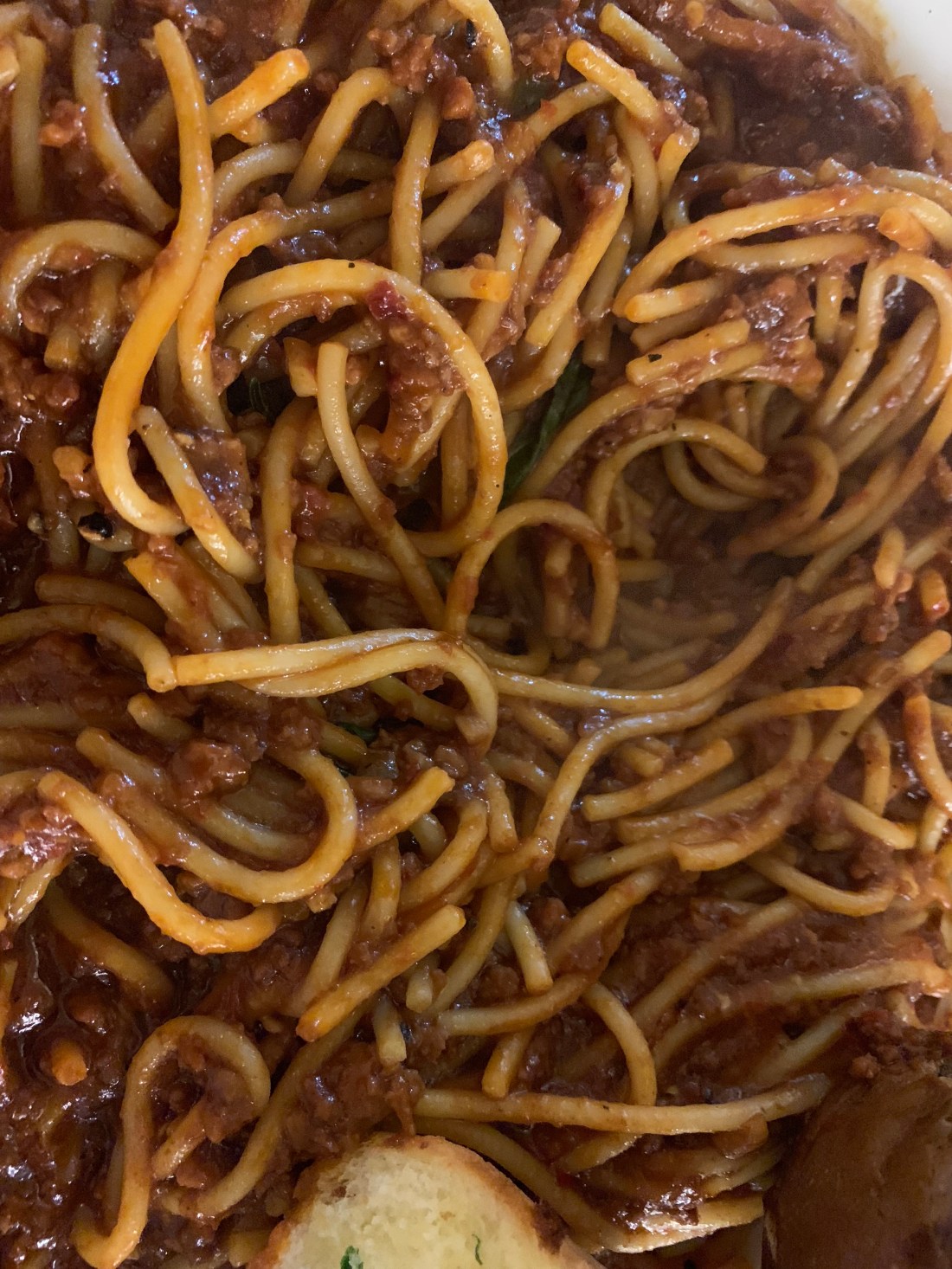
Dinner on our own! We found an adorable place in the middle of Delhi (after figuring out how to use Uber in India!) and decided we wanted what they call “Continental Food” (which means anything but Indian food, we think !!). Mary got Pizza and Bill got Spaghetti Bolognese — How very “Continental” of us !!
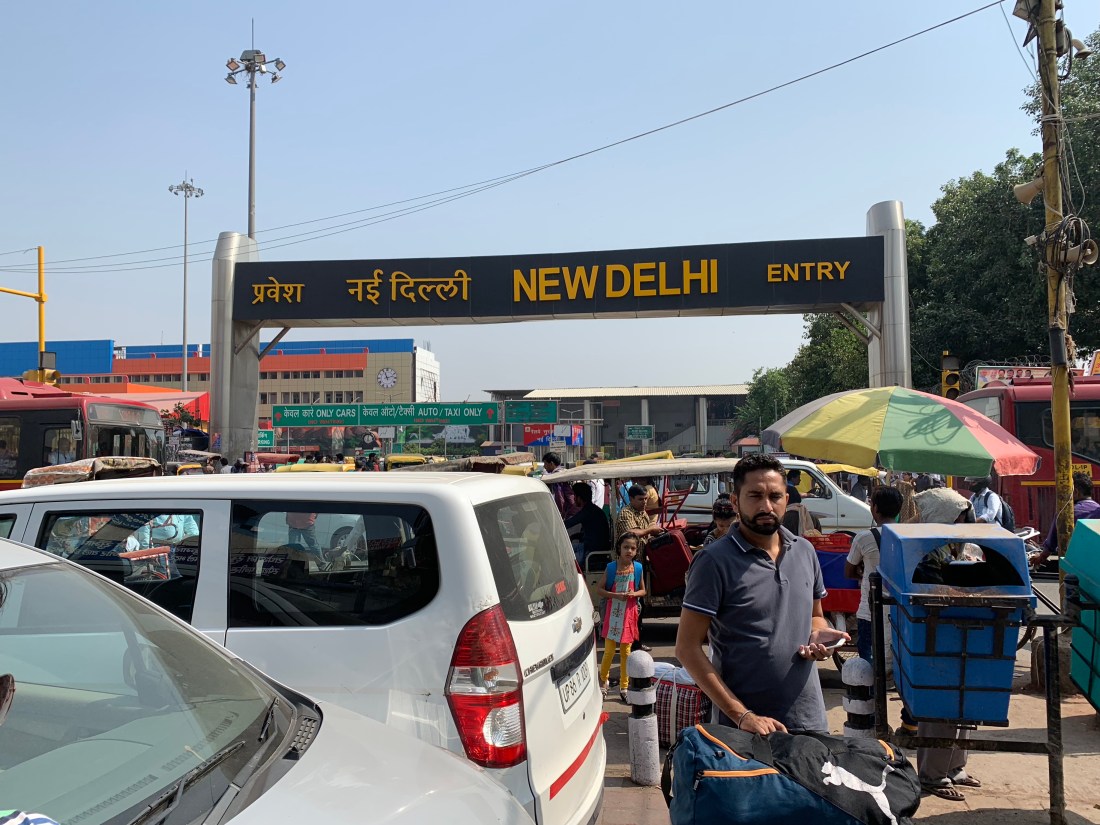
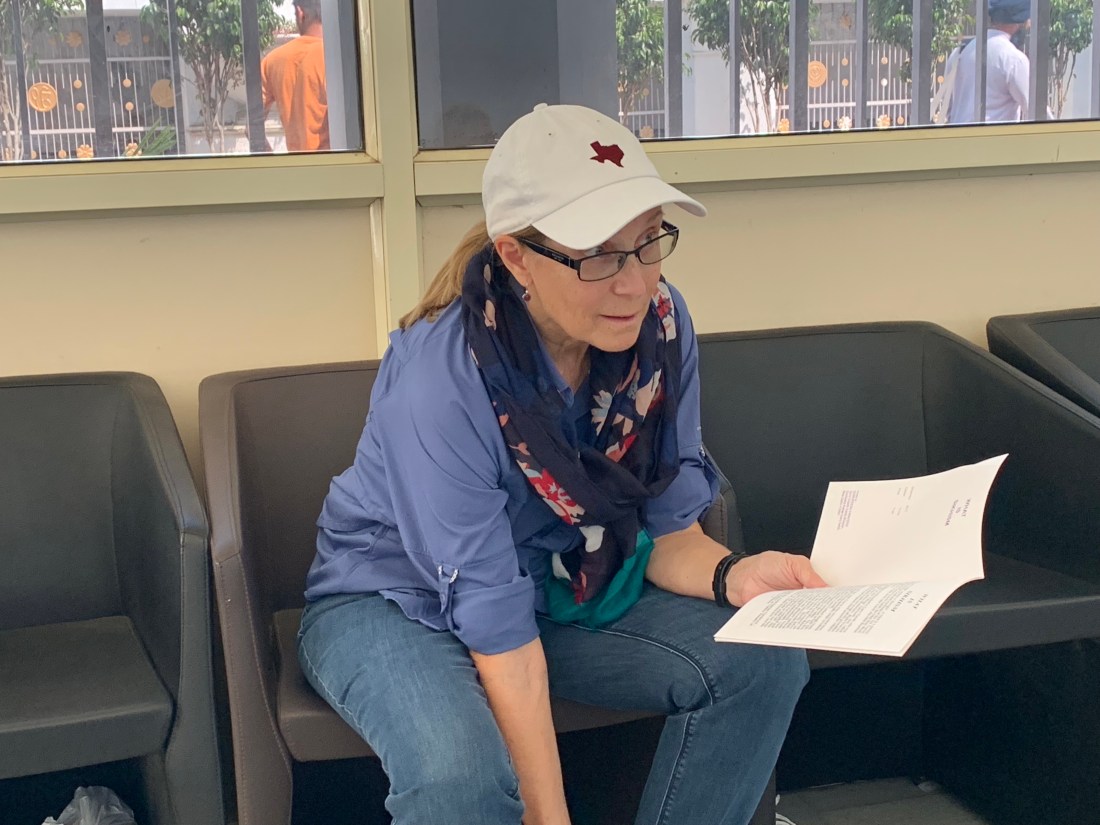
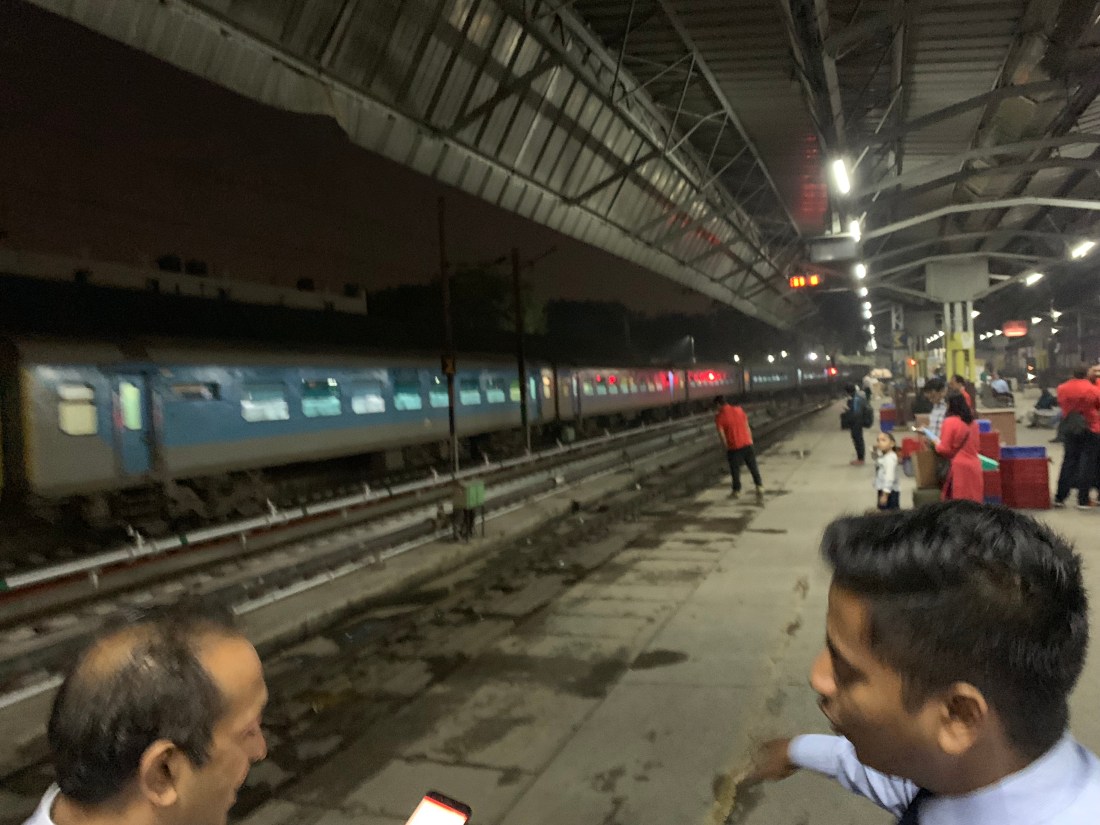
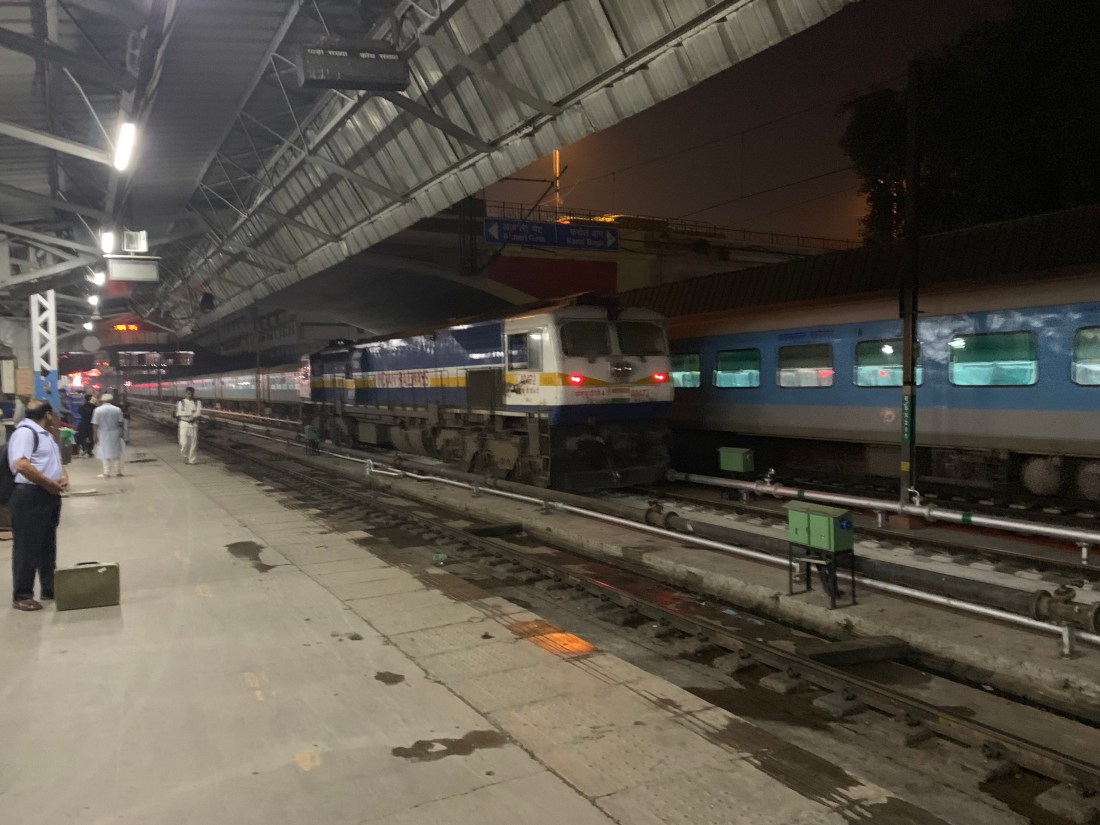
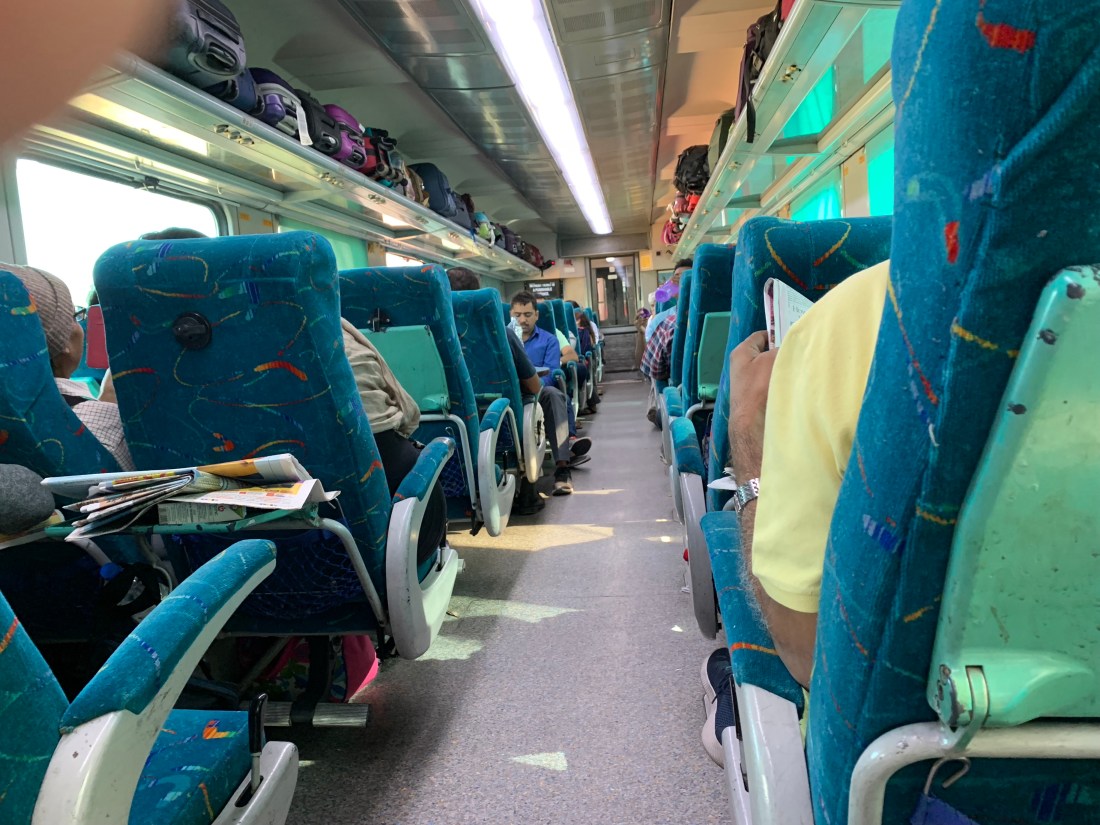
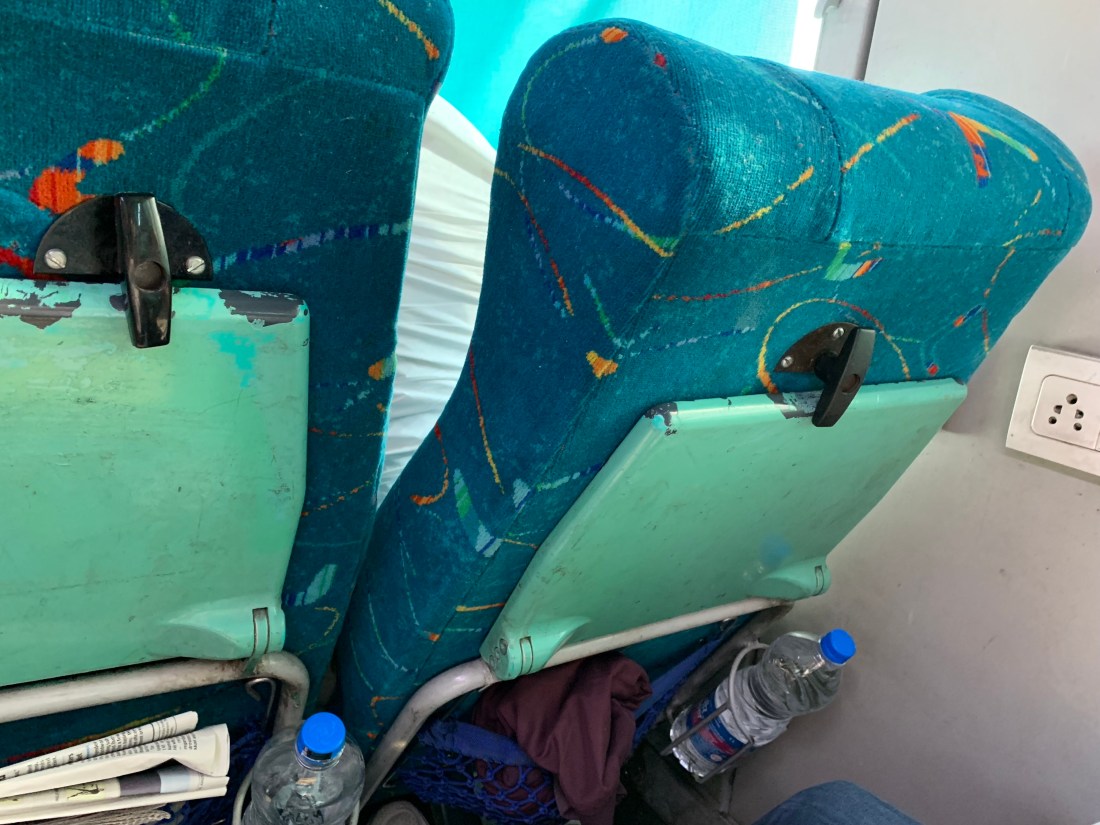
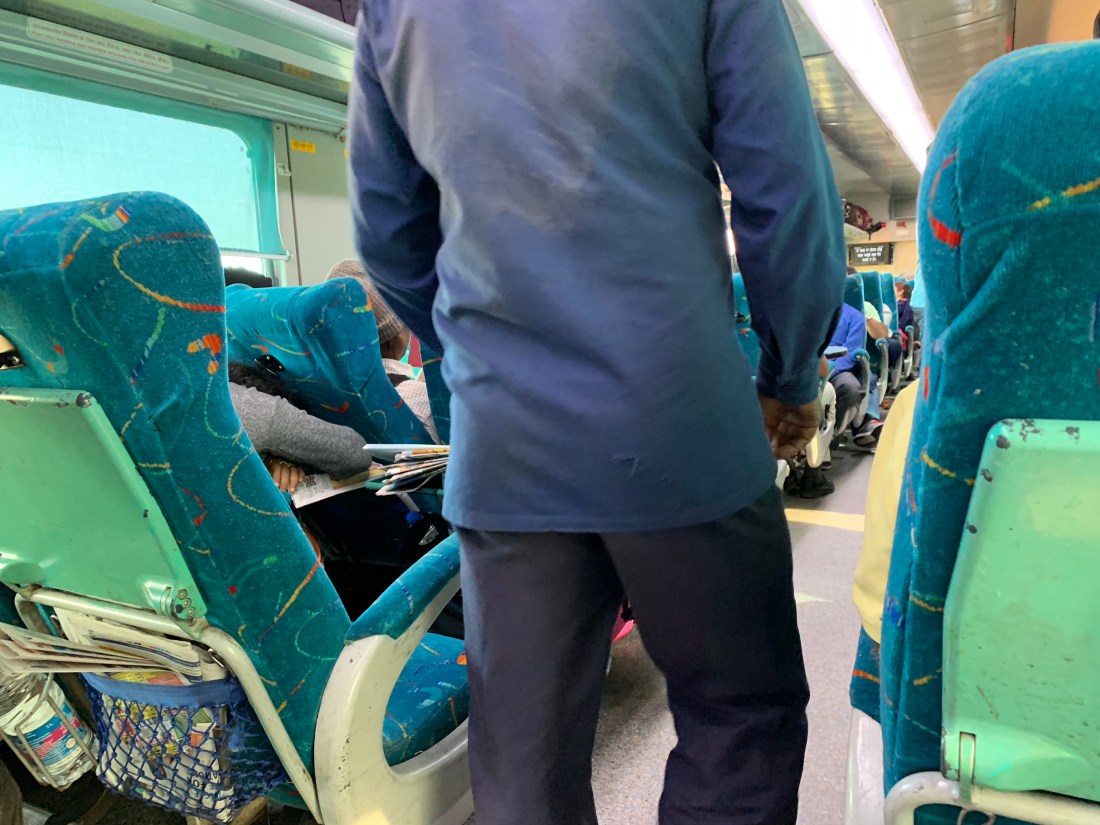
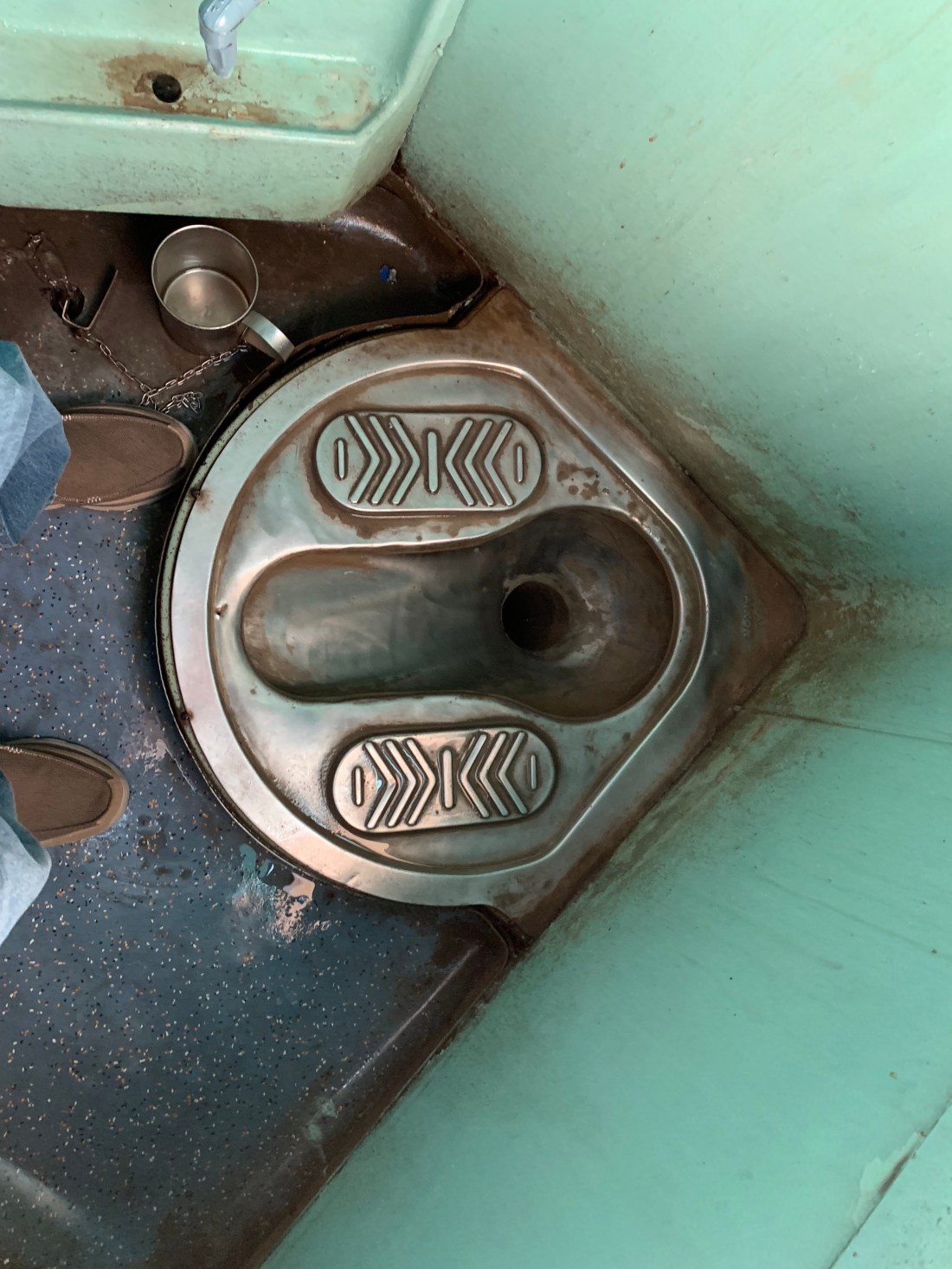
With a 4:00 a.m. wake-up call, we grabbed some snacks-to-go from our host at the Homestay, and greeted our escort to the Delhi Railway Station. Thank Goodness we did NOT have to try to negotiate getting on the train by ourselves !! First of all, the train station, even at five in the morning is unbelievably crowded. Then (as was discovered by our escort) our ticket numbers were incorrect. After running for the correct train car and throwing our luggage aboard, we finally settled down to the”meal” from the Homestay. It was an interesting trip (although packed with people) and lasted approximately five (5) hours. In case you are wondering, Bill felt it was very important to take a photo of the restroom facilities so that you might see them up-close-and-personal!
Bathroom for boys and girls!!!!!!!
We were met by another escort (thank goodness) in Jaipur. He assisted us in getting our luggage off of the train and into his car. We then took off for Kalwar, the village where we teach. After slightly over an hour, we arrived in Kalwar (by the way, we will discuss traffic in India later !!! Suffice it to say, neither of us will NEVER drive in India).
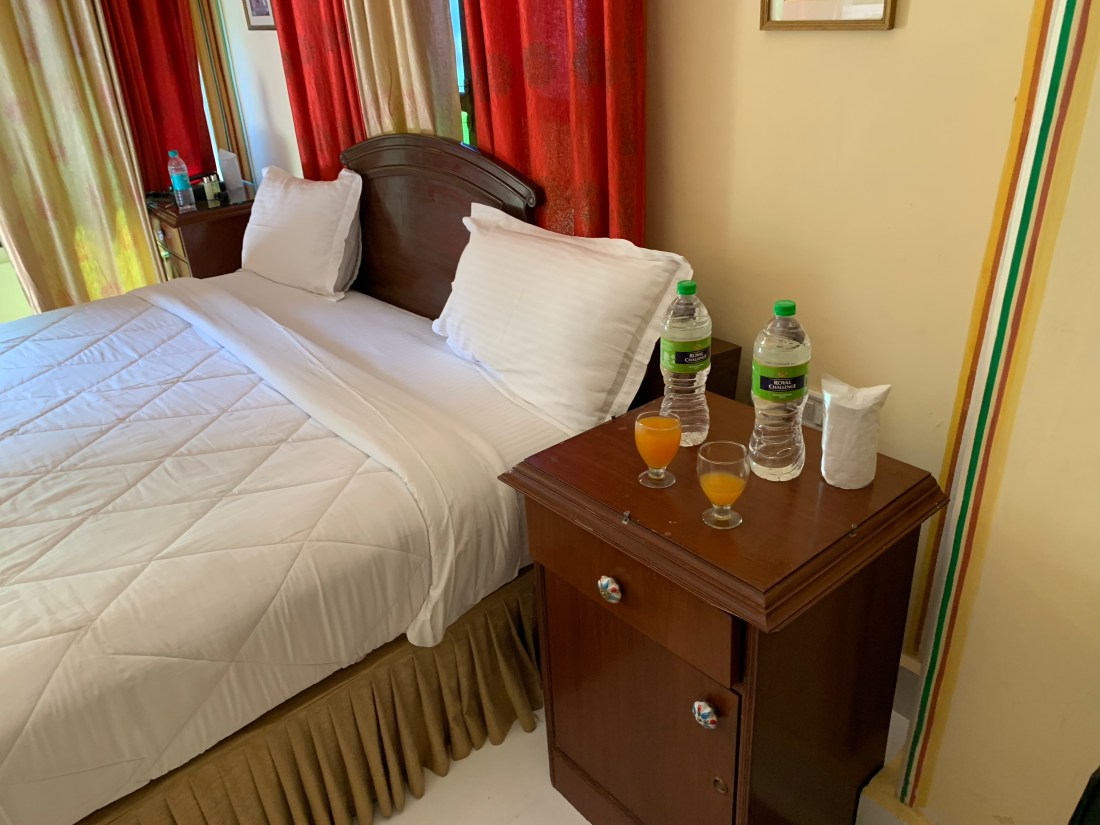
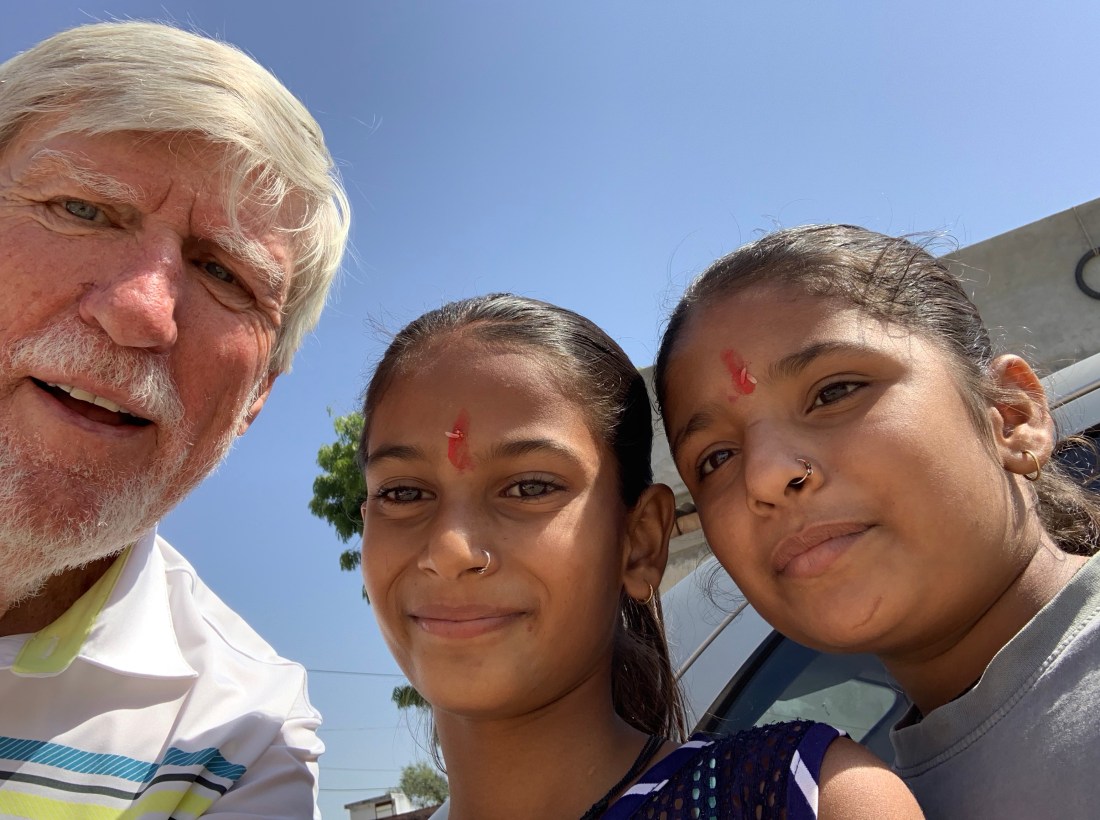
In Kalwar, we were greeted by the Service Program Coordinator and the Kalwar Castle staff with marigold leis, and traditional “dots”, red for the sun and white for the moon. We were also offered fresh mango juice. A wonderful welcome after hours on a train and in a car ! We then were provided a lecture on “International Service Learning”, after which we were a superb dinner of traditional Indian food. At this point we were exhausted. Good night!
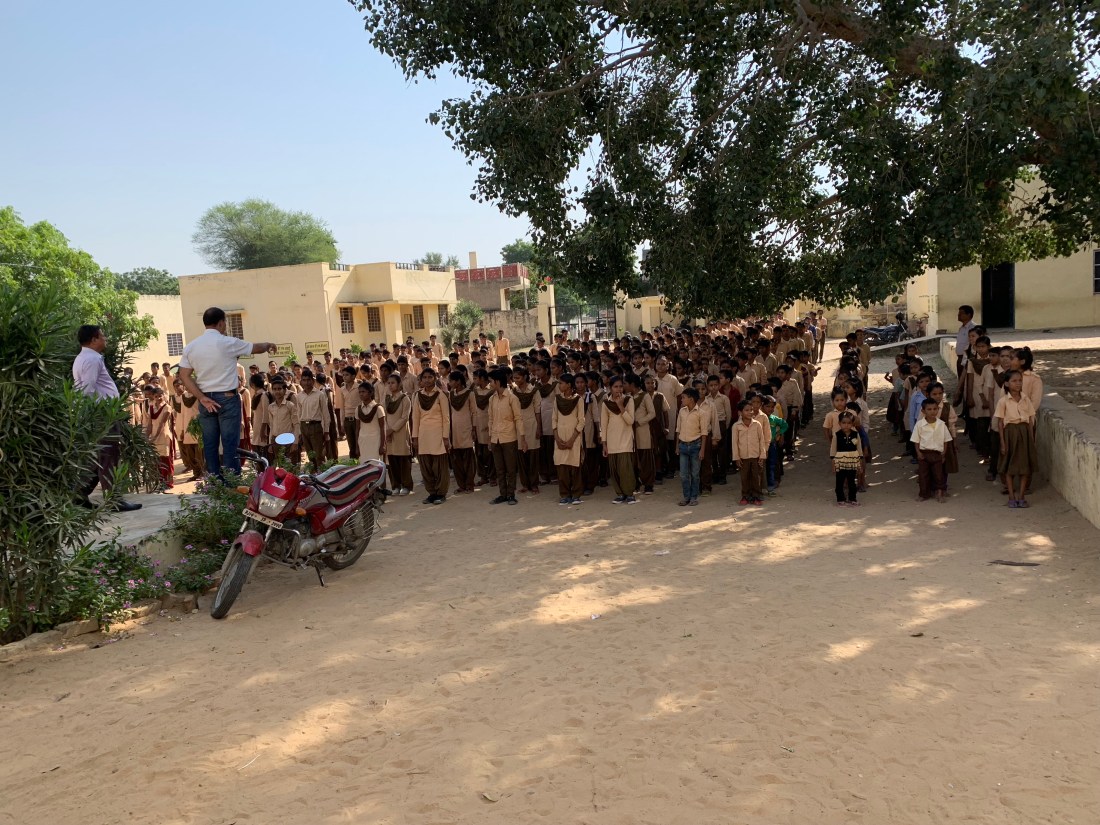
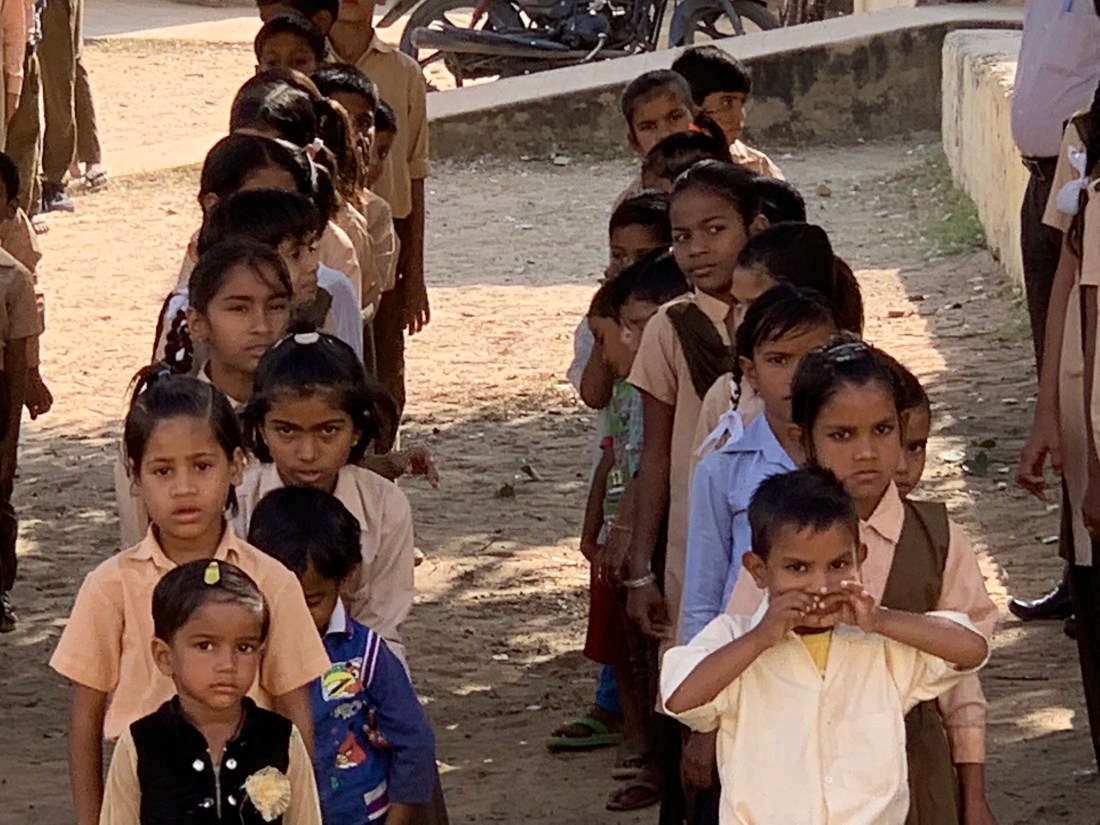
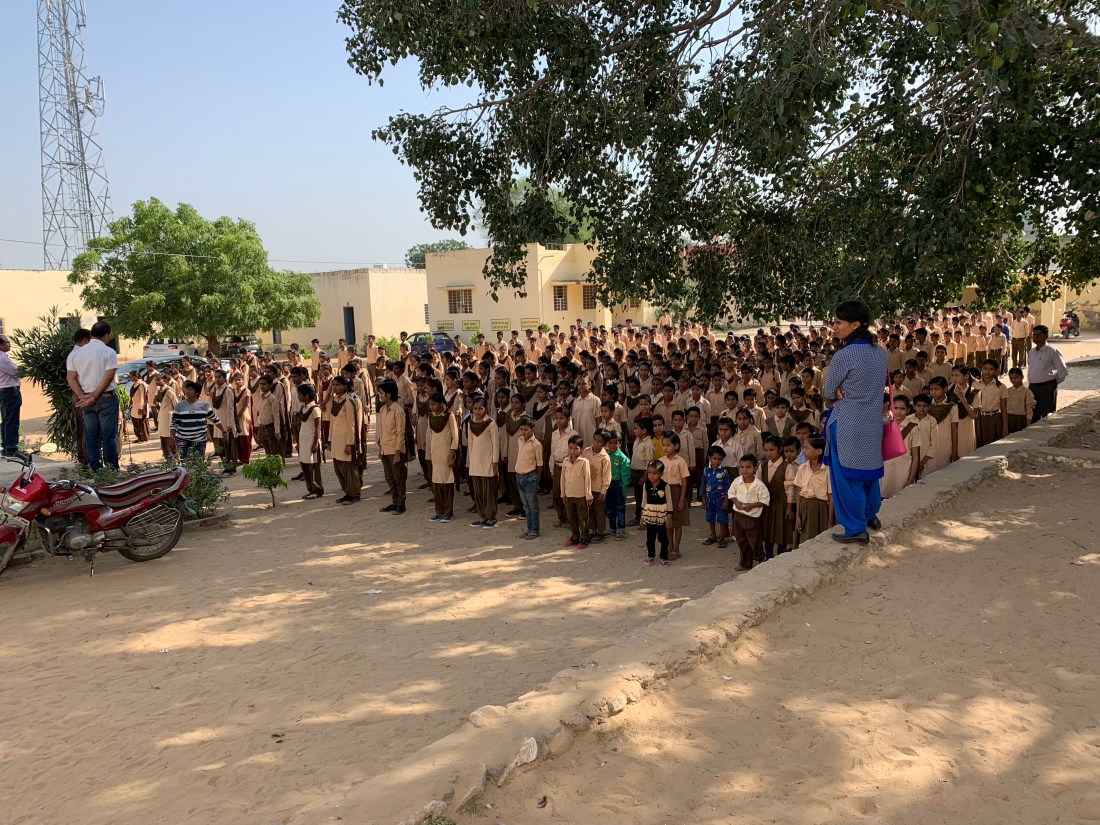
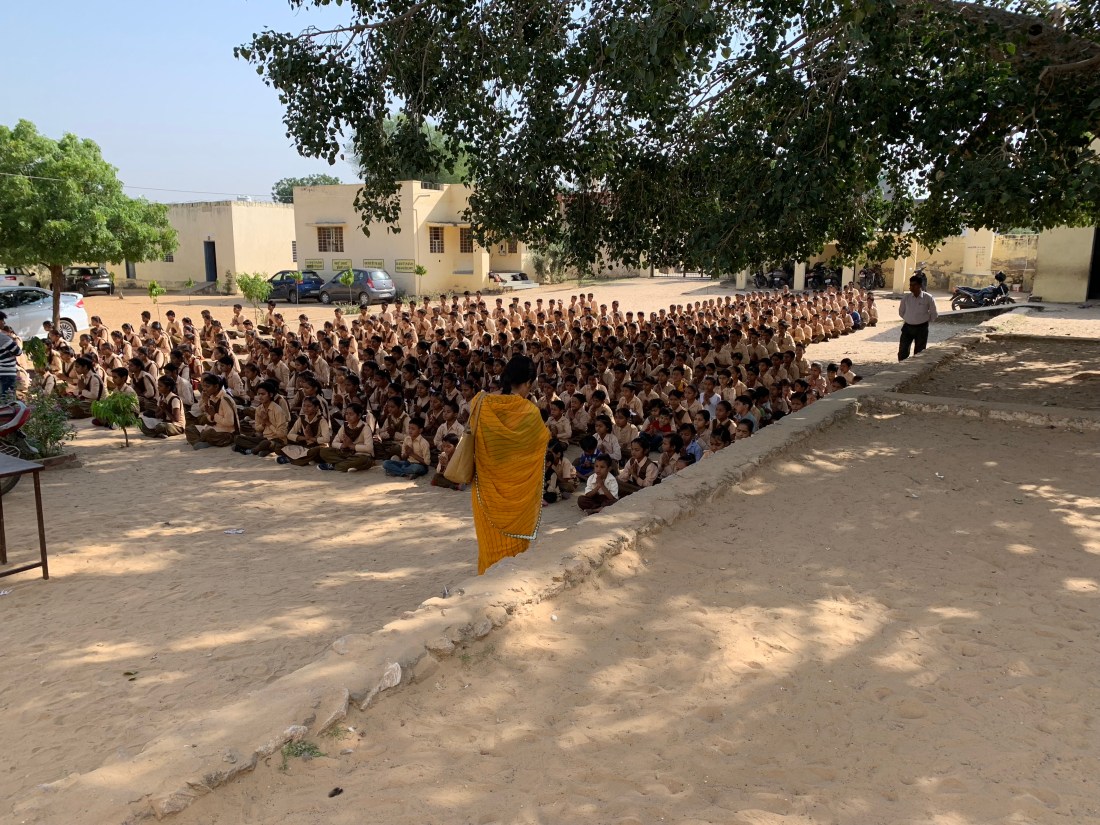
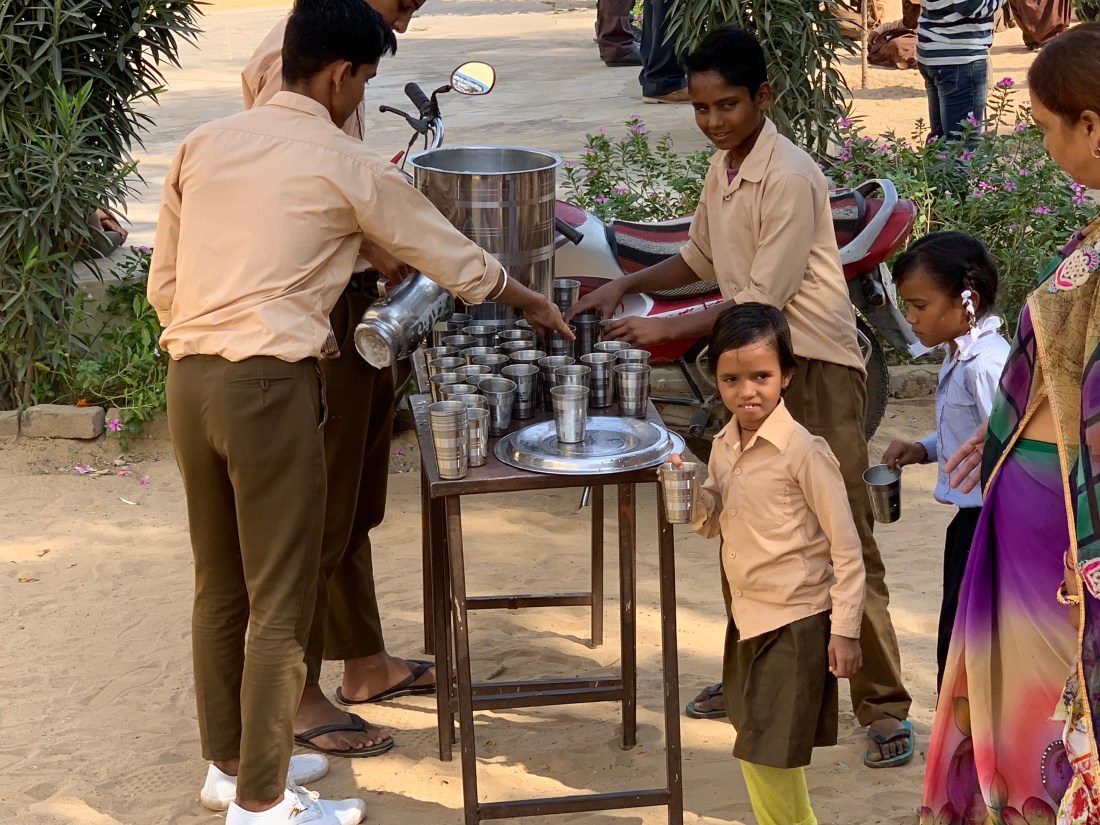
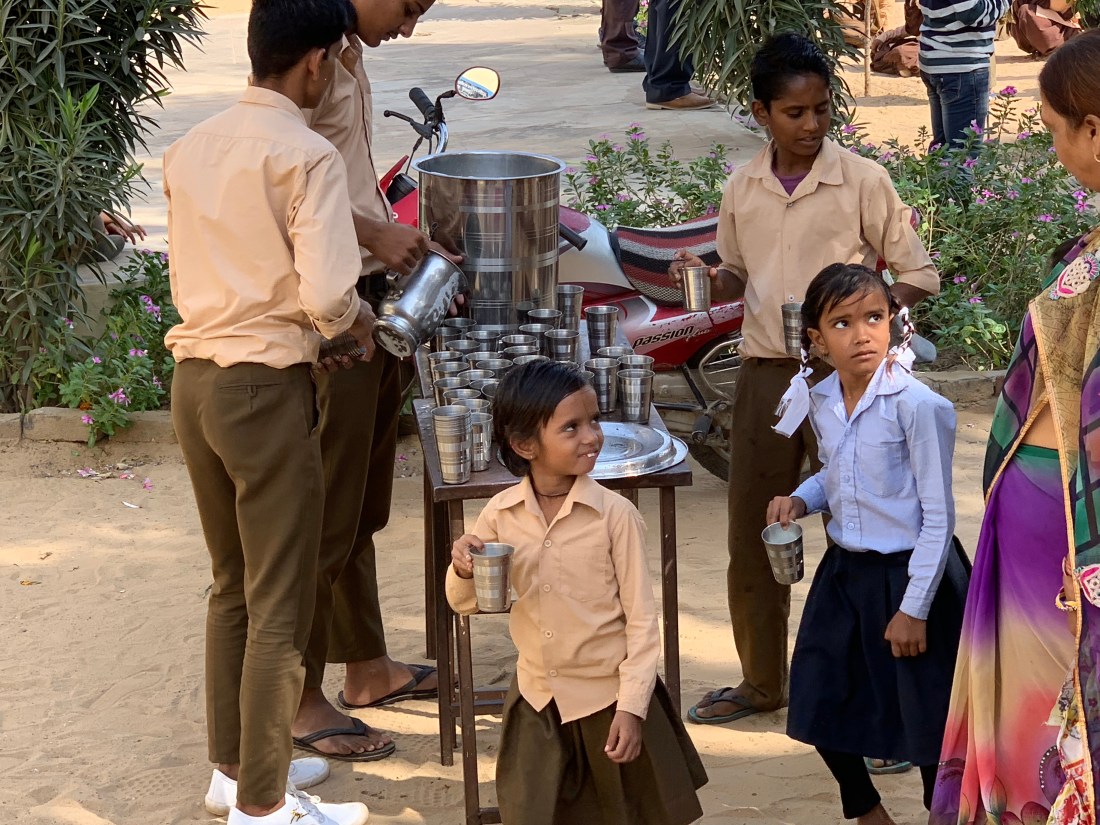
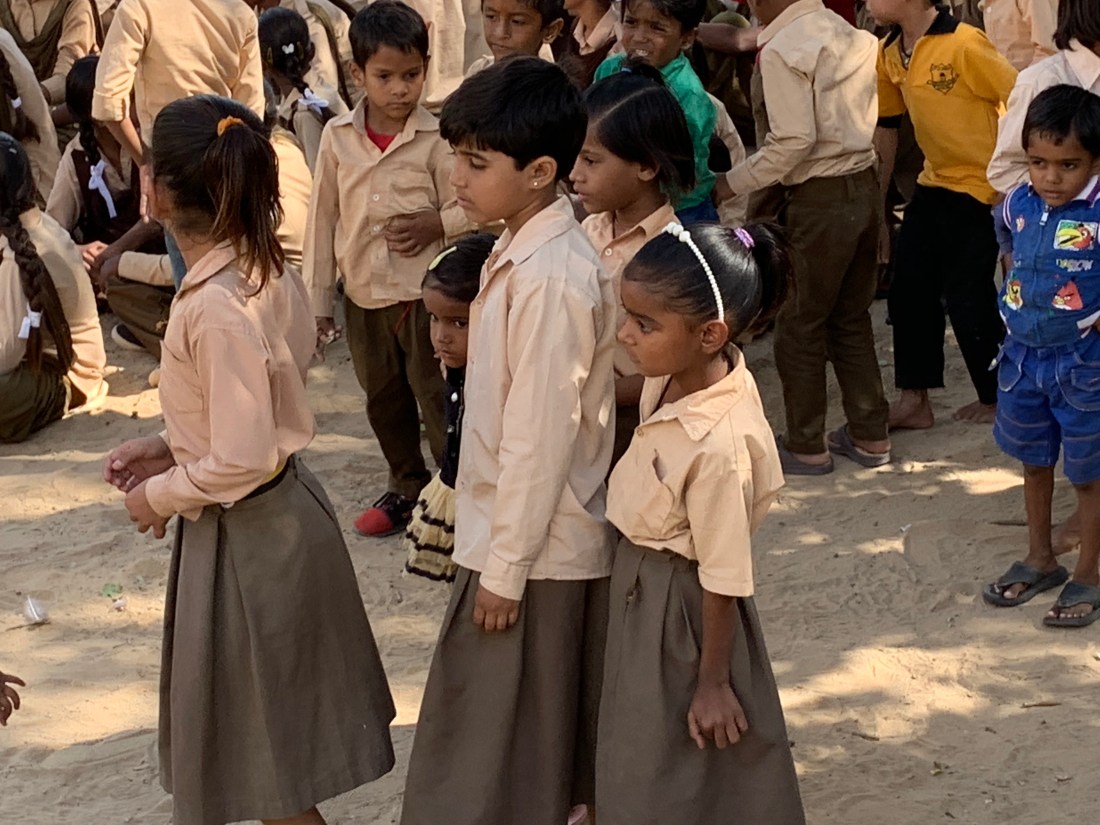
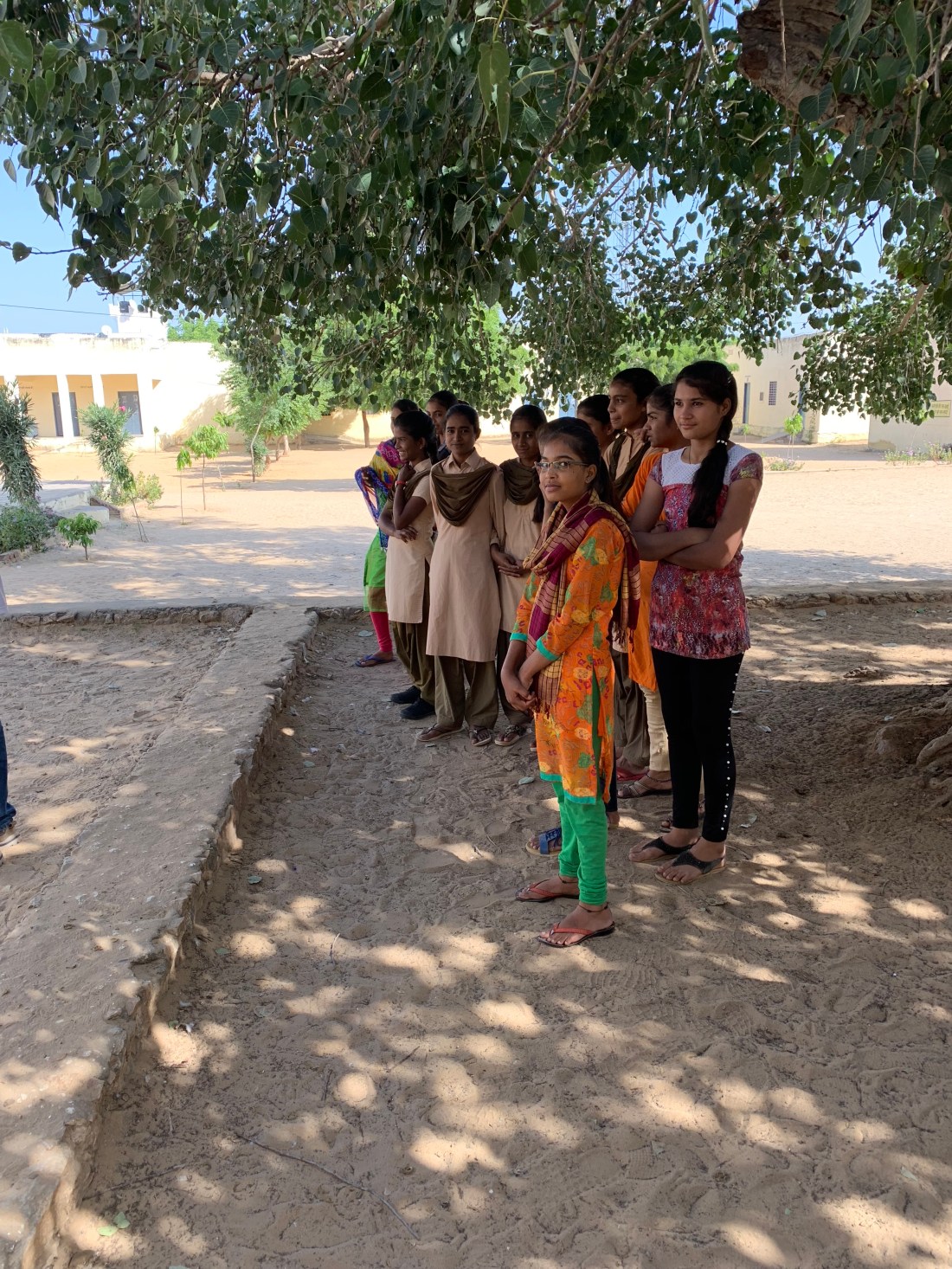
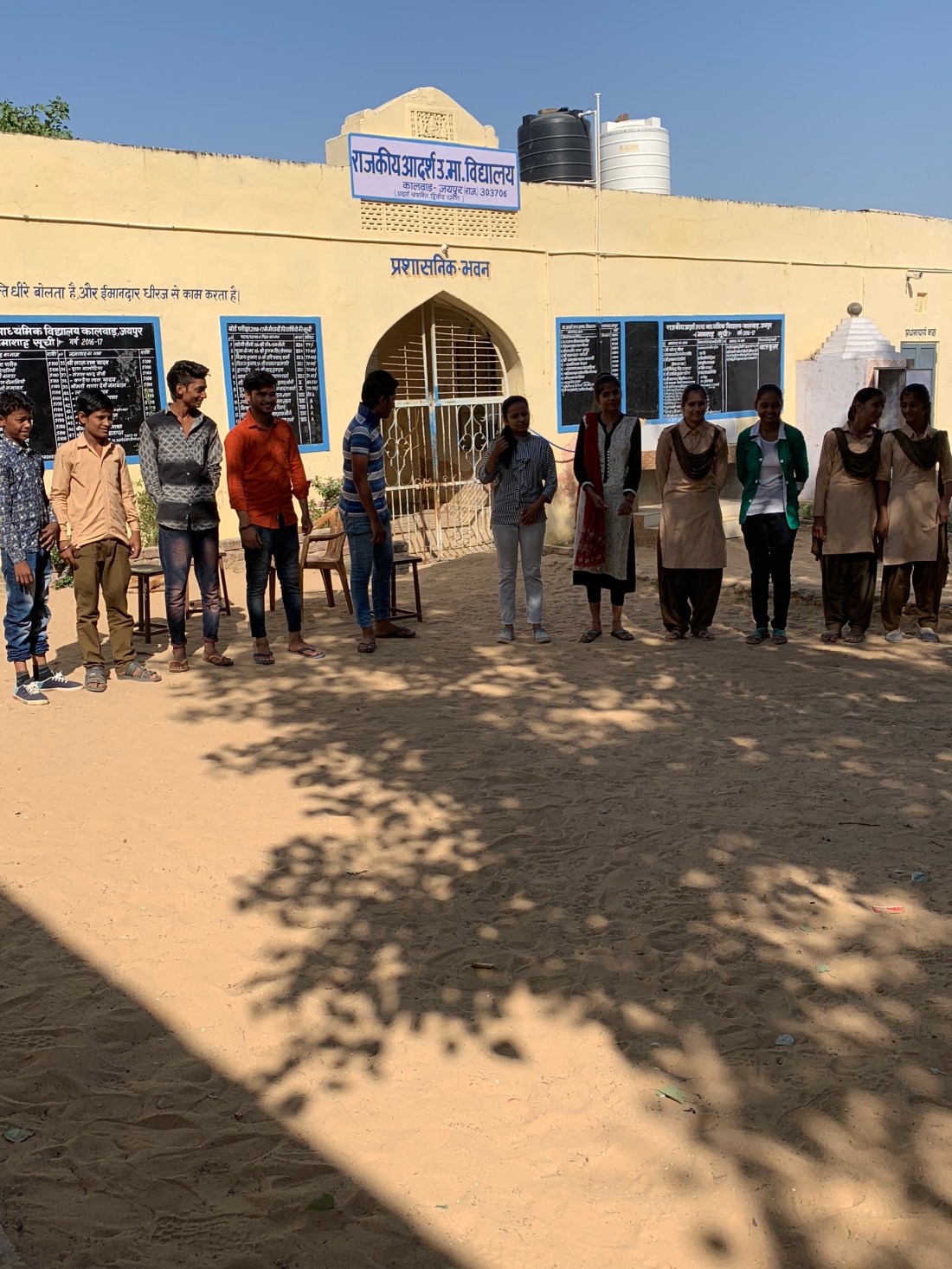
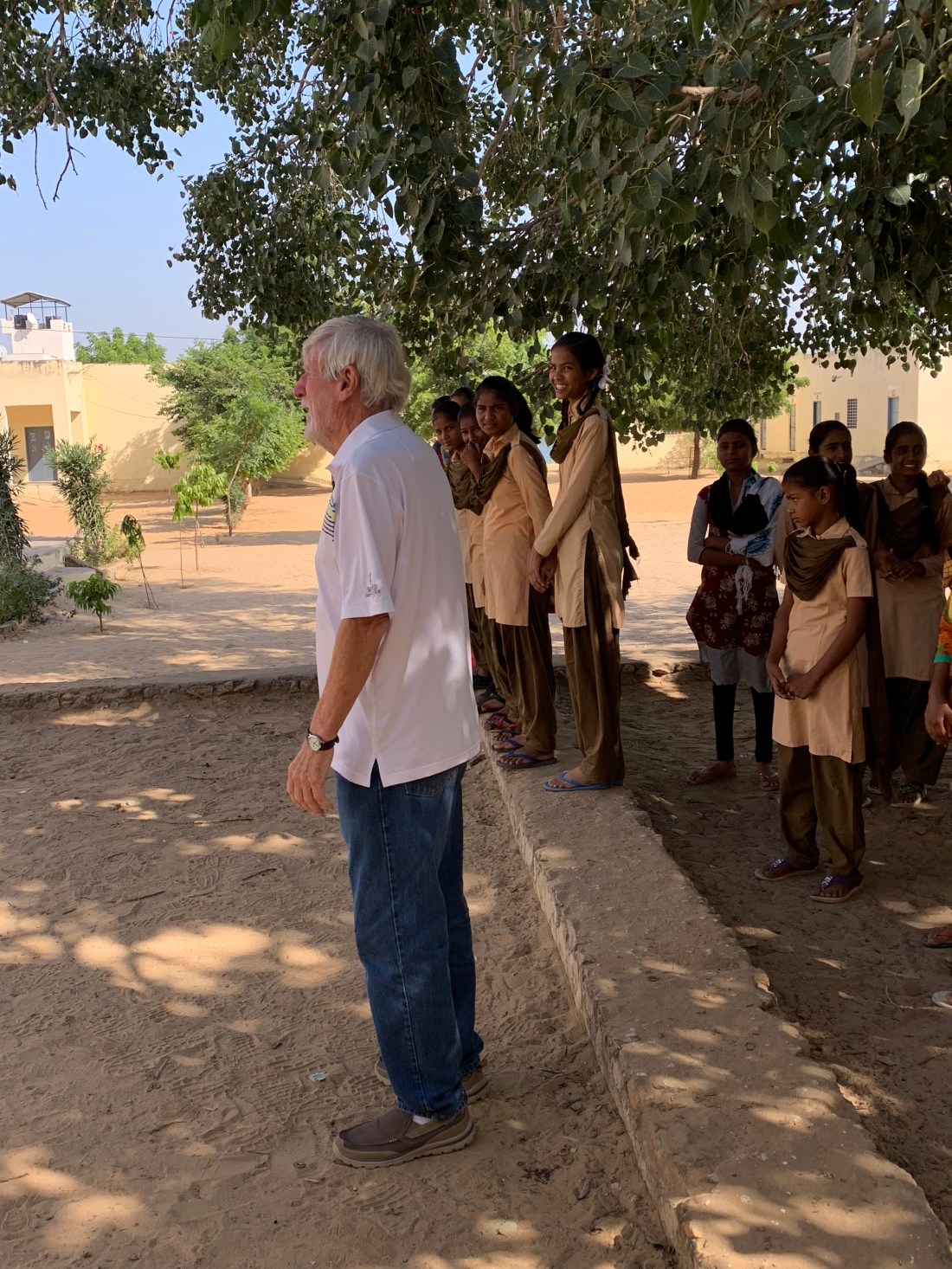
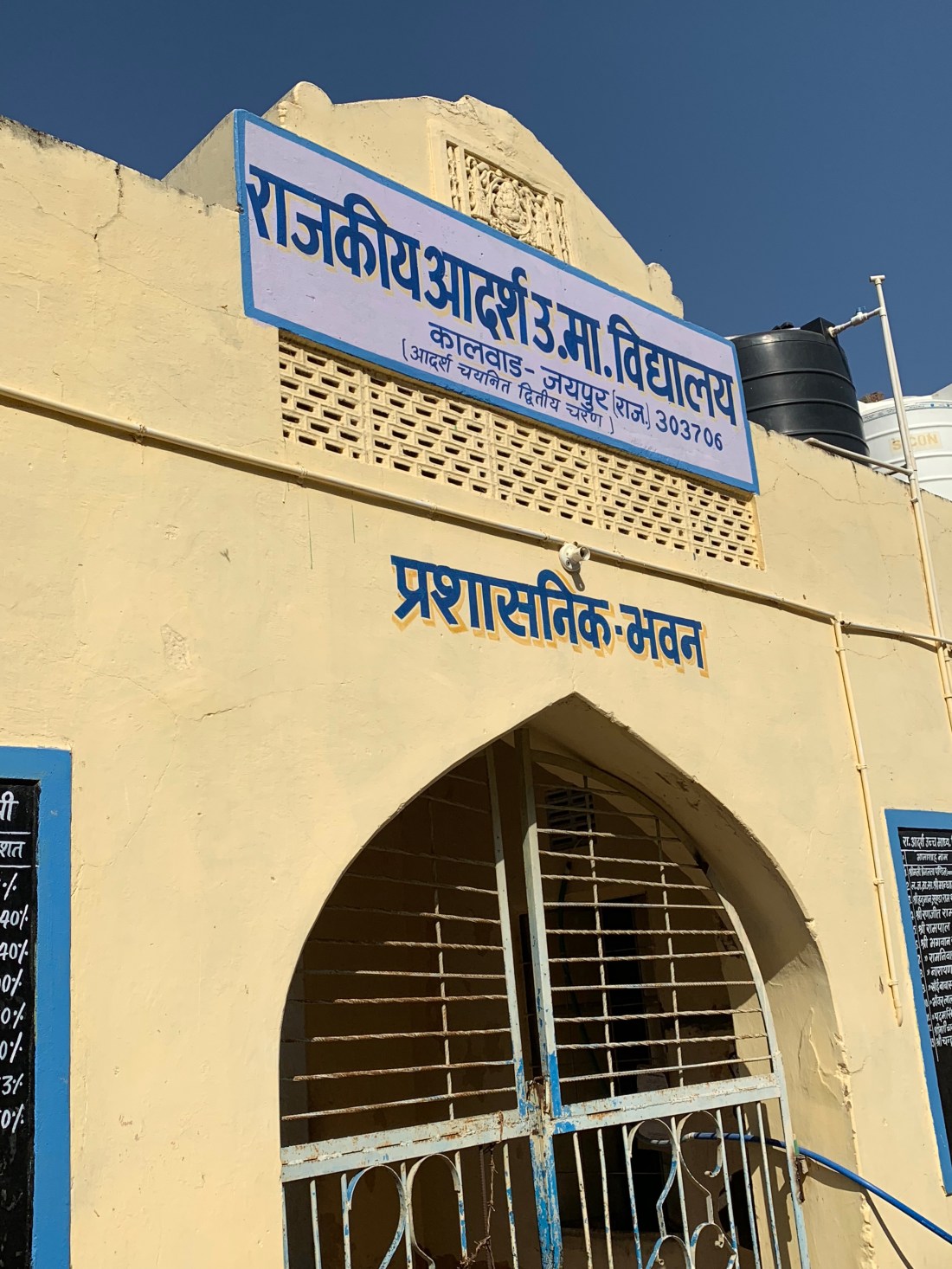
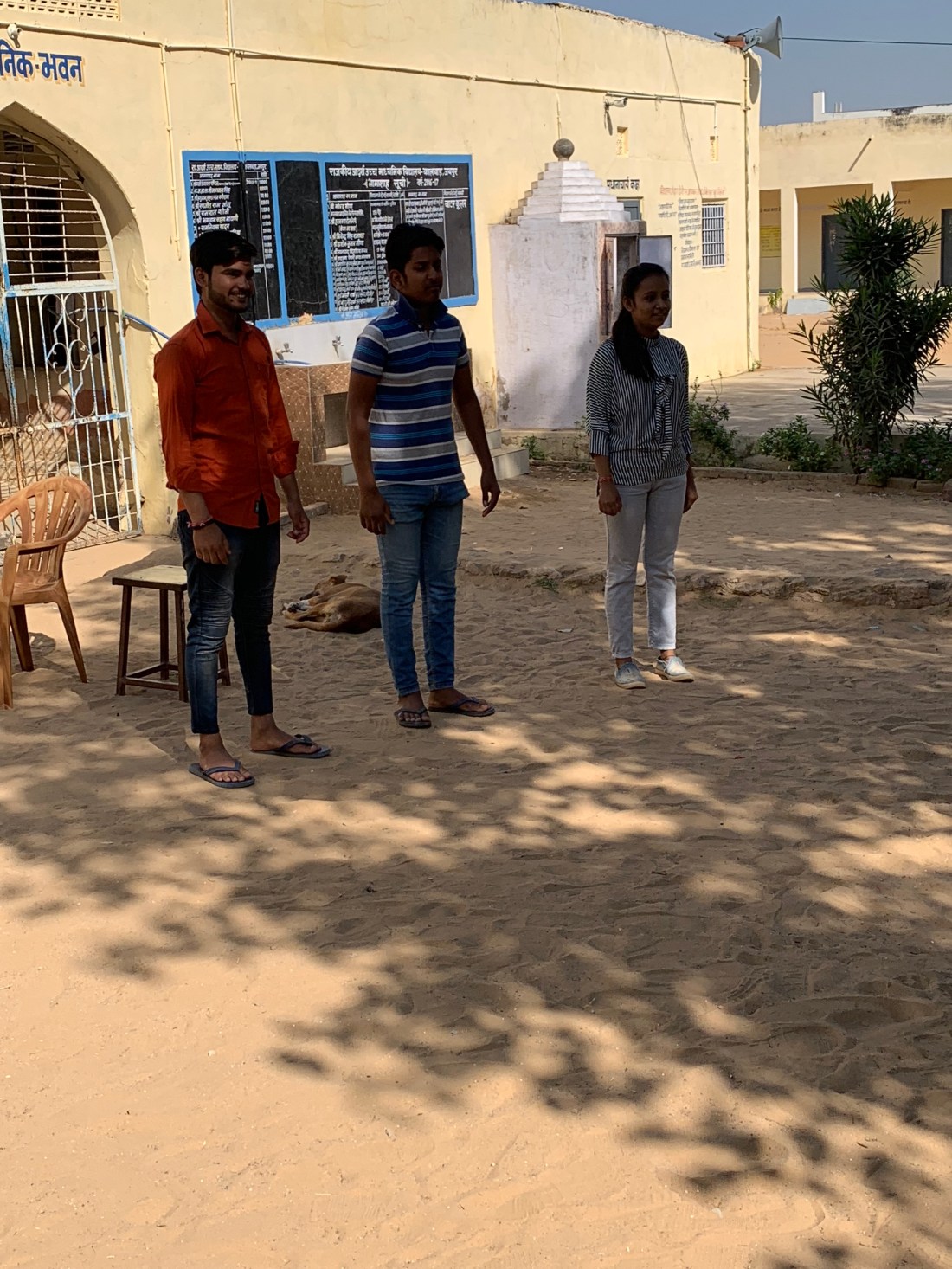
This was our first day with our children !! We doubt there is a more adorable group of students to be found !! Each day begins with the students gathered in their courtyard in exact lines — even the smallest children. The Principal of the school then comes forward to give them the “Lecture of the Day” (often about what appropriate behavior should be). The children sit on the ground and truly pay attention for the entire lecture. After that is complete, the children all join in with a prayer which is said by all of the students, Hindu, Christian, and Muslim. Finally, the reward comes! Fresh milk for everyone ! Hooray ! The children are then on their way to class.
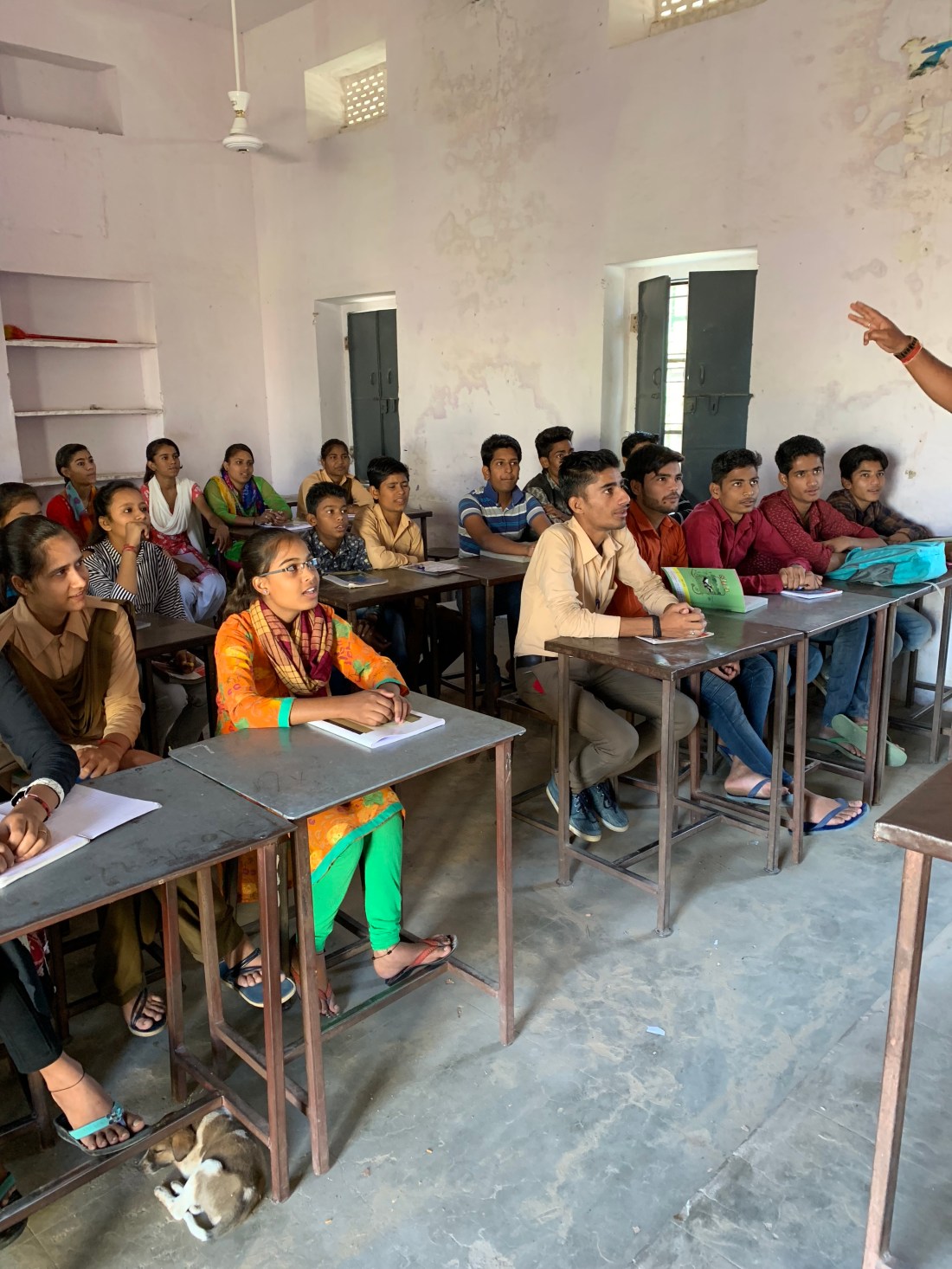
We took no photos on this day of our particular students. The class we teach is one and a half hours and begins BEFORE the children assemble in the courtyard. It is amazing to us the number of children who are willing to attend our class, which is totally voluntary. Because it is conversational English, the students believe (as do the teachers with whom we interacted) that it will aid all of these students from this very rural area in getting a job. They only have one class of English in the school and we spent quite a bit of time with the English teacher. She stated that she is required to focus on grammar and vocabulary and has almost no time for conversational English. Thus she appreciates the Service Learning volunteers and feels as if they contribute to her ability to provide English skills to her students. By the way, this is the first year at this school for this English teacher (who we think is delightful). It was made clear to us that the previous English teacher for this school could not speak English at all…….
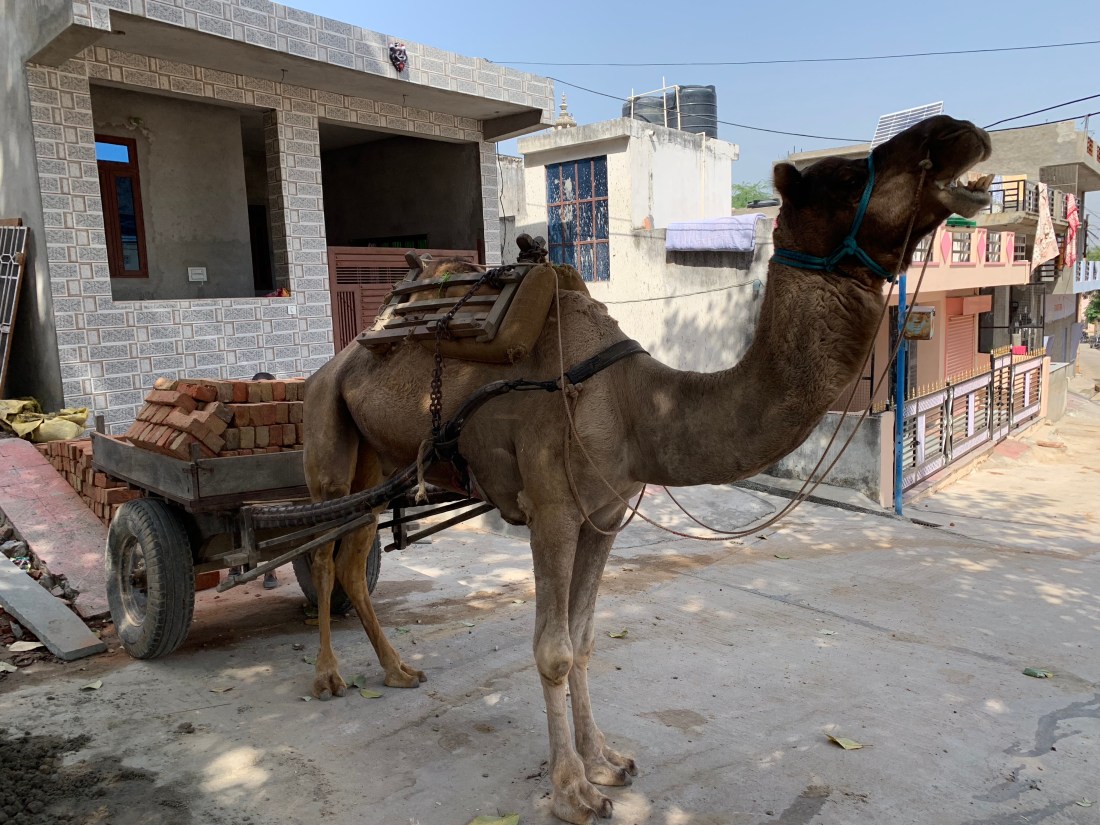
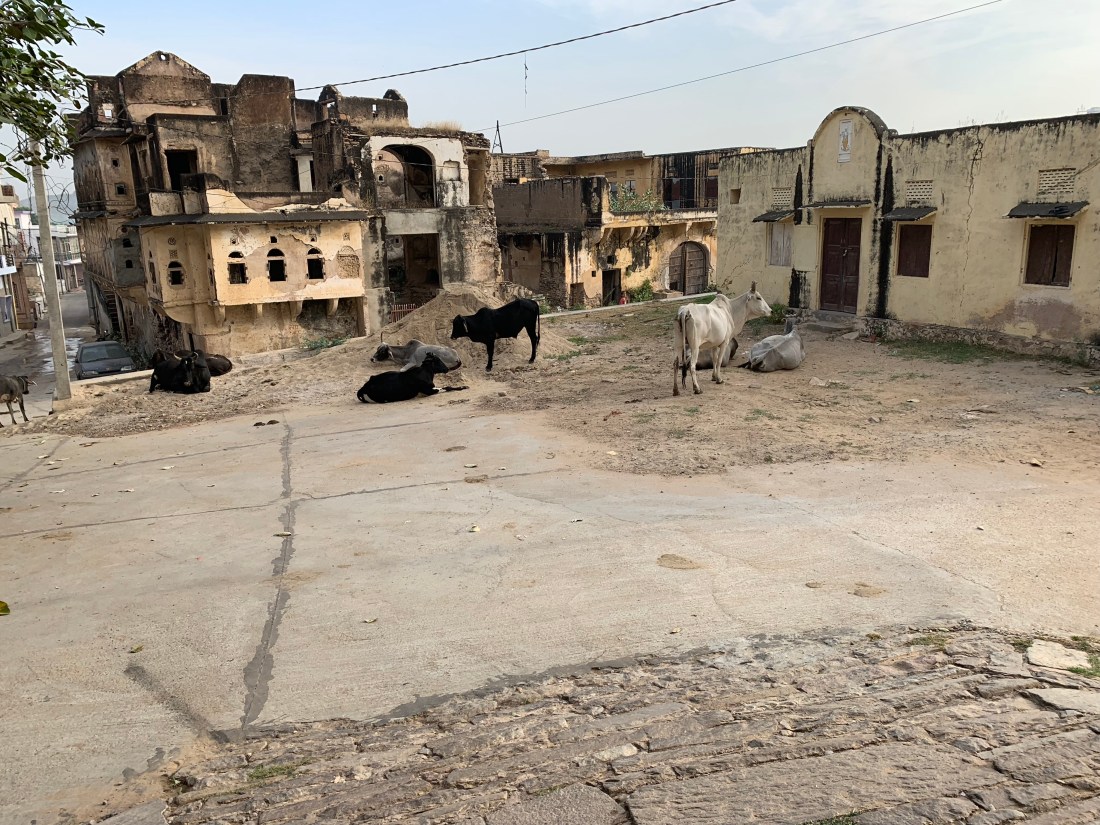
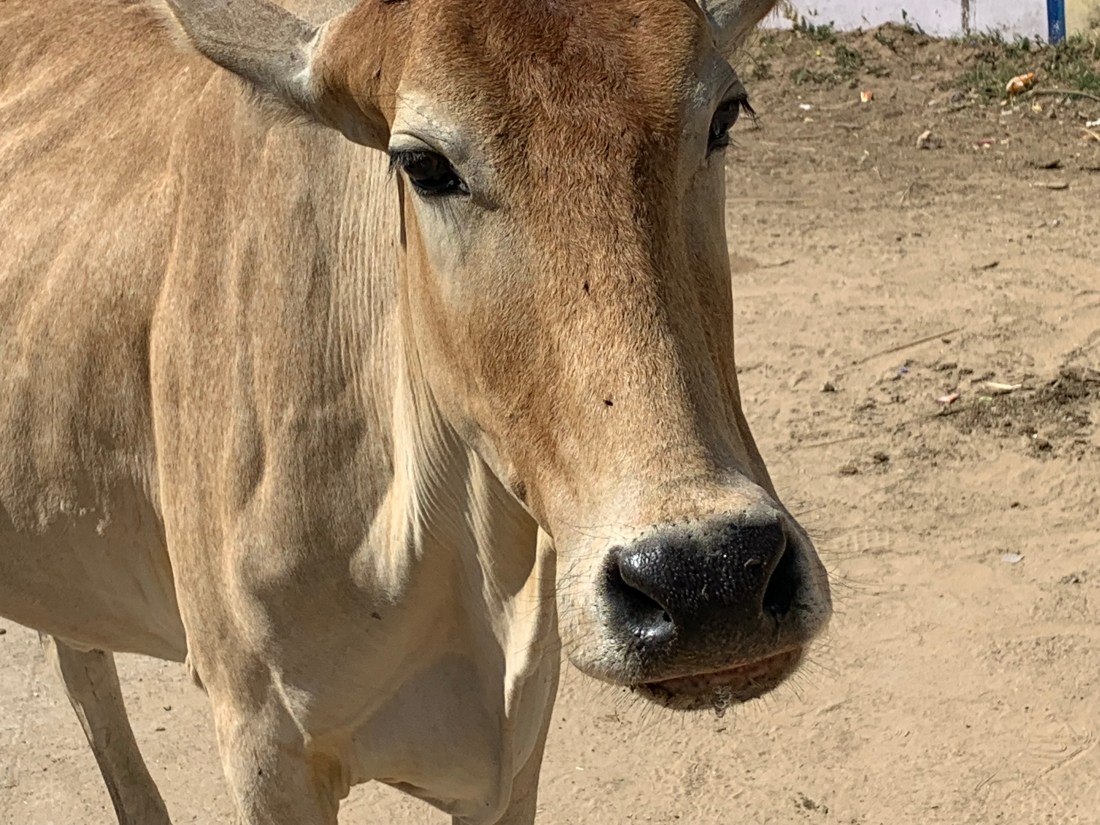
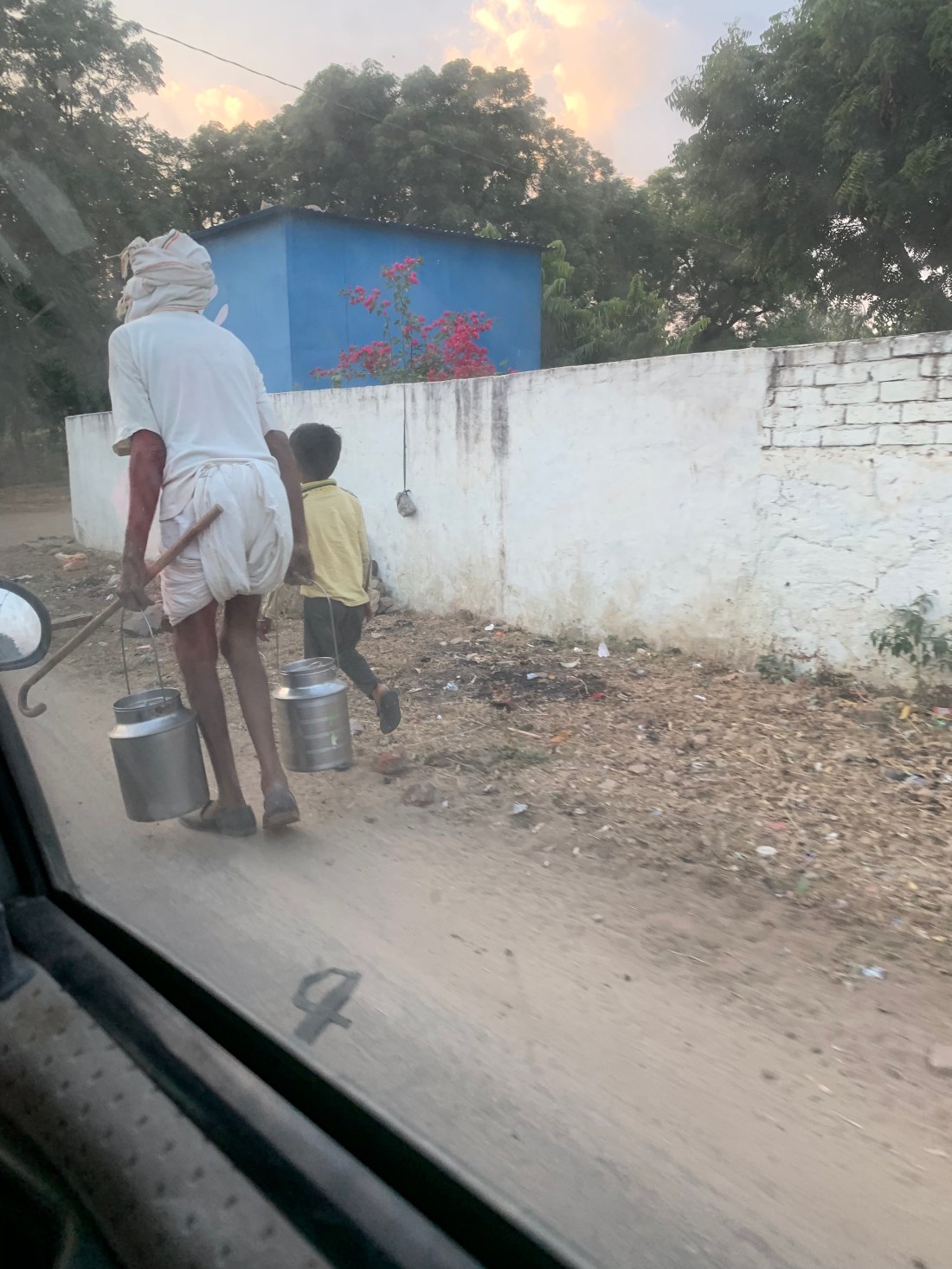
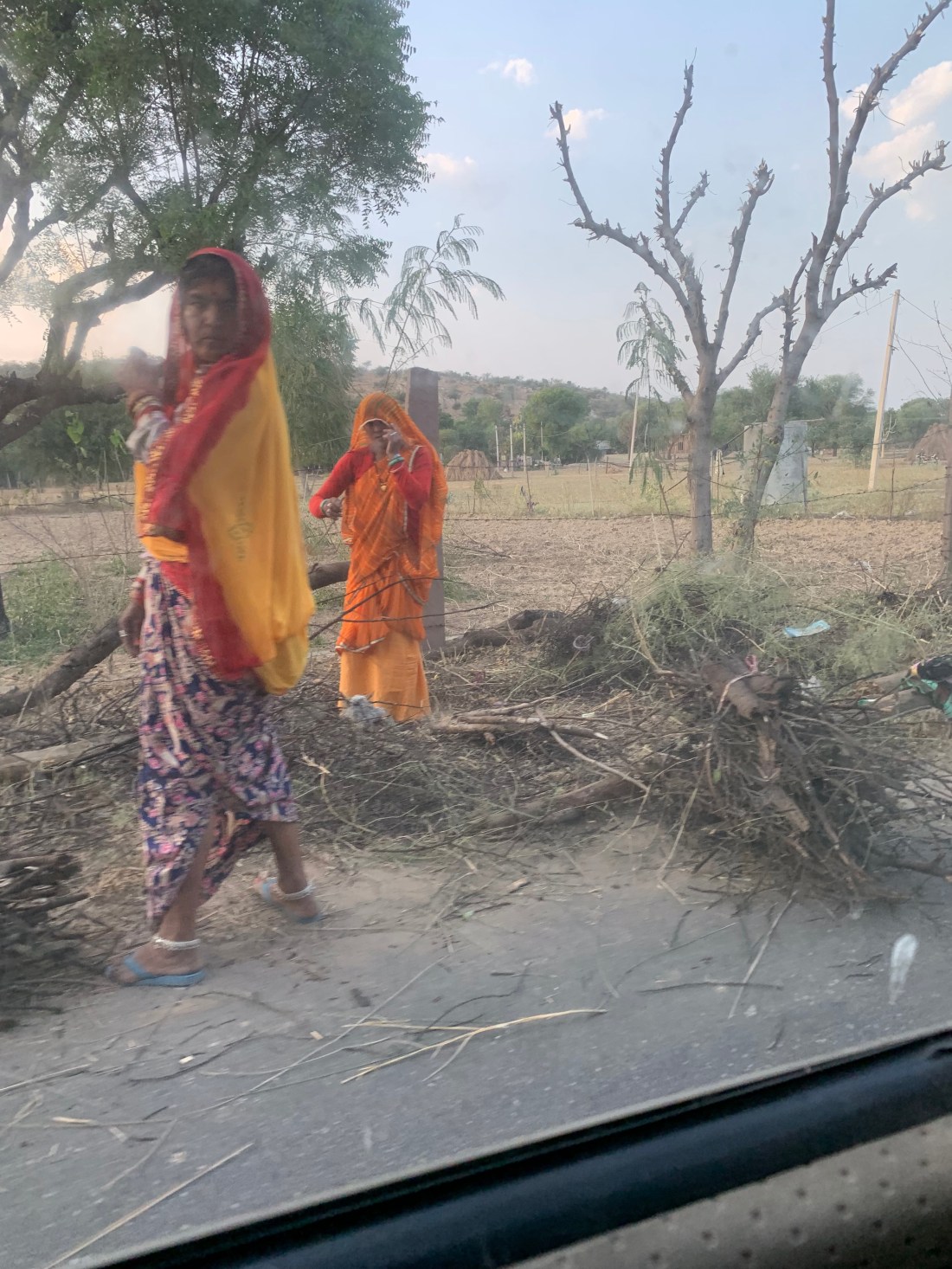
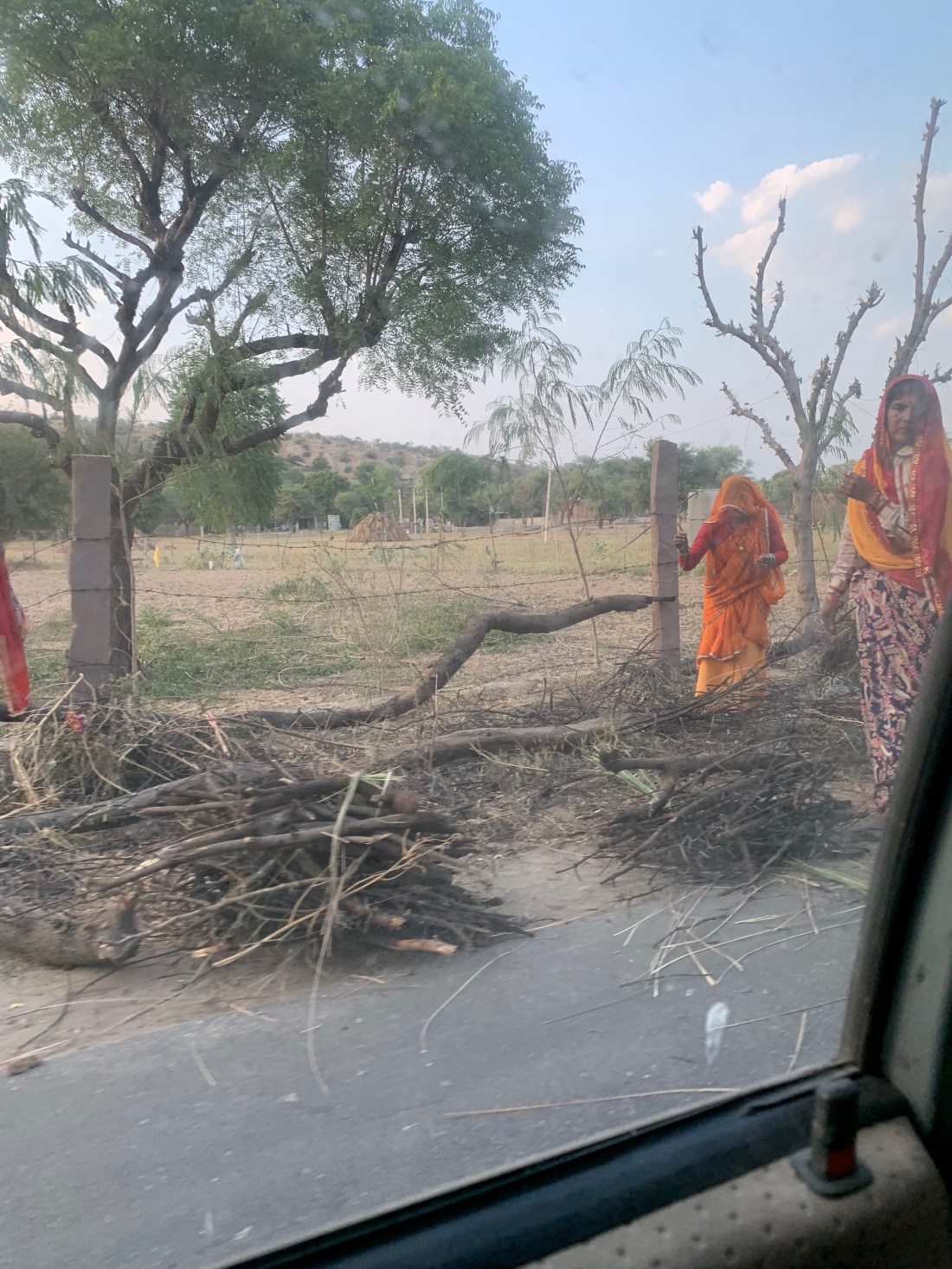
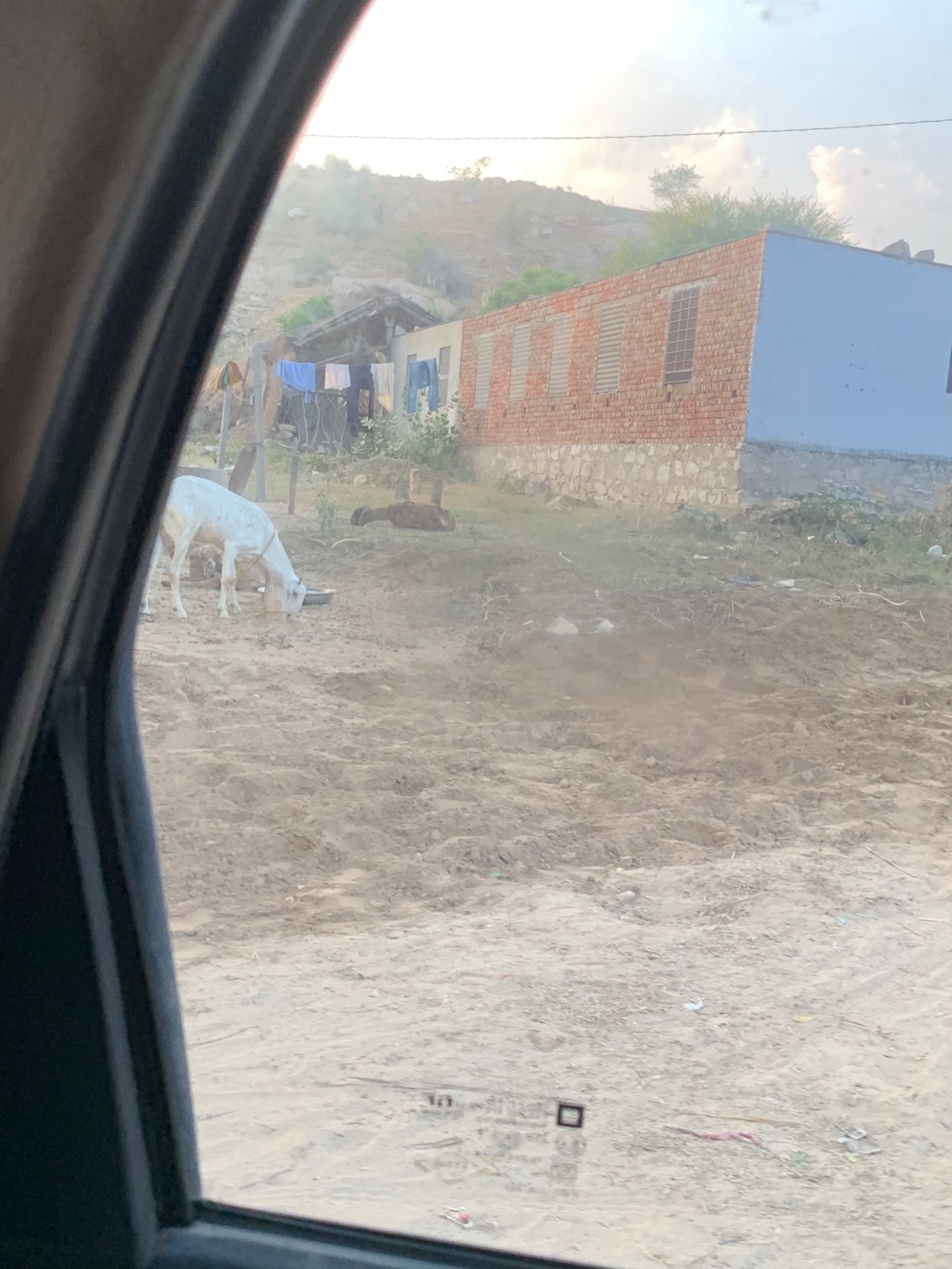
We thought you might enjoy seeing our view as we walk to school in the morning to teach. As we walk out of our gate, we are always greeted by several kind-faced cows and at least one working camel. This particular one is being used to bring handmade bricks up a hill to an individual who is hand-building his own home in the village of Kalwar right next to where we are staying. He almost always greets us each morning!
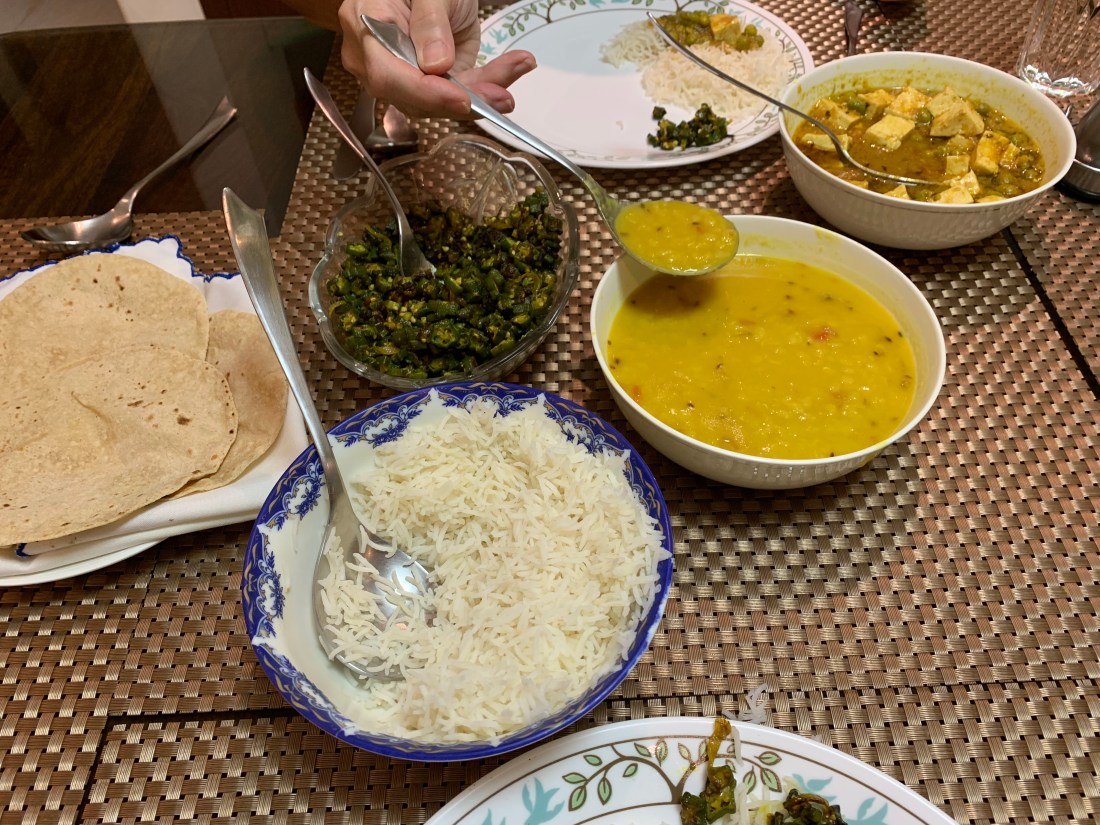
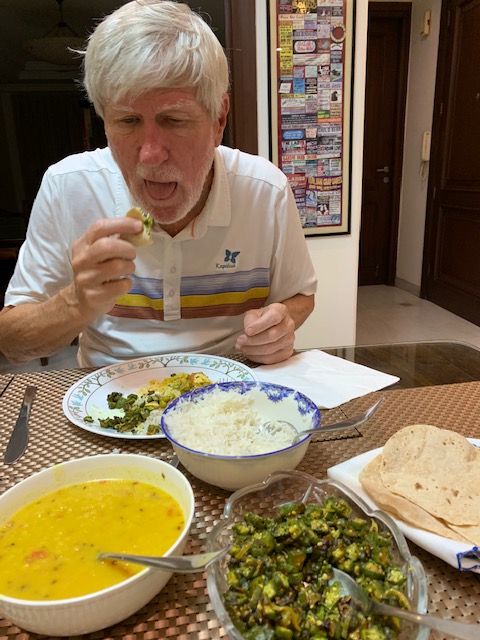
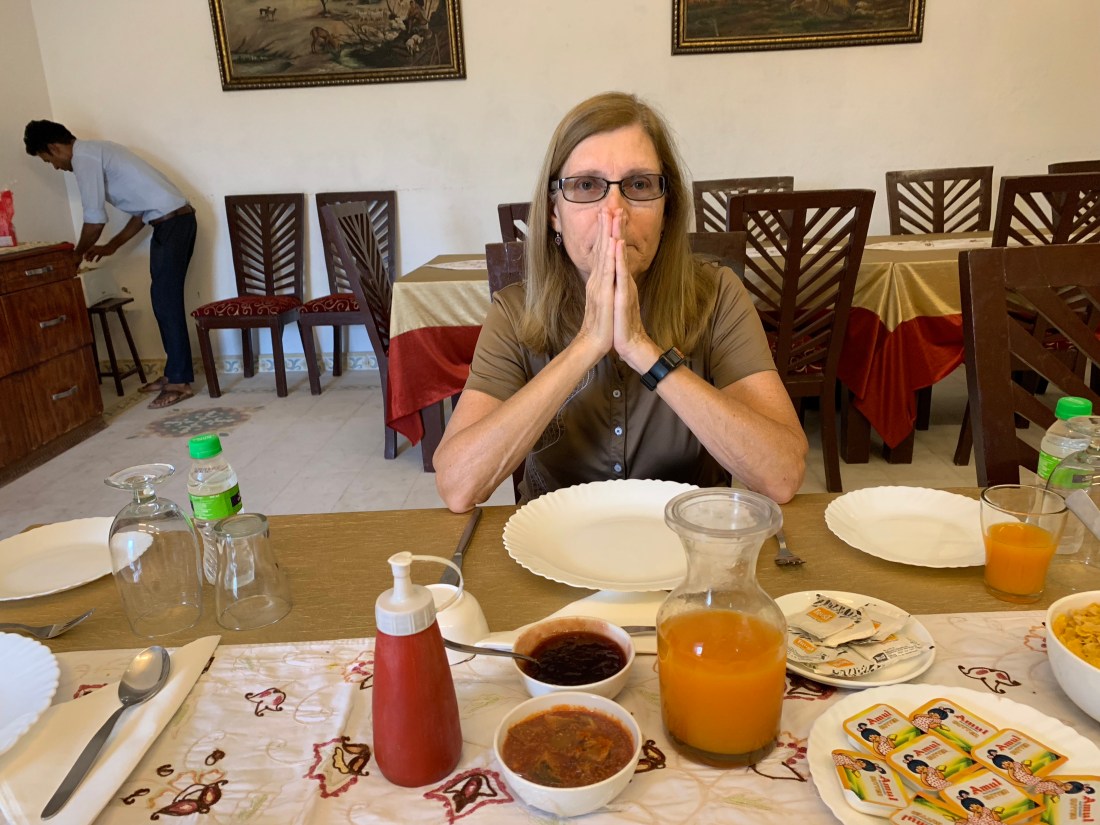
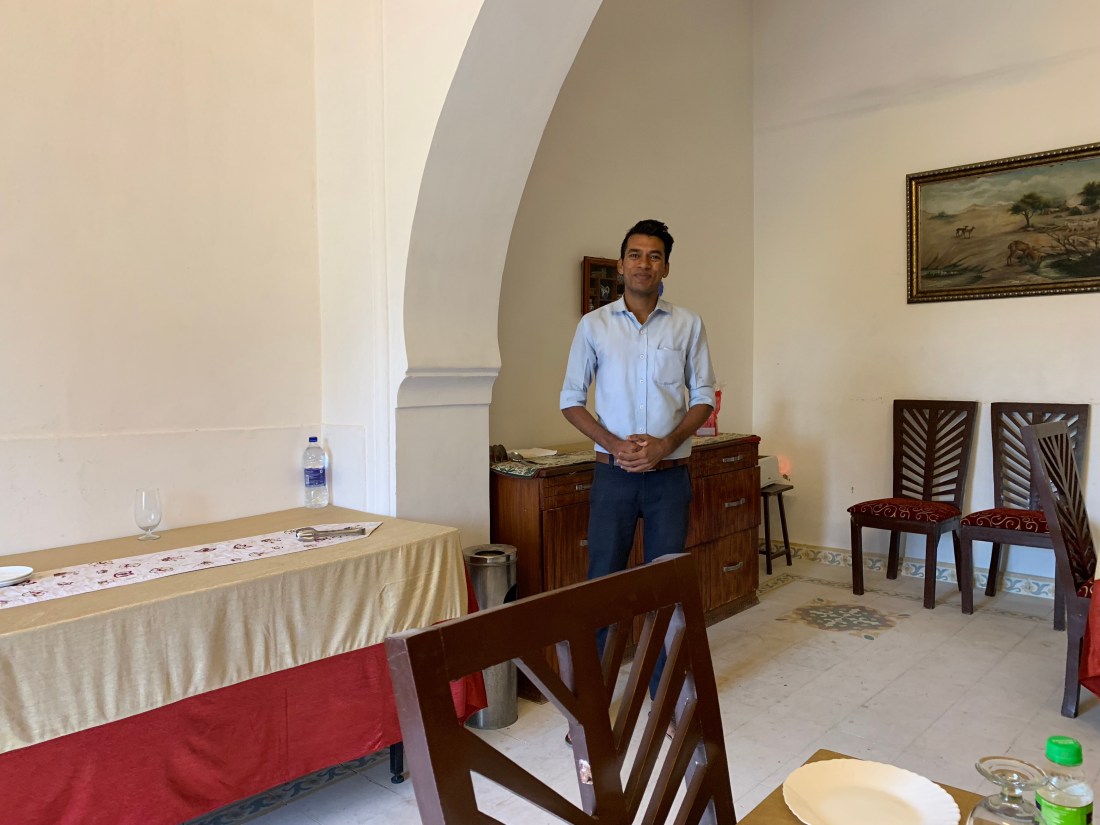
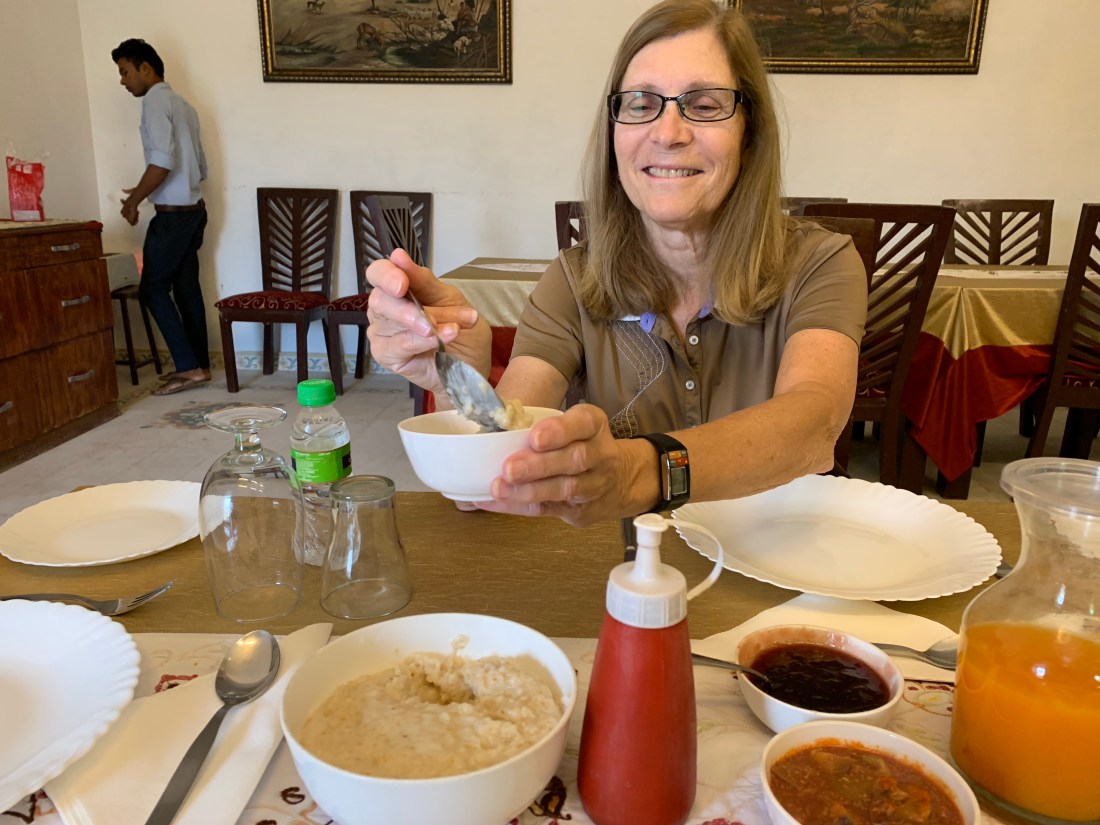
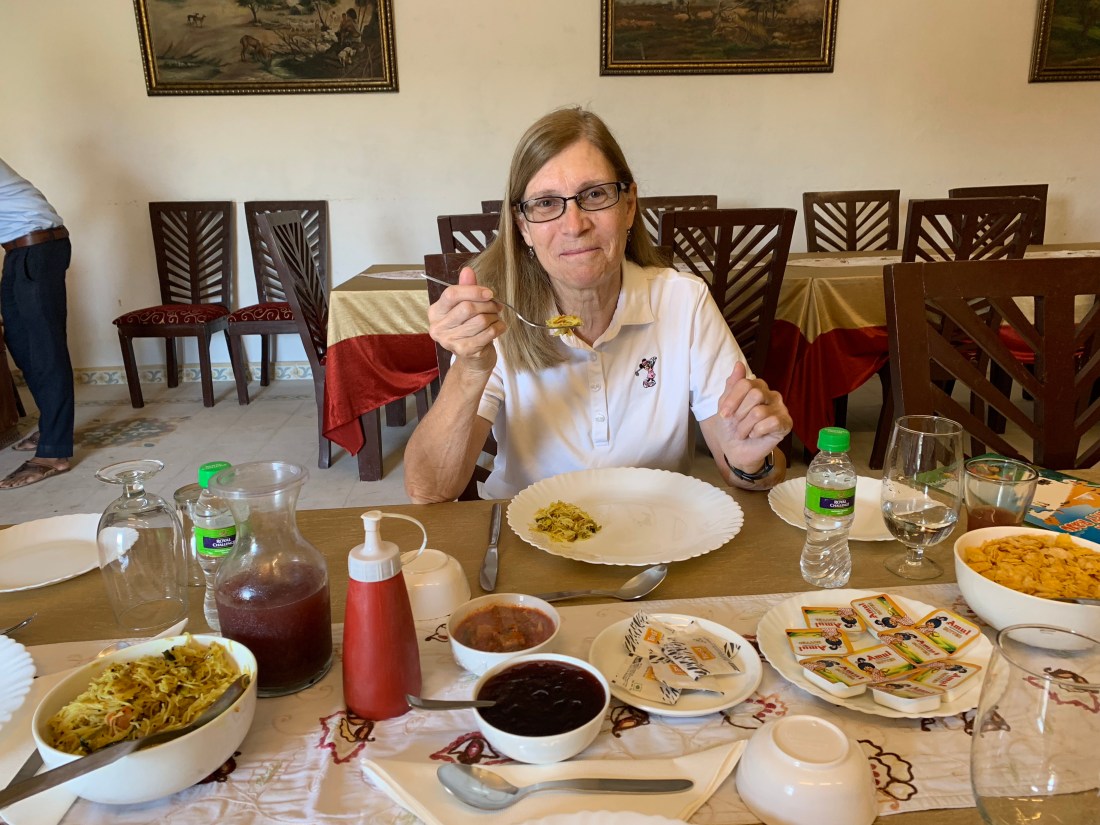
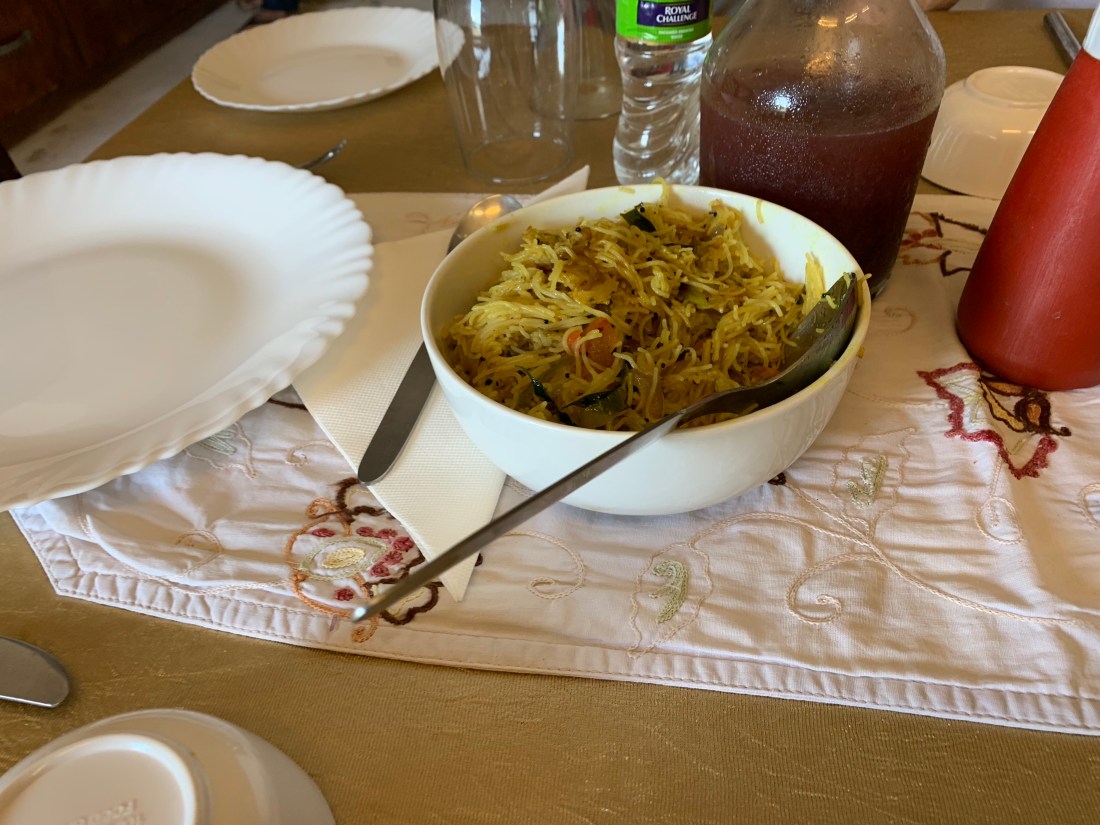
An early morning breakfast at Kalwar Castle. We are beginning to get used to Indian food at every meal, but breakfast is still the most difficult as spicy foods with chutneys and spicy hot ketchup are a little dicey at seven a.m. The staff is always bringing us more foods to try and attempting to explain in their limited English and our very, very limited Hindi (like maybe five words!) what everything is that we are eating.
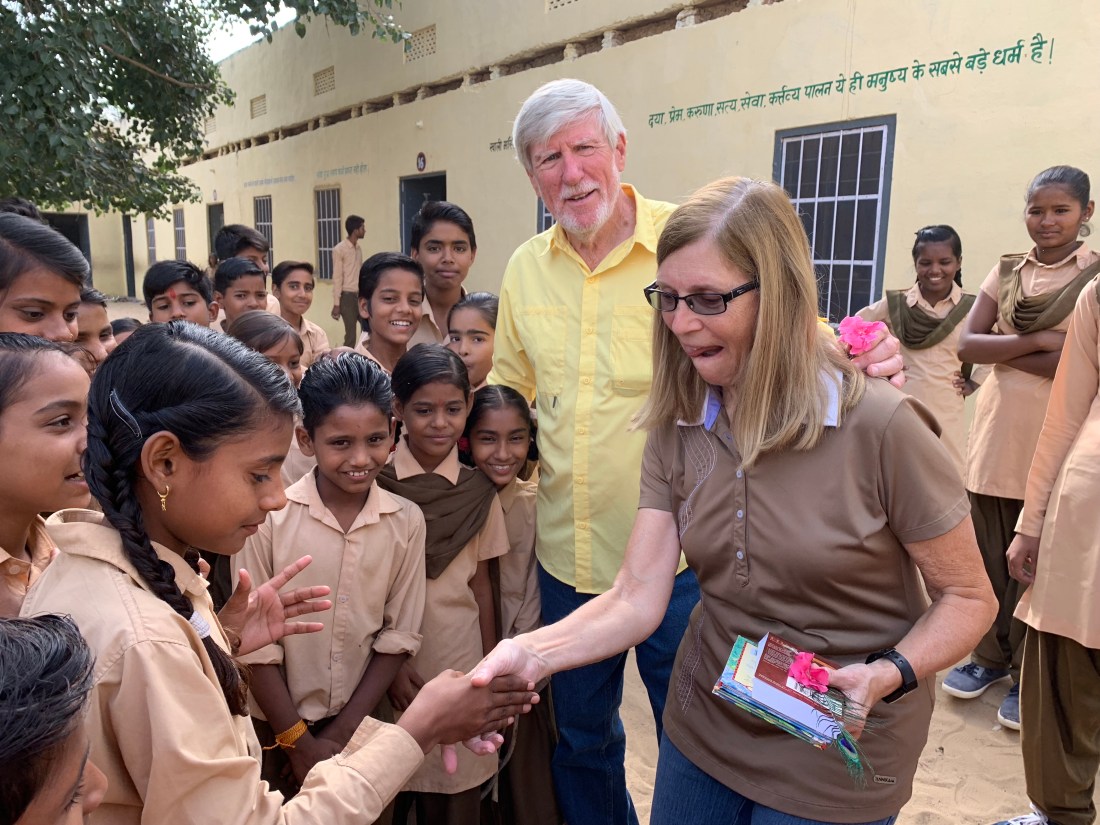
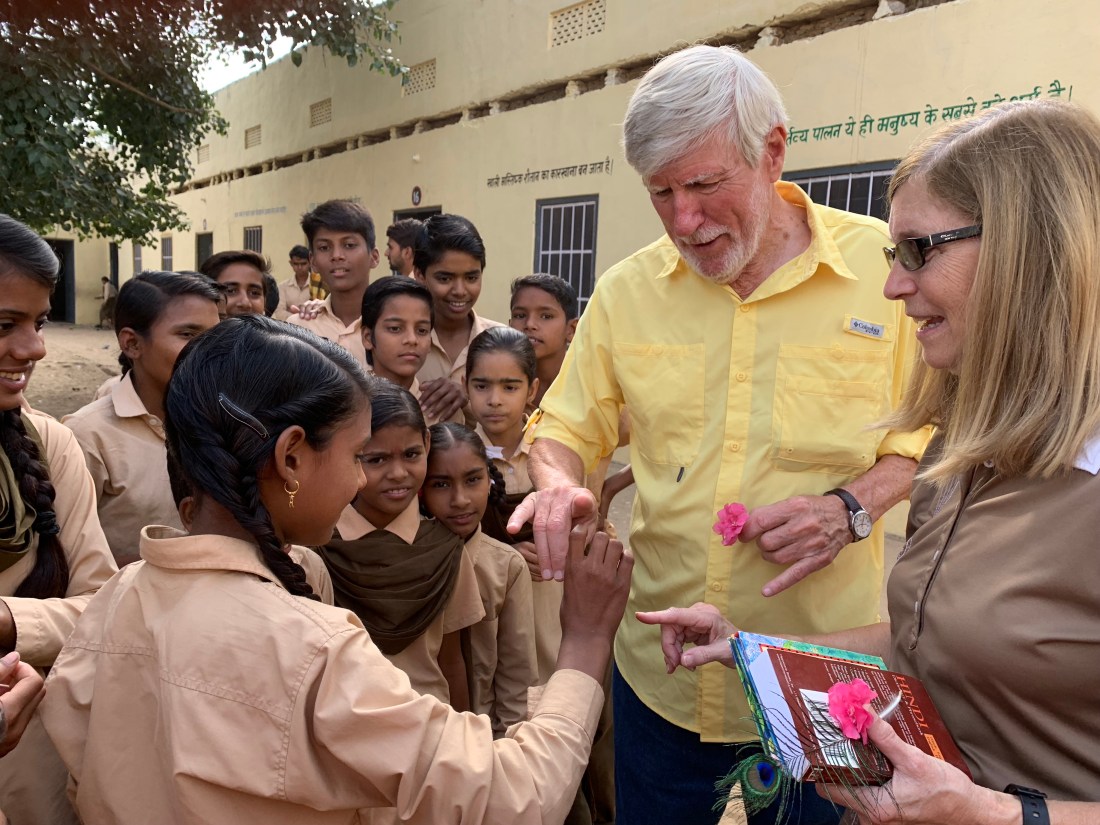
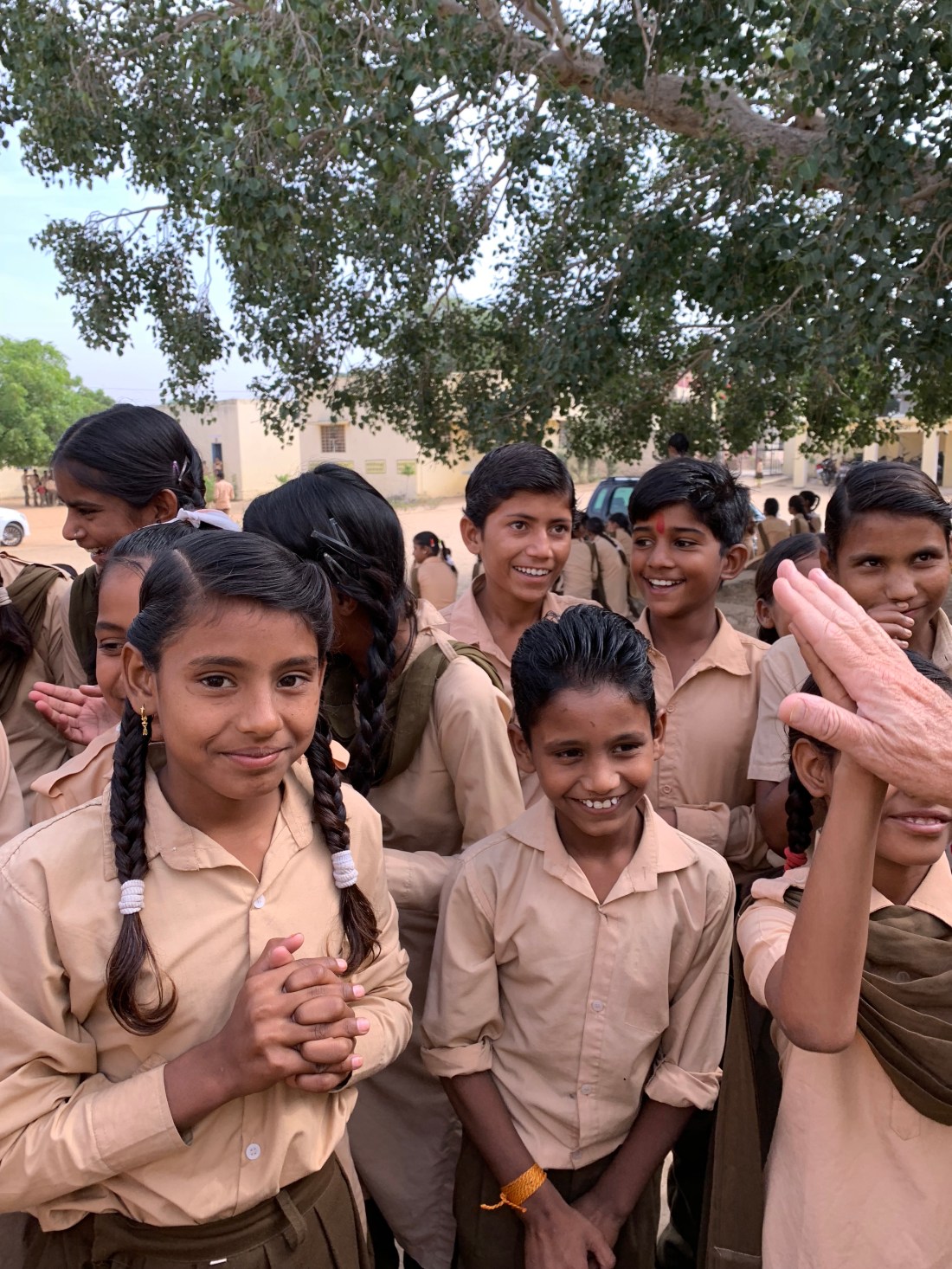
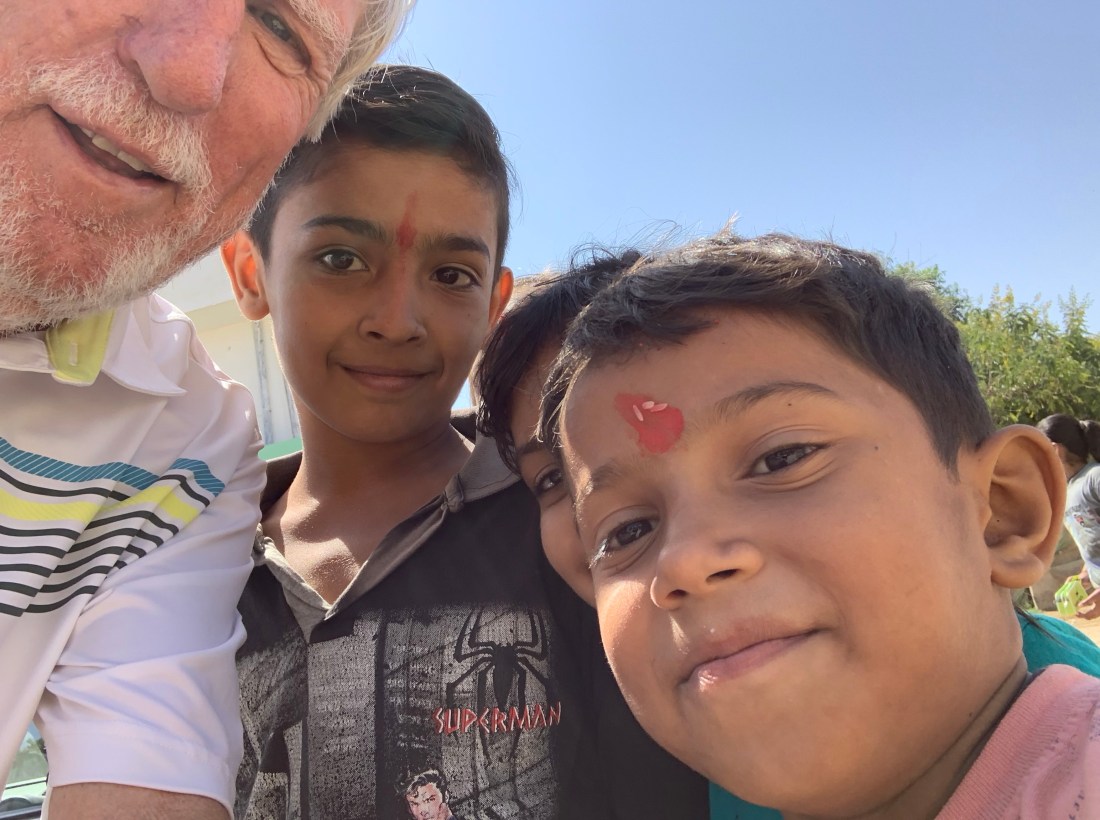
Then off to school. The children surround us with “Good Morning, Mam.” and “Good Morning, Sir.” This morning after class they decided to show us some of their favorite handshakes and we all ended up laughing and having a wonderful time. We really like these wonderful children and they appear so highly motivated to try to learn English that we are excited to be with them.
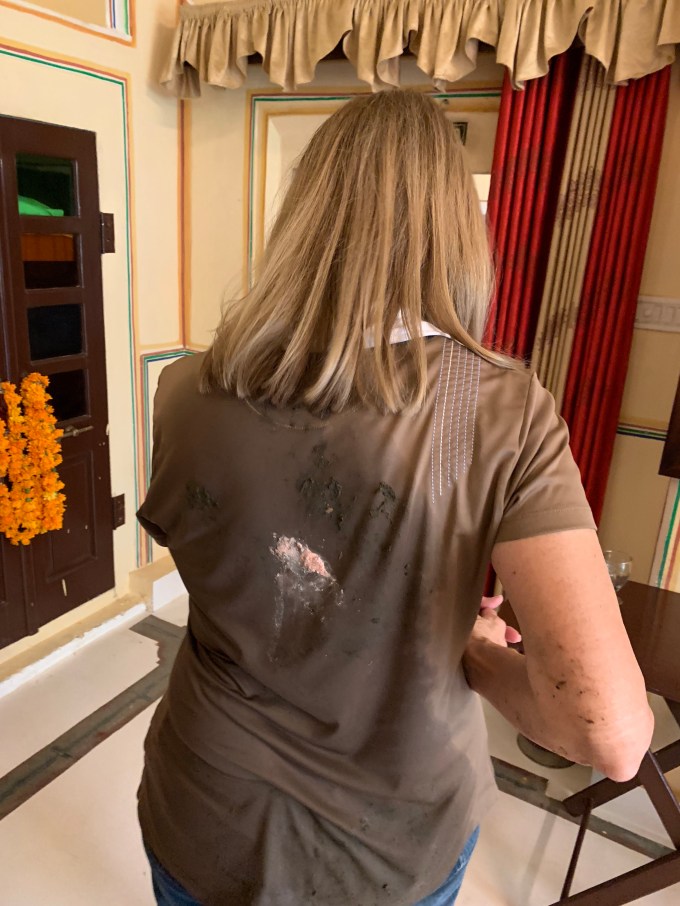
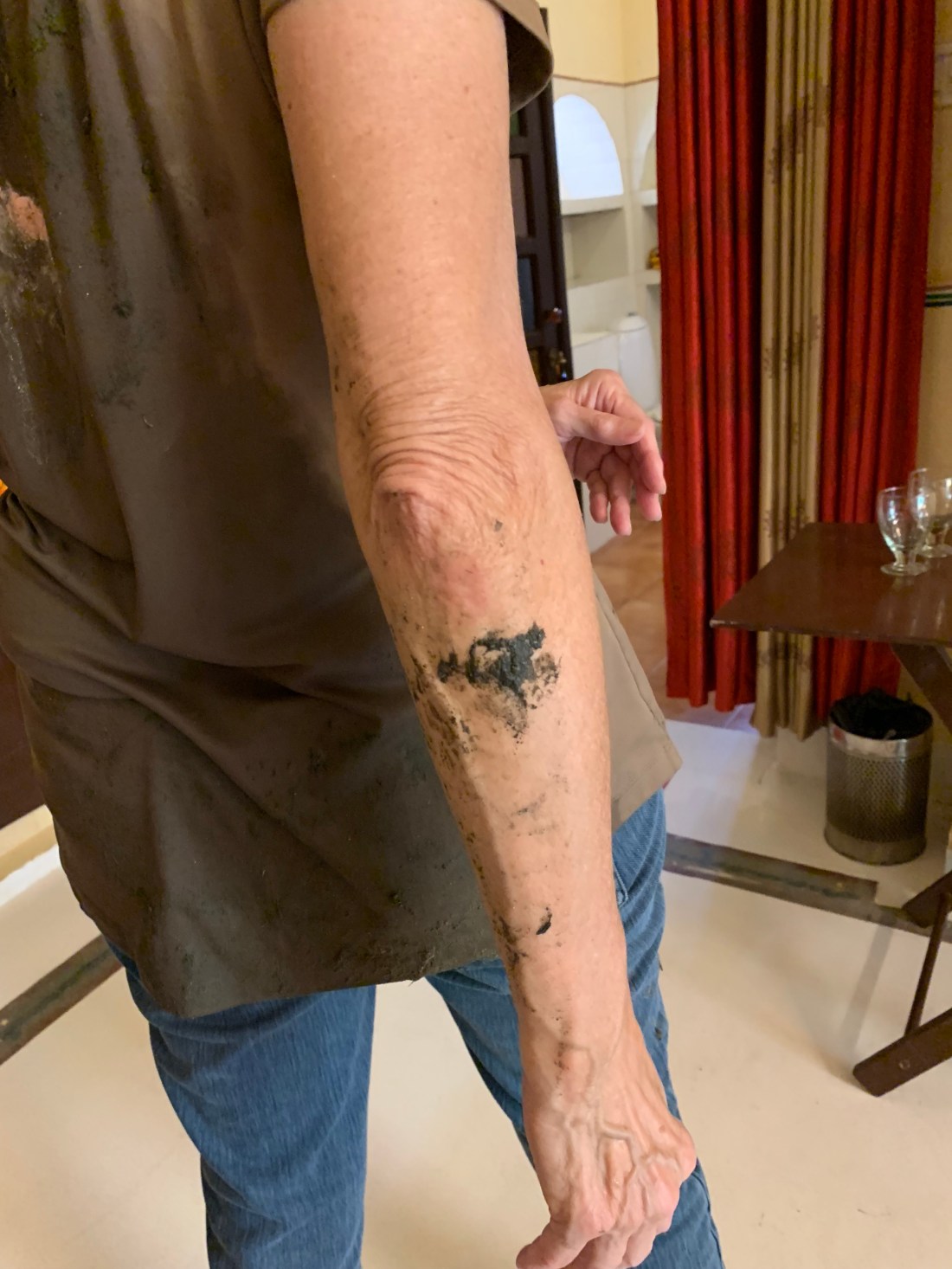
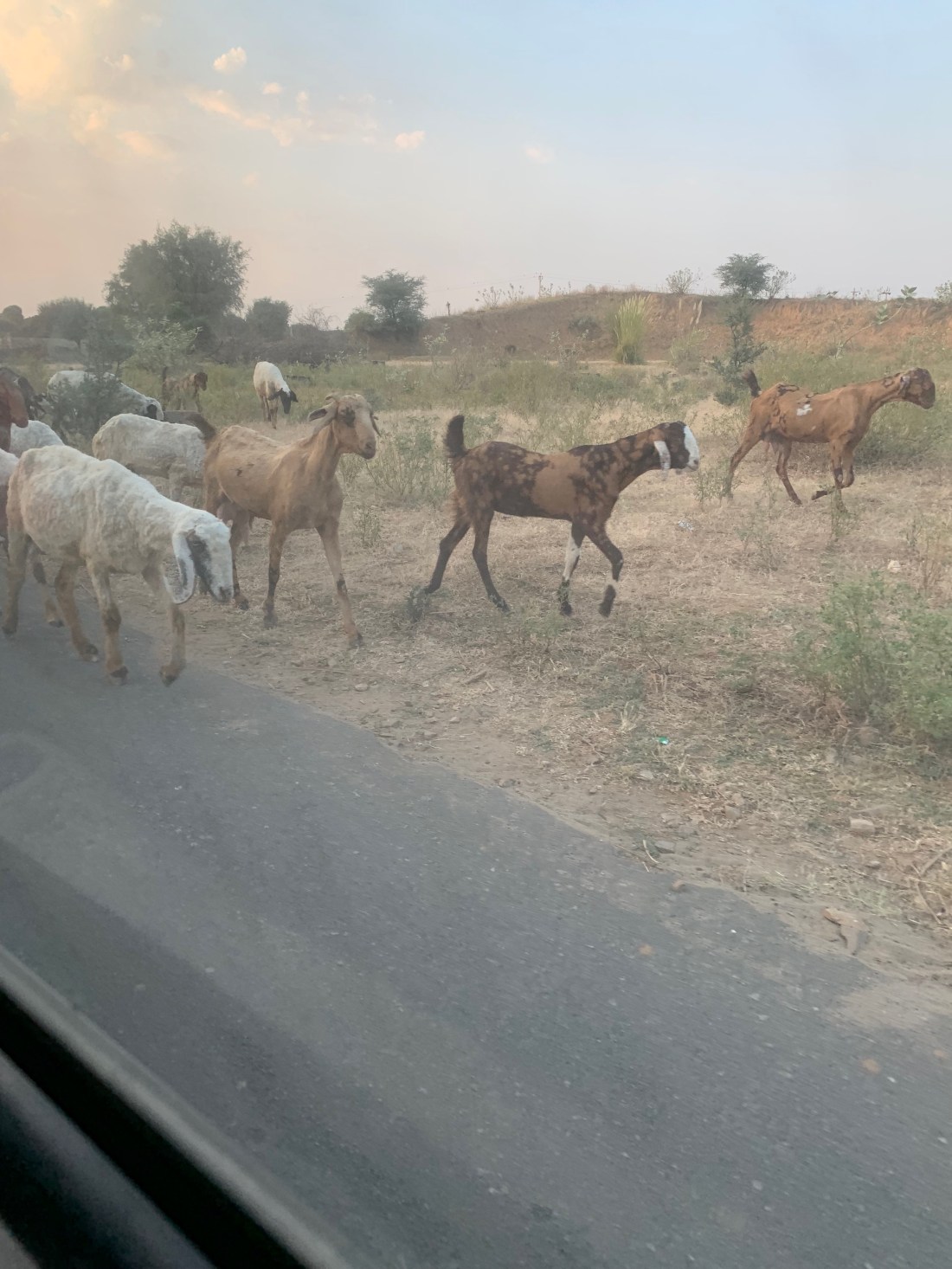
Do not ask why the following photos were included, except that, on the walk home from school, Mary had an “event” occur. Please see the cows below. As we walked, Mary was watching them. She was not watching where she was walking. In just a split-second, her foot hit a “gift” left by the cows on the dirt road, and, suddenly, she was flat on her back in cow dung !!! What a terrific India-Only experience !! Her back, her arms, and her jeans were covered (see below)! Needless to say, she headed straight for the shower ! Unfortunately, because the “Castle” is in such a very rural area, the electricity had been off and therefore no hot water for a rather extended time period. Thus, Mary sat covered in cow dung until, luckily, the electricity returned for a long enough period to get clean.
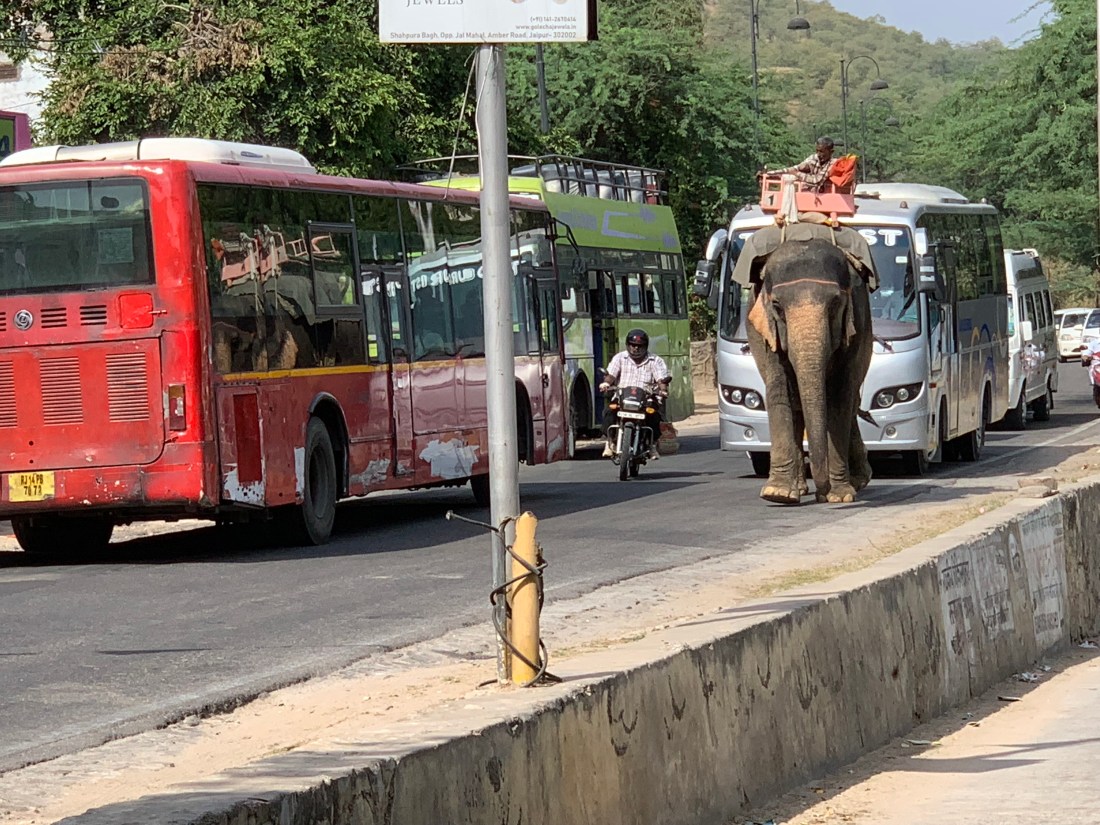
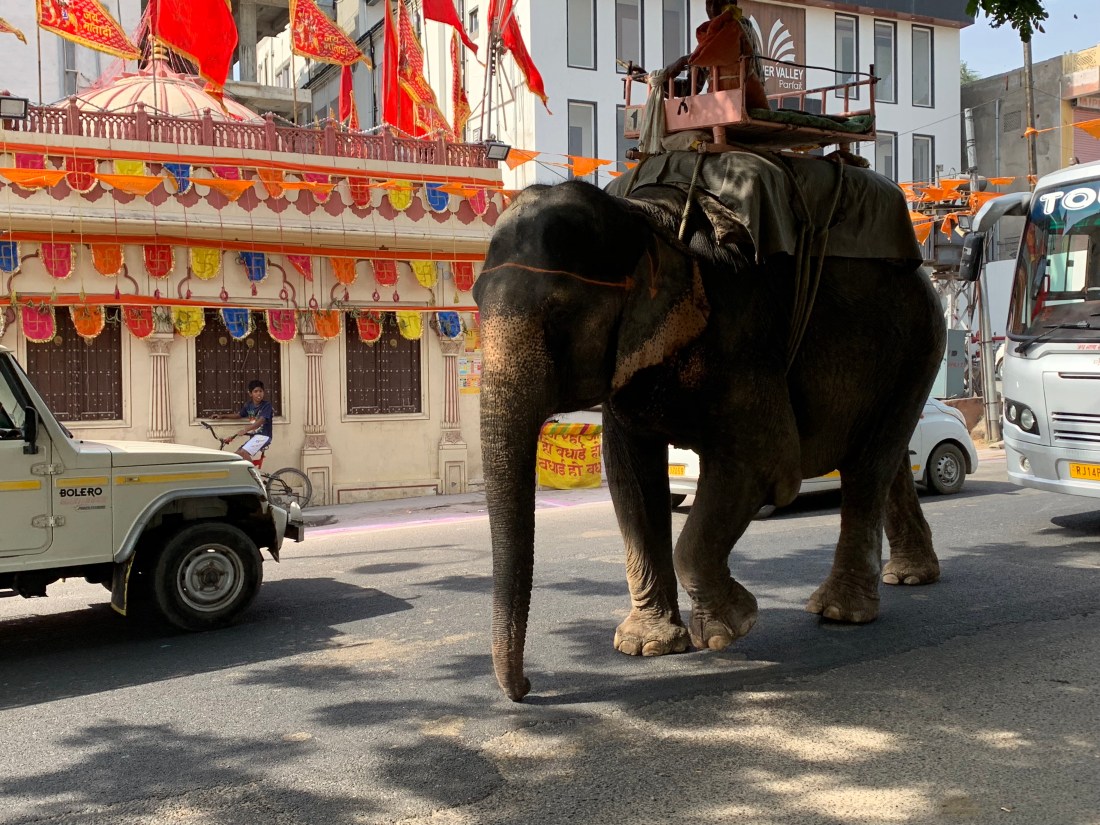
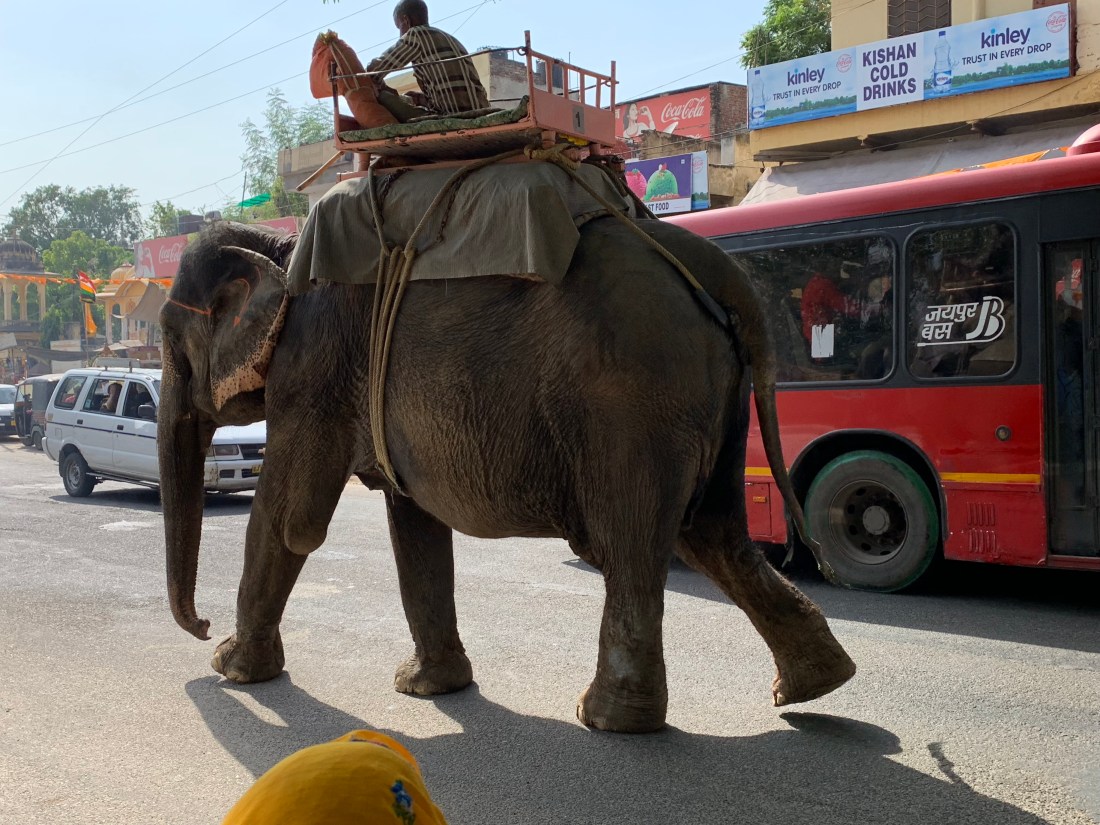
After our morning of teaching as well as “The Great Cow Poo Incident”, we joined a local guide who drove us to Jaipur to see one of the most remarkable forts in the area. On the way, we saw camels and elephants being used both as work animals and as transportation for tourists and locals alike. One quick anecdote: As we watched one of the elephants stroll through the streets, we noticed that his trainer, sitting high on the elephant’s back, was involved in a very animated conversation on his cell phone. Very strange to see the juxtaposition of ancient elephant transportation and modern cell phone !
Along the way to Amber Fort, we stopped to look at an fascinating example of the step wells which had been built in India to aid with water use when the Monsoons were not adequate. Often the community found an area with deep-rooted trees so that they knew there was water there, and then dug deep “wells” down to that water, building steps so individuals could avail themselves of water even if there were water shortages at the time.
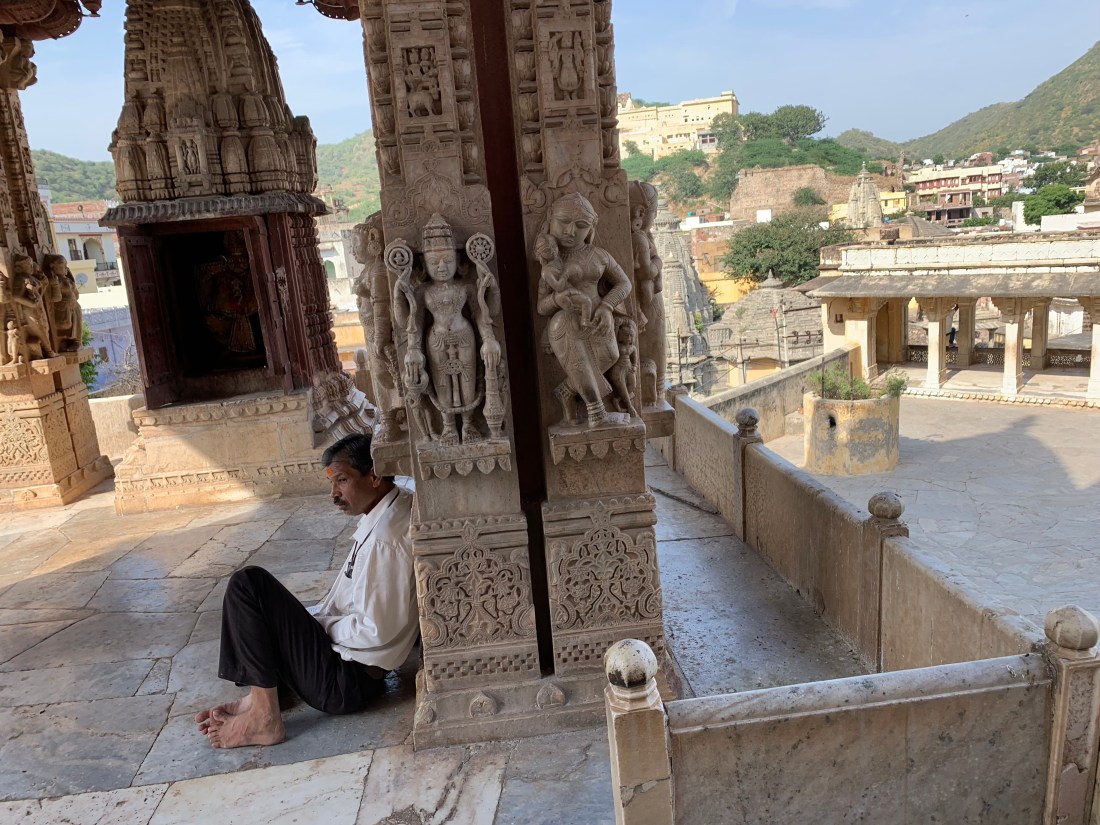
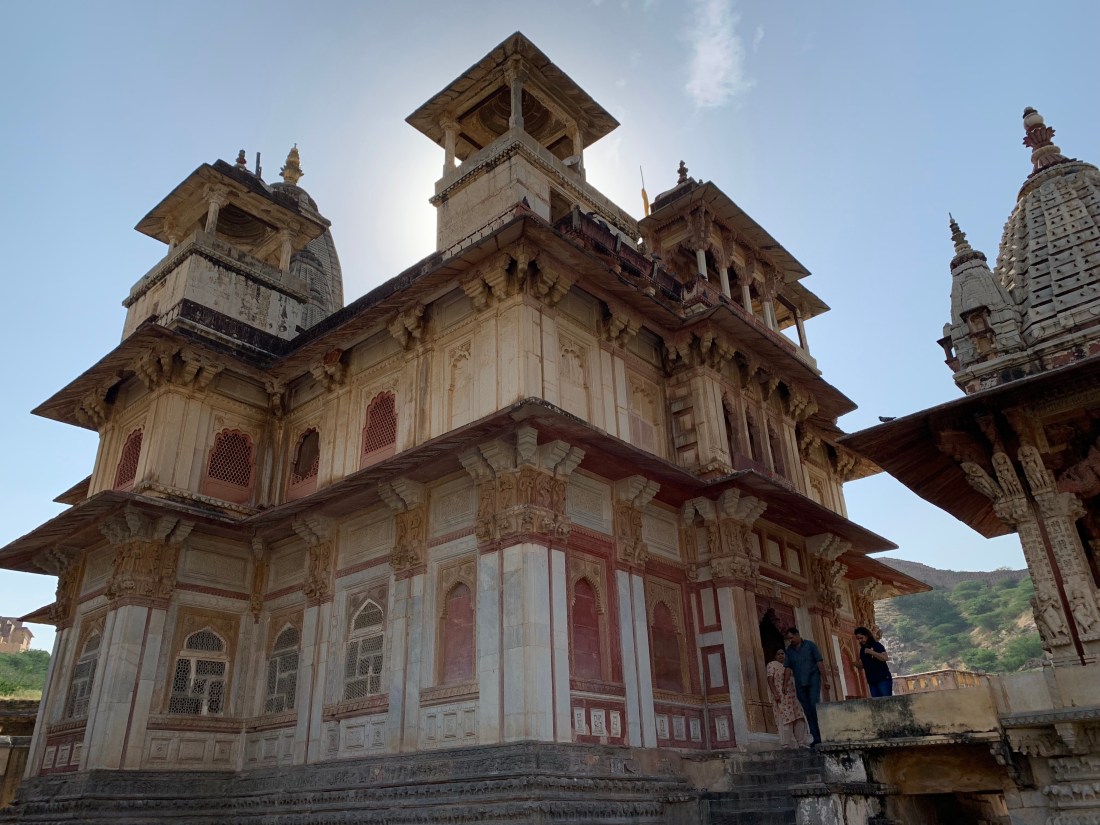
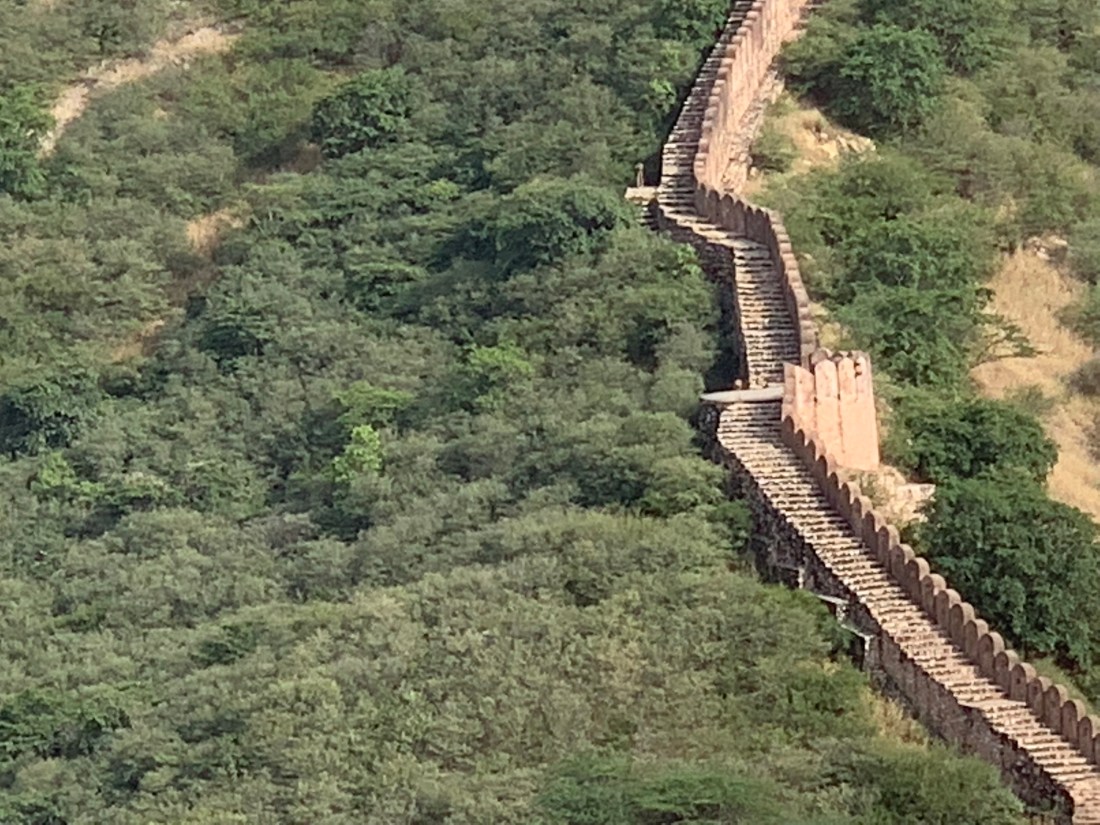
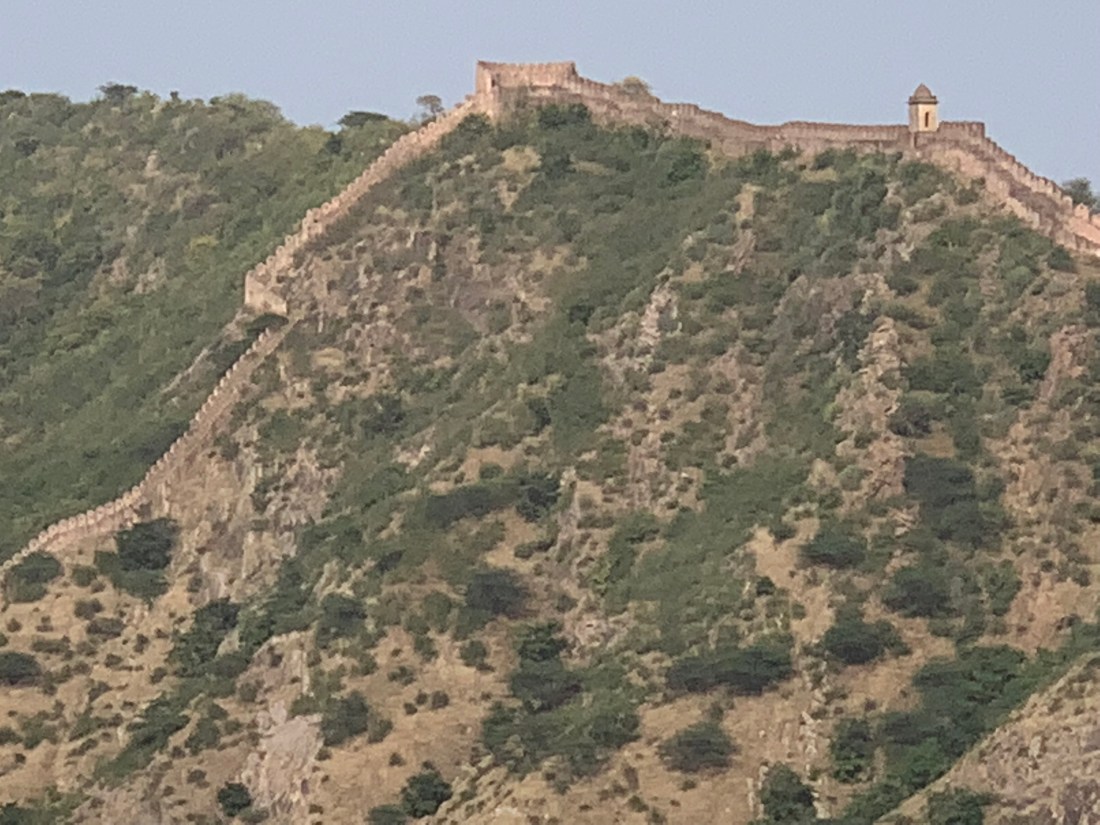
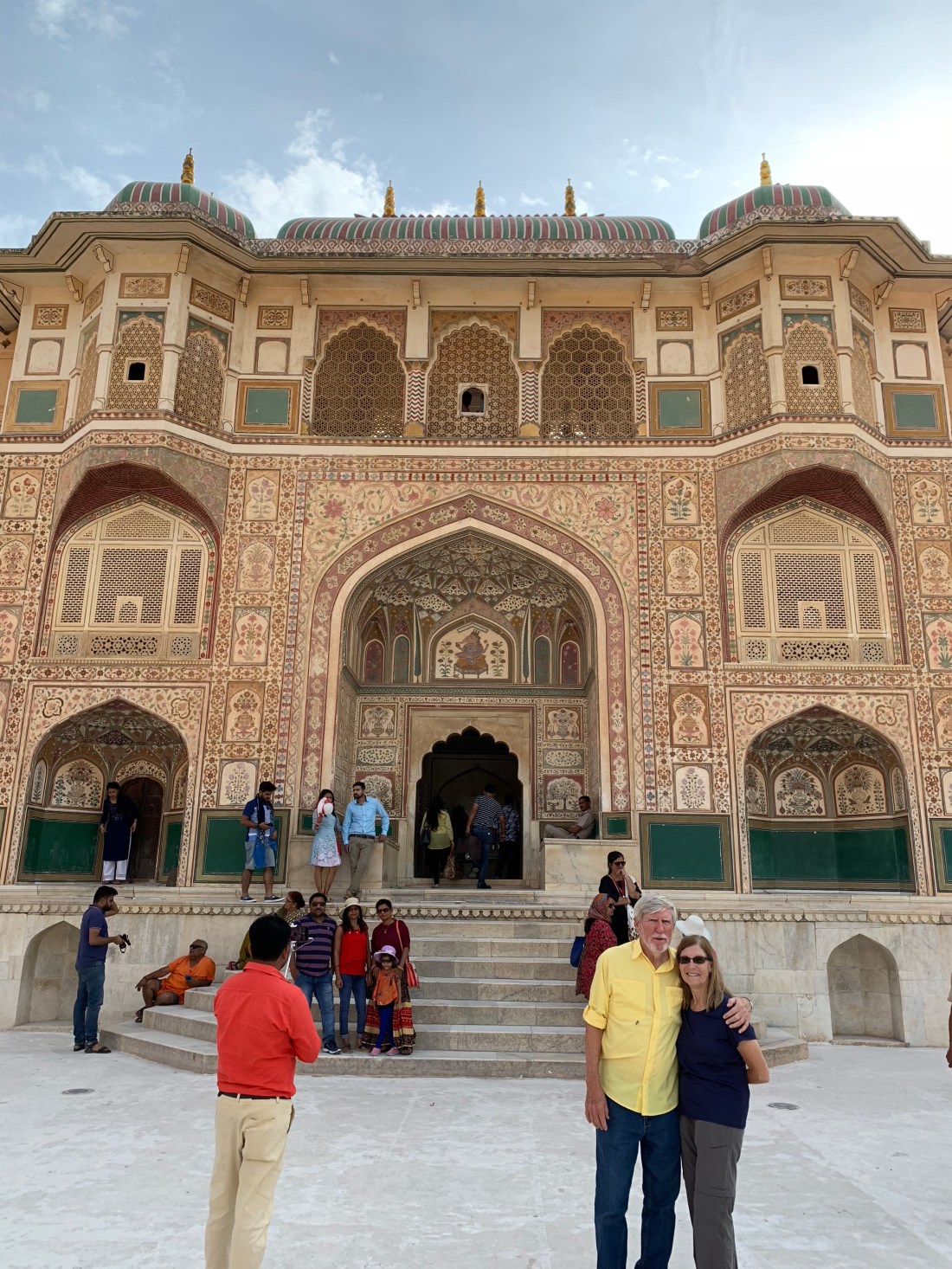
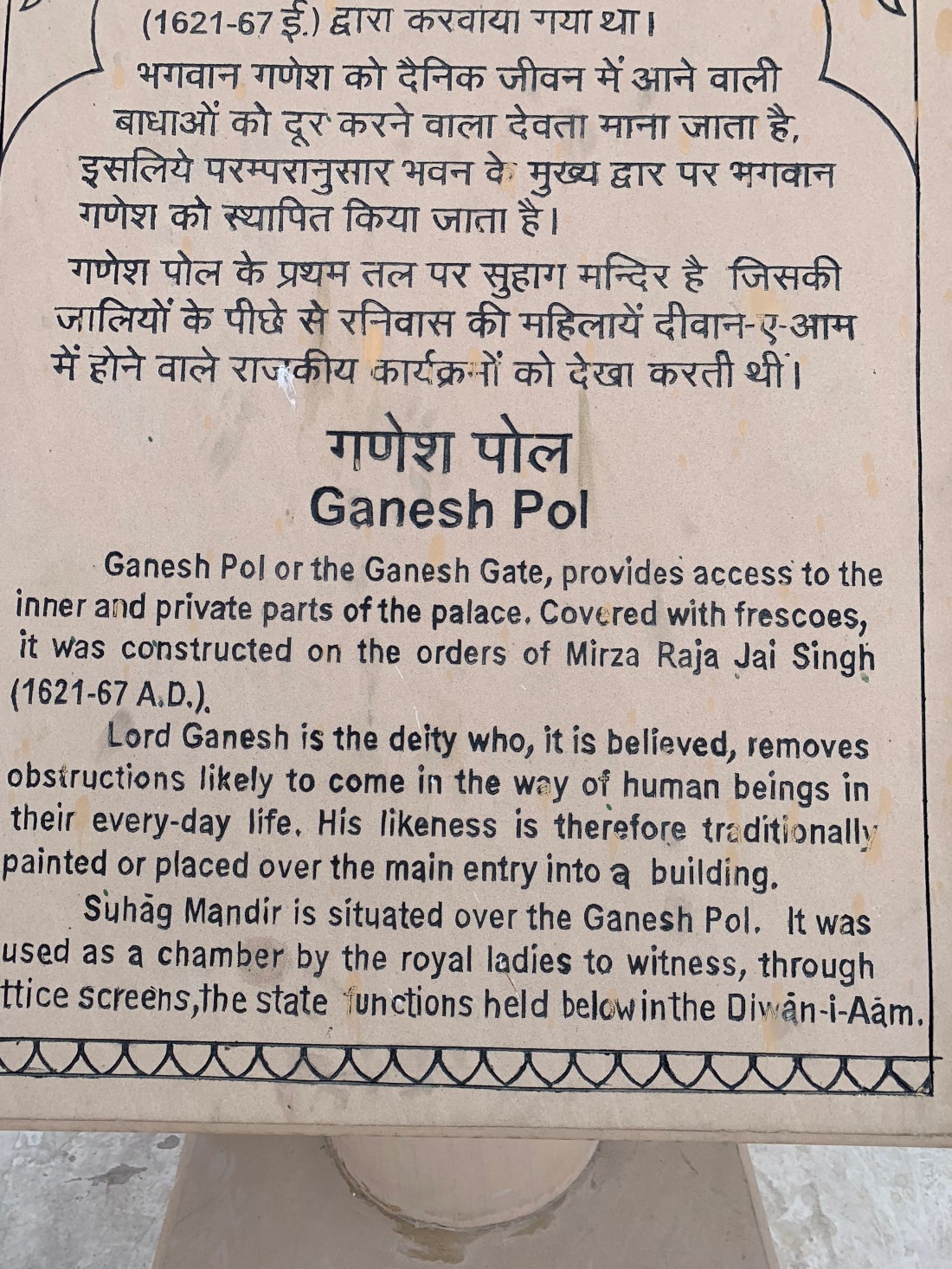
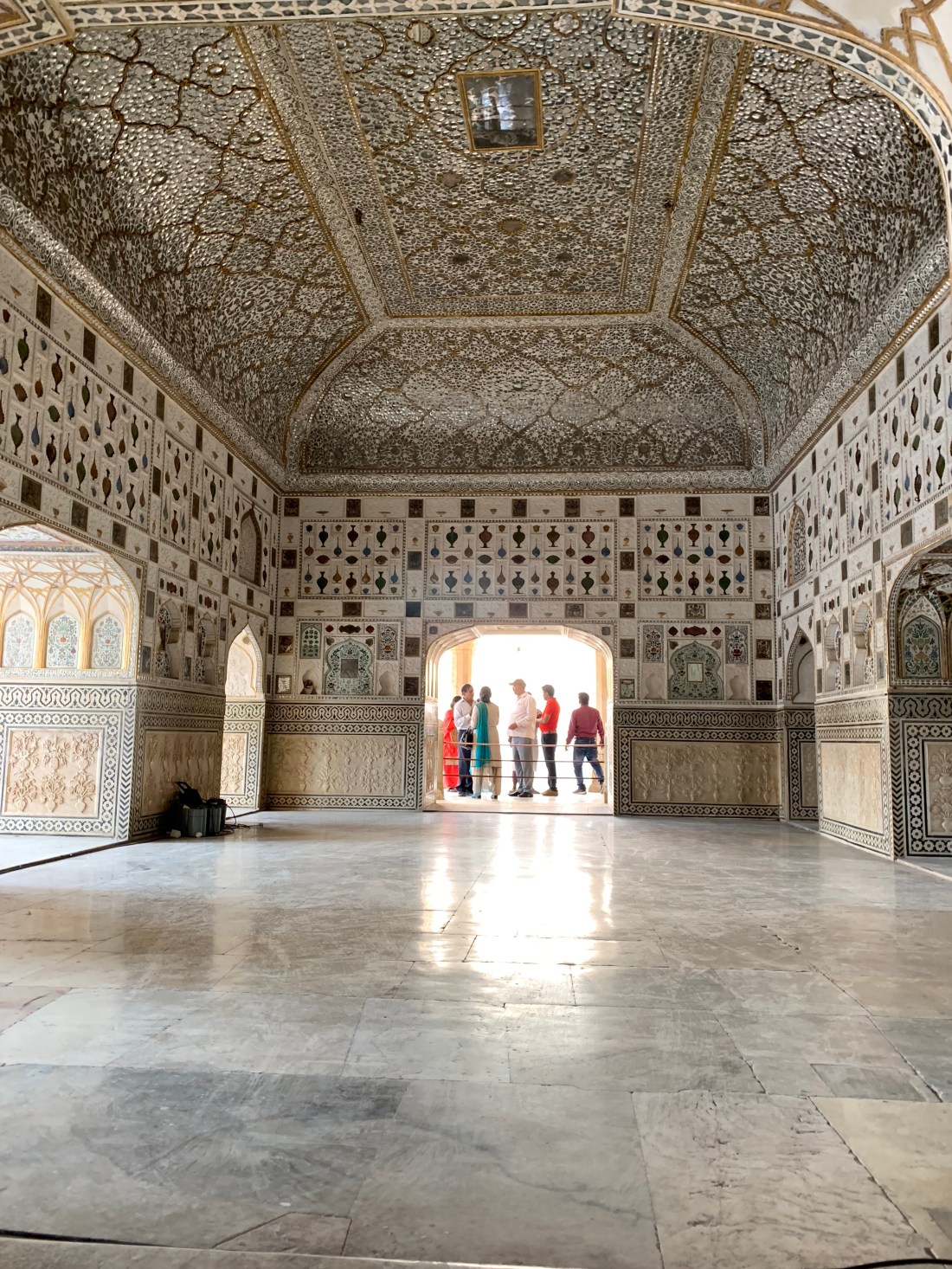
Finally we arrived at Amber Fort. Built in 1592 the fort looks extremely old on the outside but is lovely on the inside. Painted scenes of wars and hunting expeditions adorn the walls which are set with precious stones and mirrors. Of special beauty is the Sheesh Mahal or Mirror palace which is covered by carefully placed small mirrors and and precious stones. A group of school children all turned the flashlights from their cell phones on the ceiling and the ceiling sparkled with light. The fort is surrounded by a huge wall which reminded us of a smaller version of the Great Wall of China as it ran up and down the high hills around the grounds of the Amber Fort.
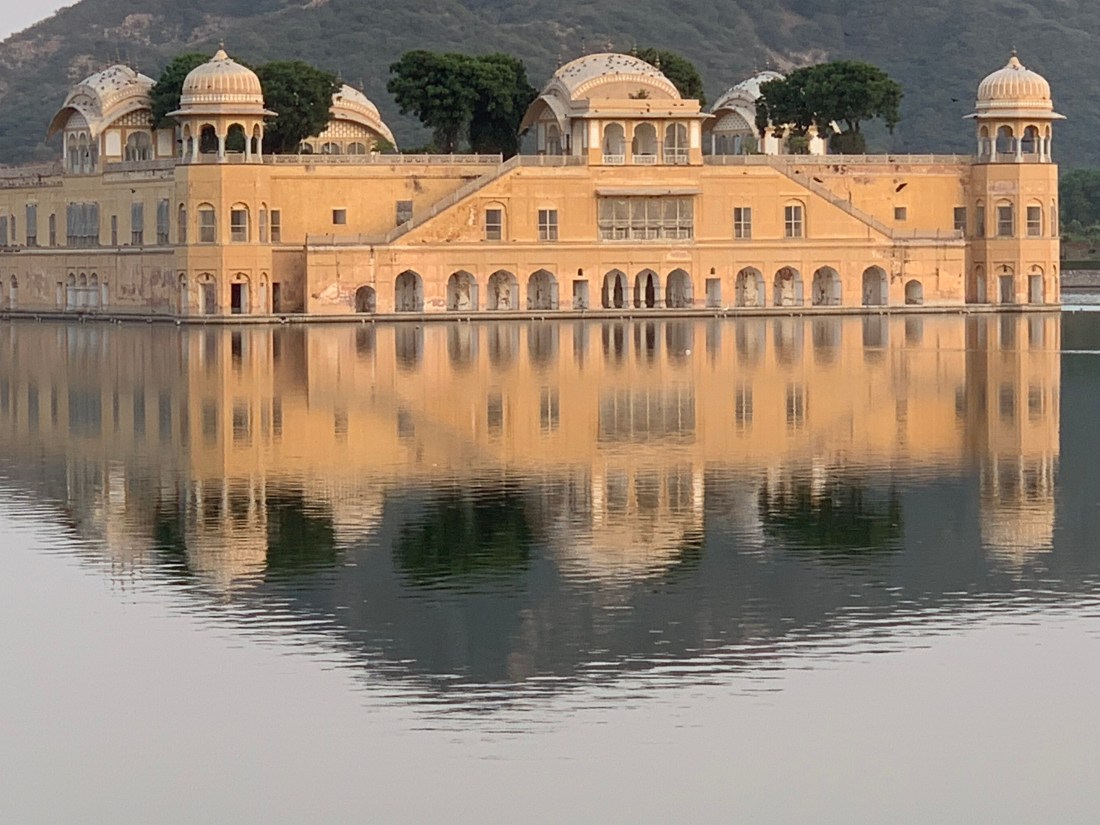
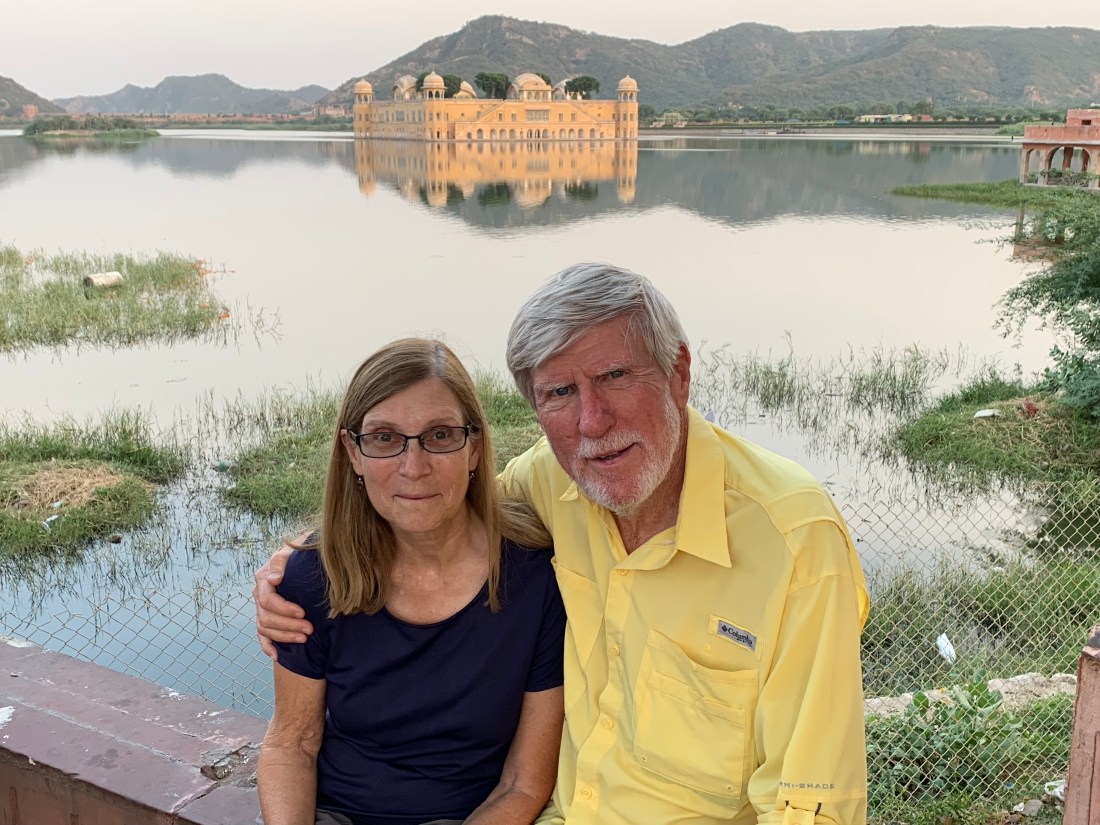
On the way back to Kalwar we stopped for a minute at the floating castle located in the middle of a large lake. It is a lovely structure and quite old. However, recently it was purchased by a private company which began to turn it into a restaurant. The government discovered that the private company had not received the clearance to change some of the old features into updated ones, and thus the castle now just sits there — or, more correctly, just floats there…..
It has been several weeks since our last post. The last few weeks of our trip we were without wifi and at times without electricity and water. The day after we returned we had to travel to Maryland and Pennsylvania to attend a funeral and a wedding. We returned to Florida and immediately received house guests and they just left. So, we are finishing our Blog all at once.
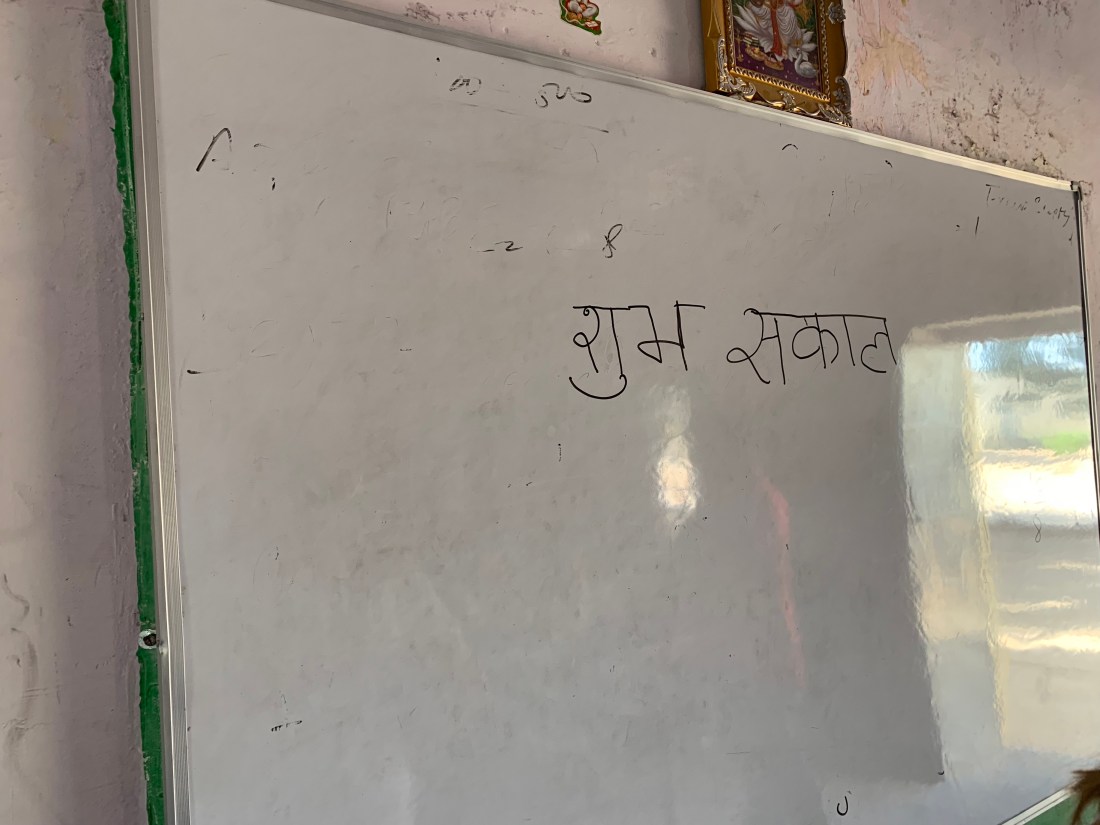
Our Names in Hindi !!!!
We are playing “Simon Says” in Hindi and English.
Our Friend………
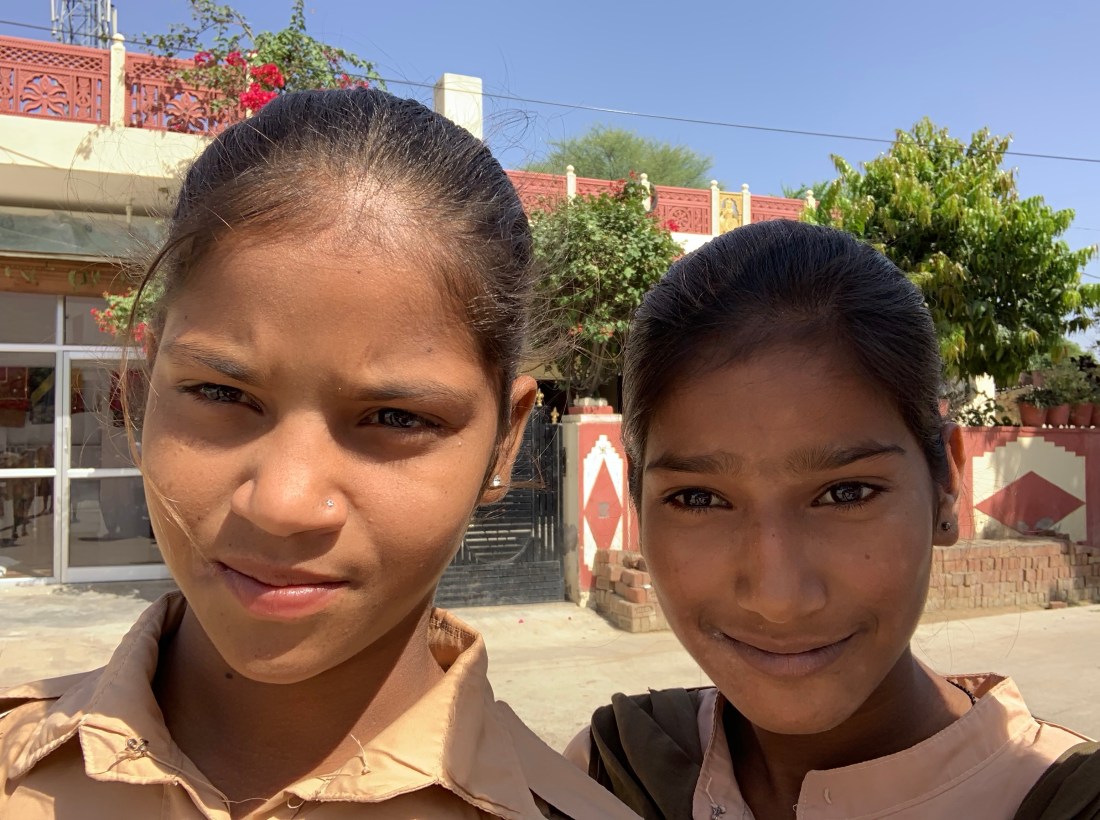
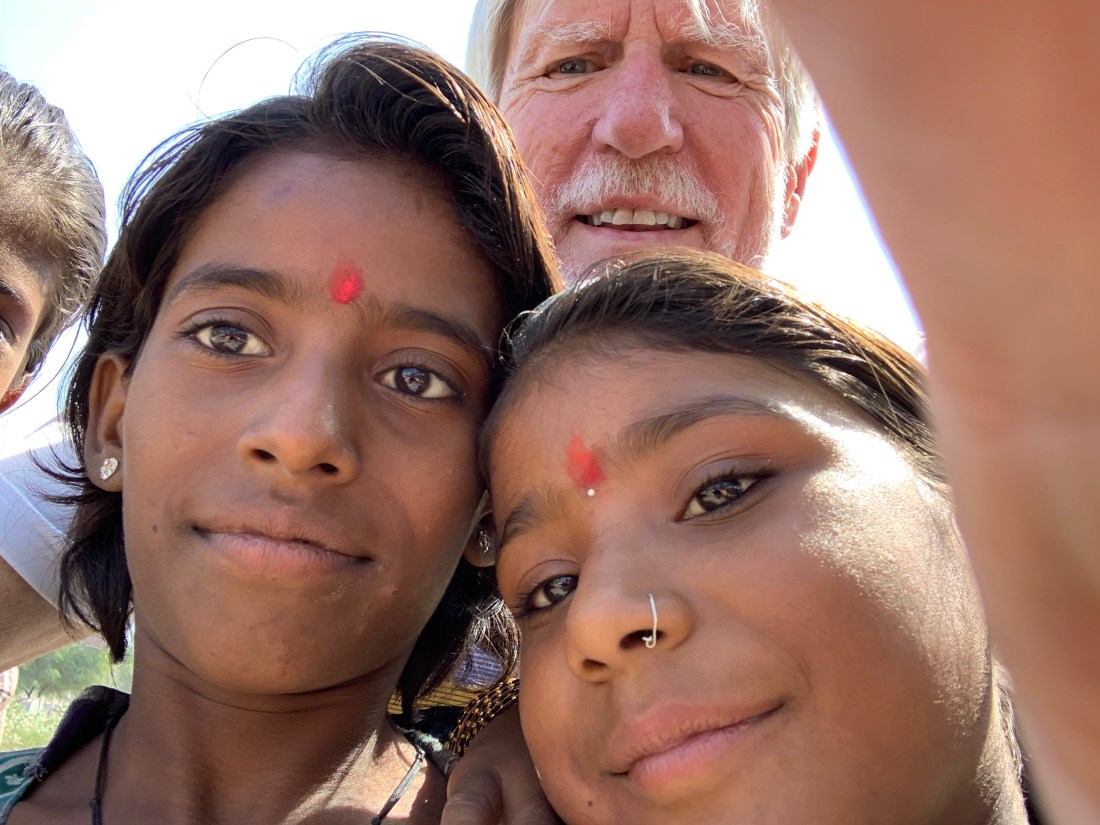
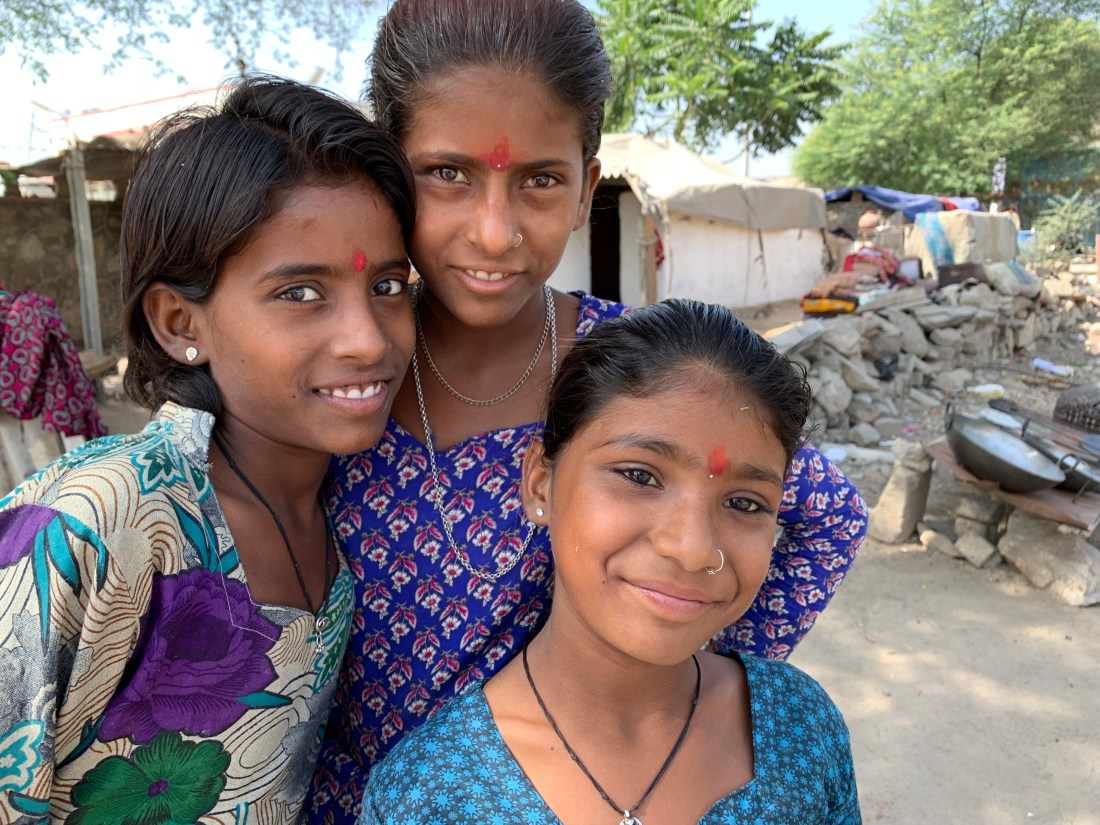
Selfi’s…..
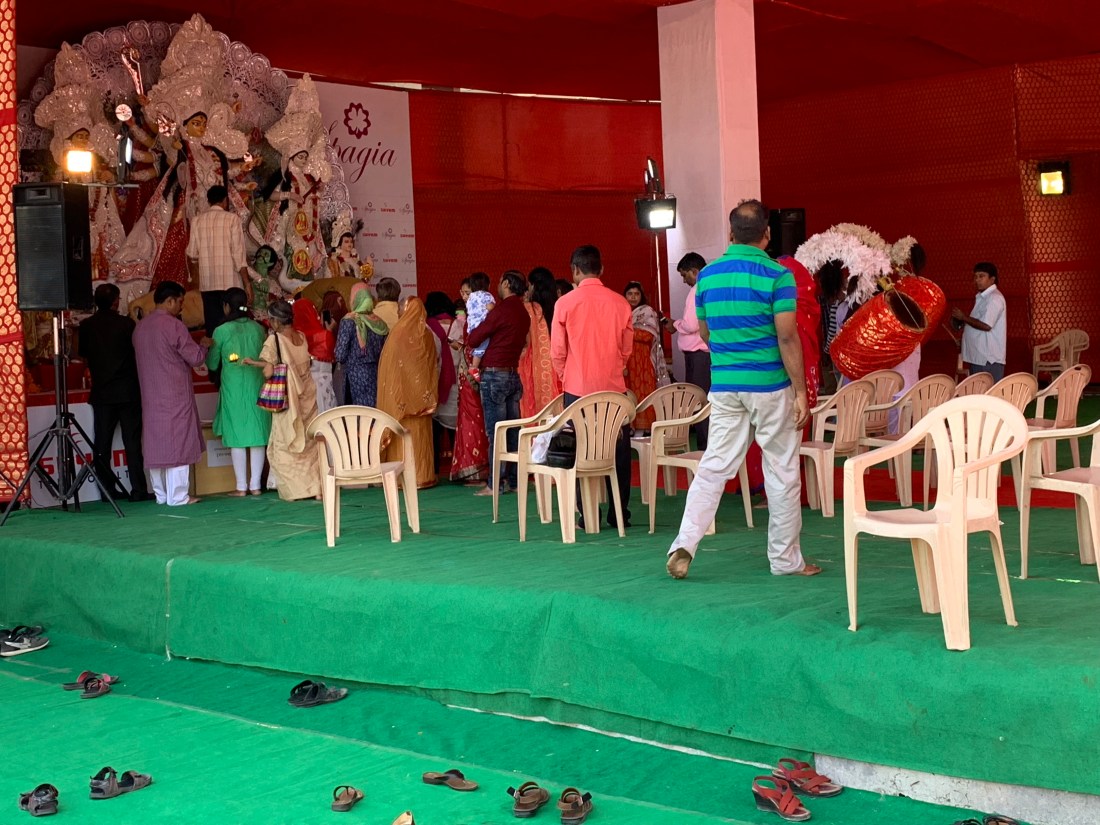
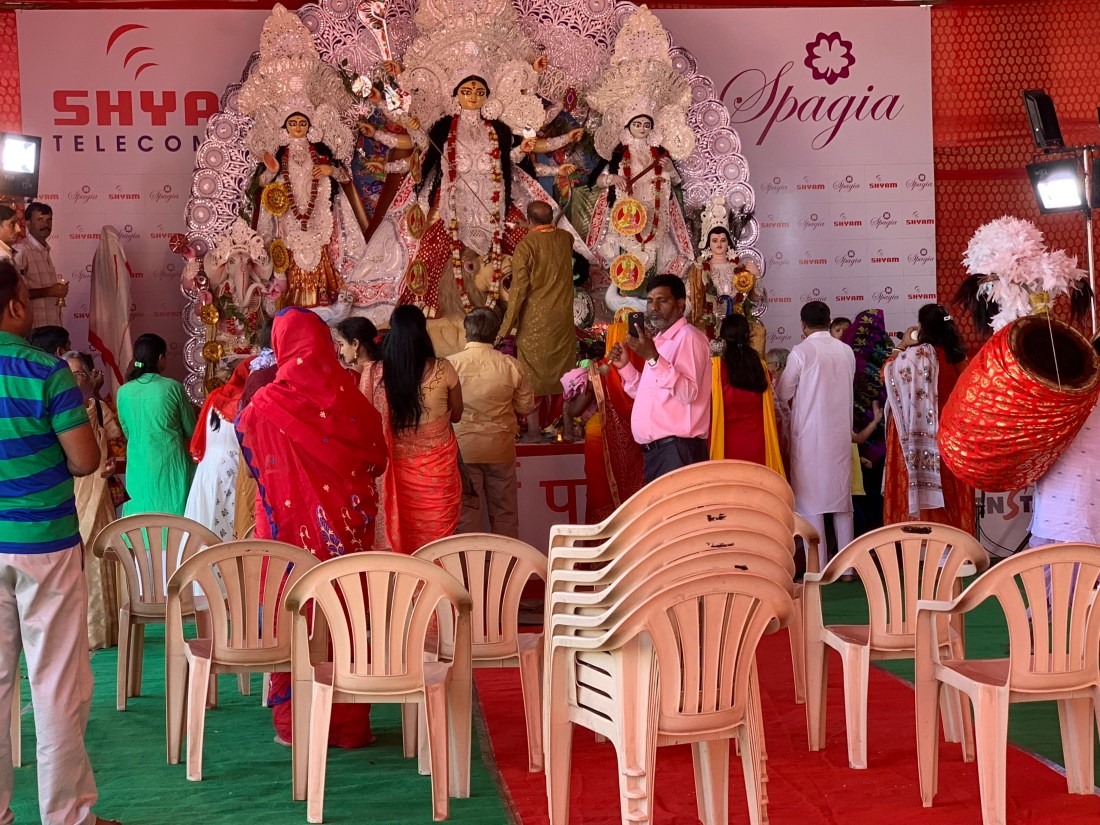
India Festival
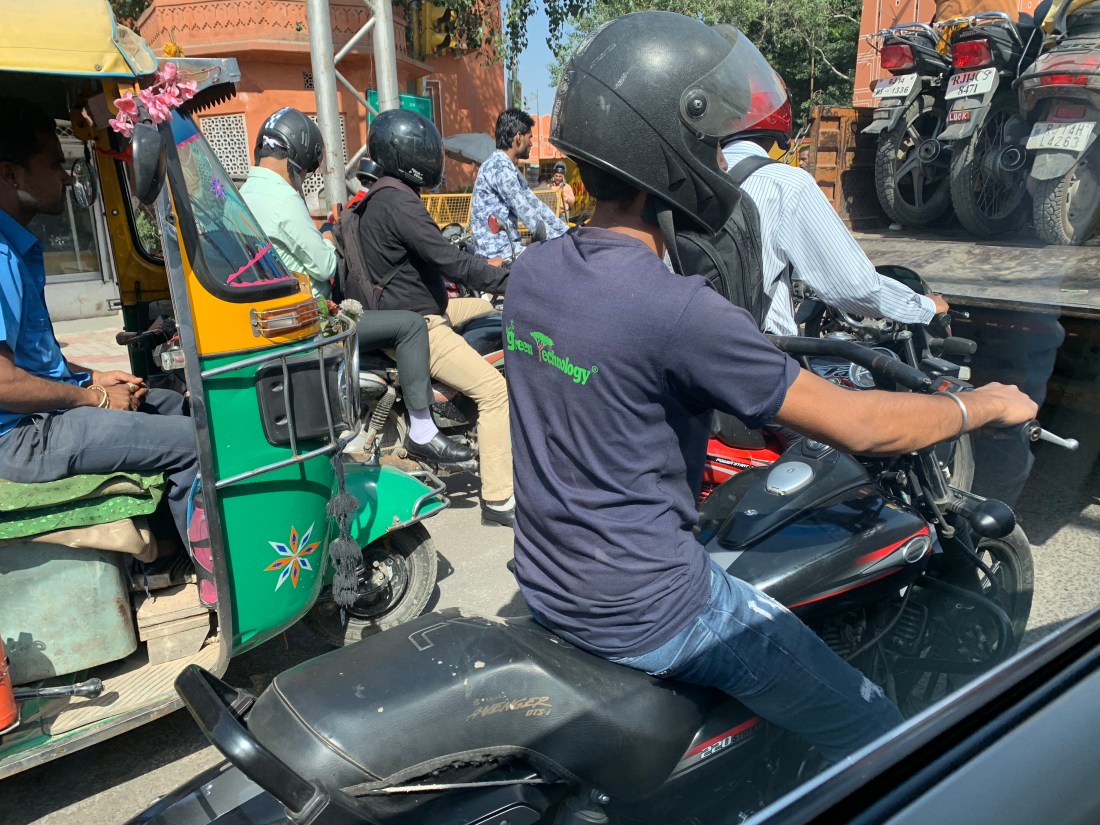
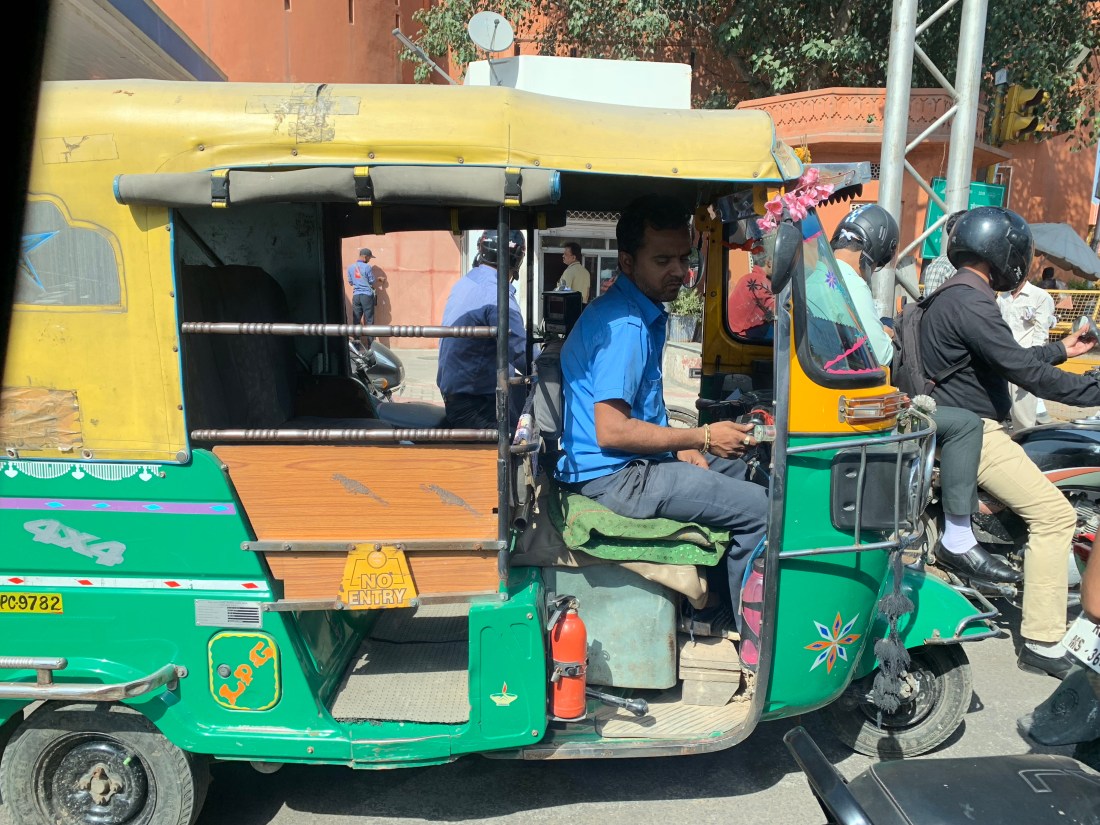
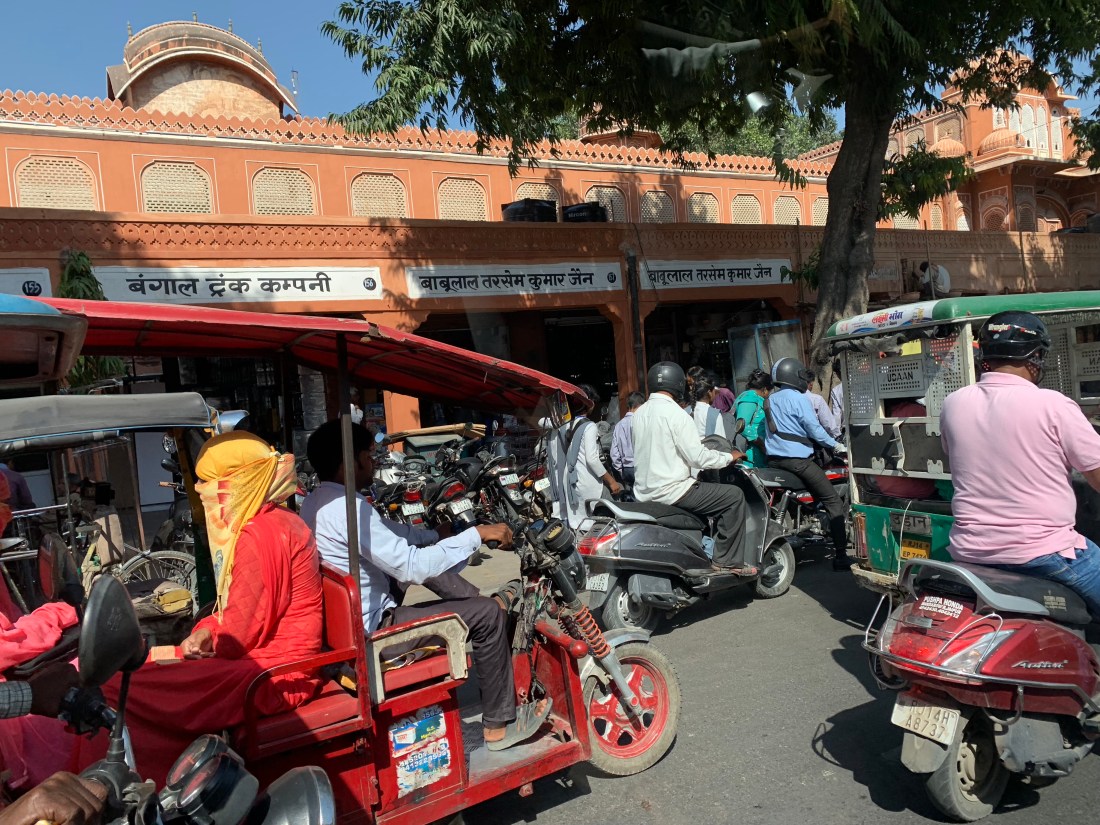
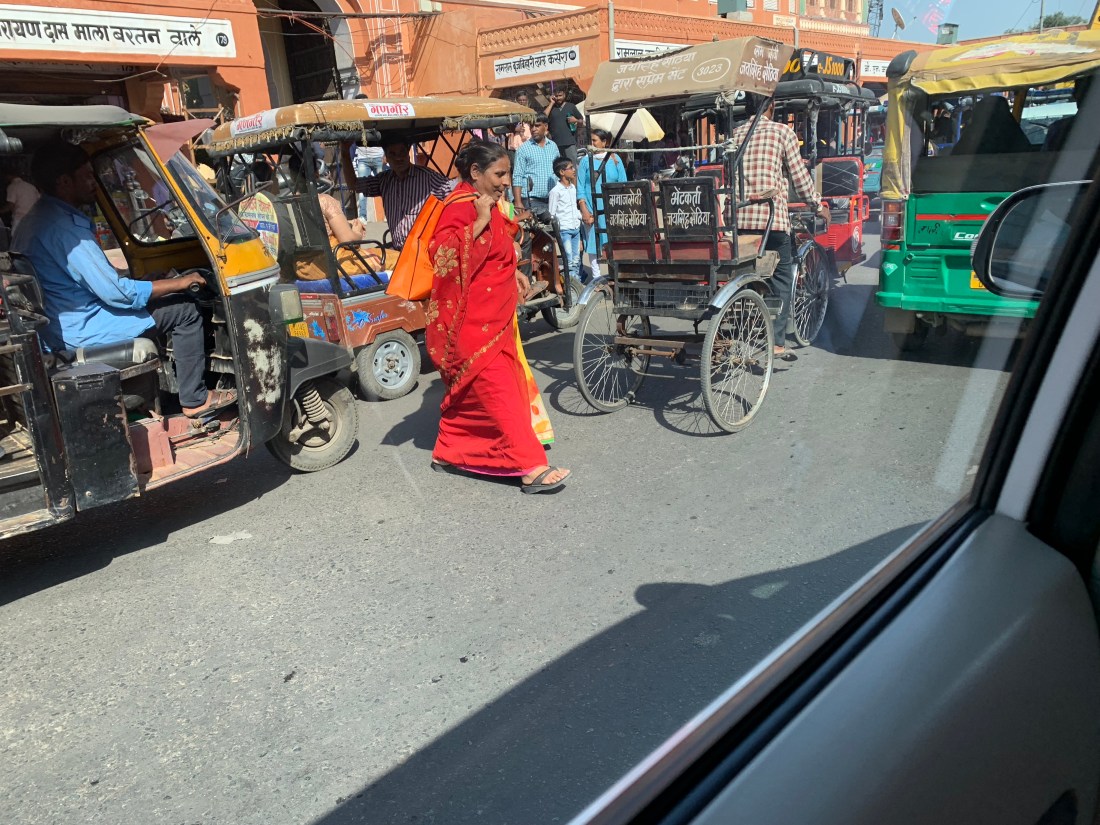
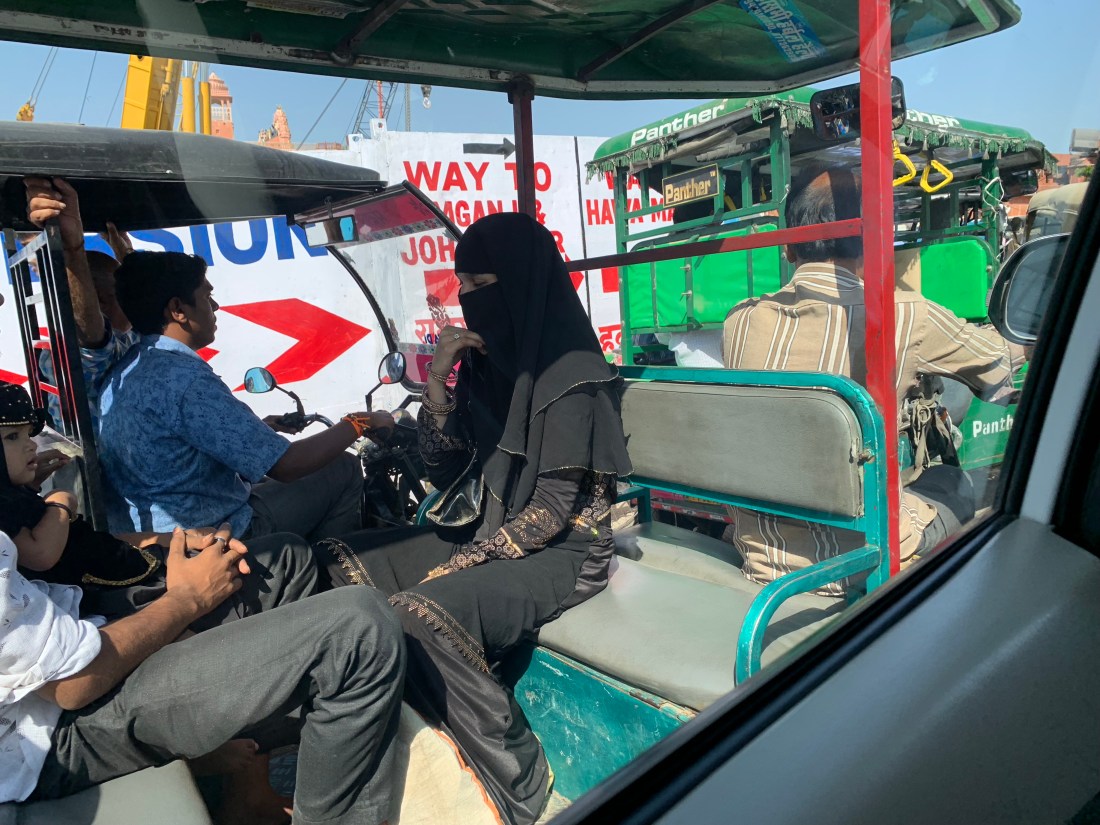
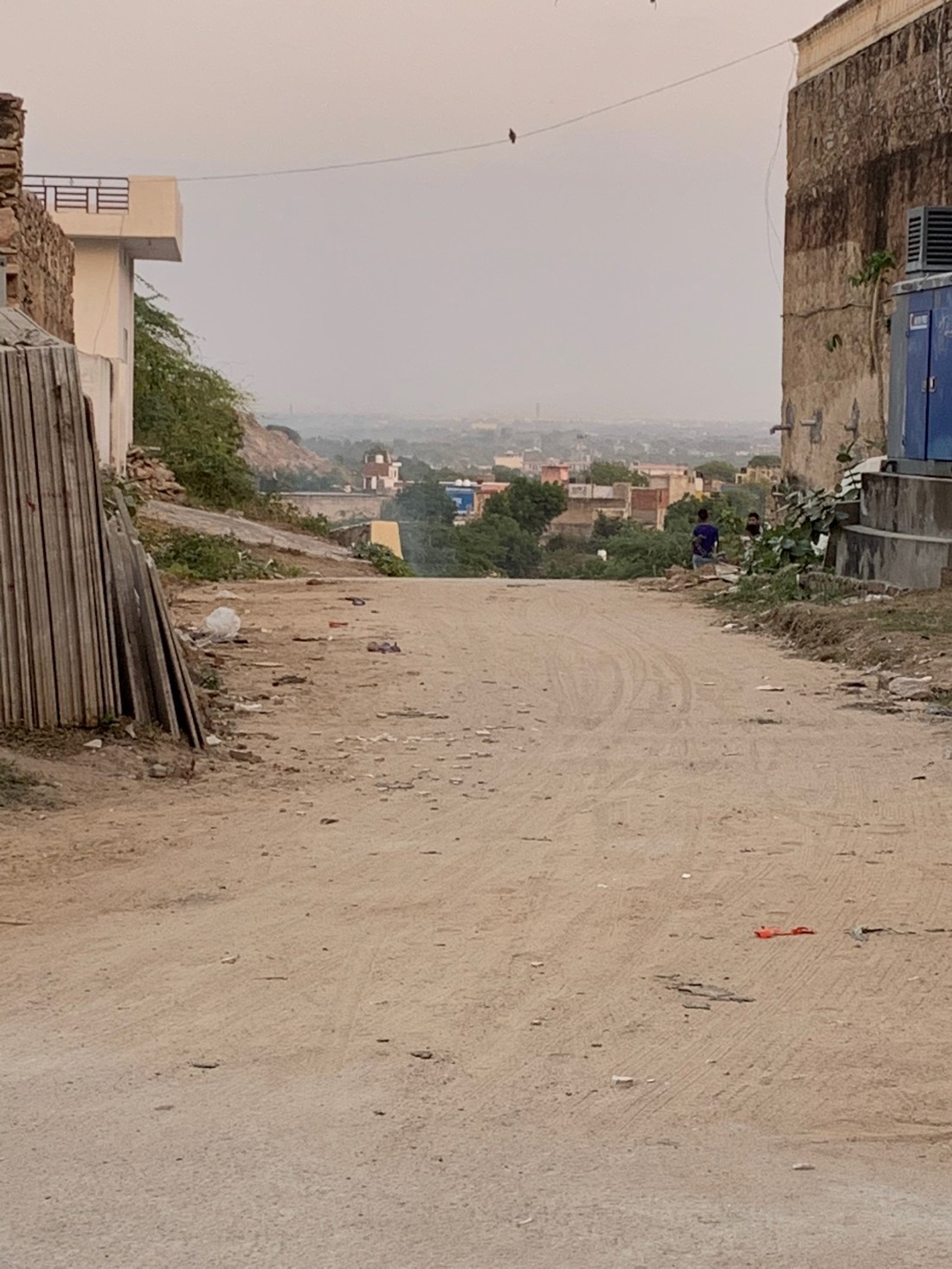
Downtown Jaipur
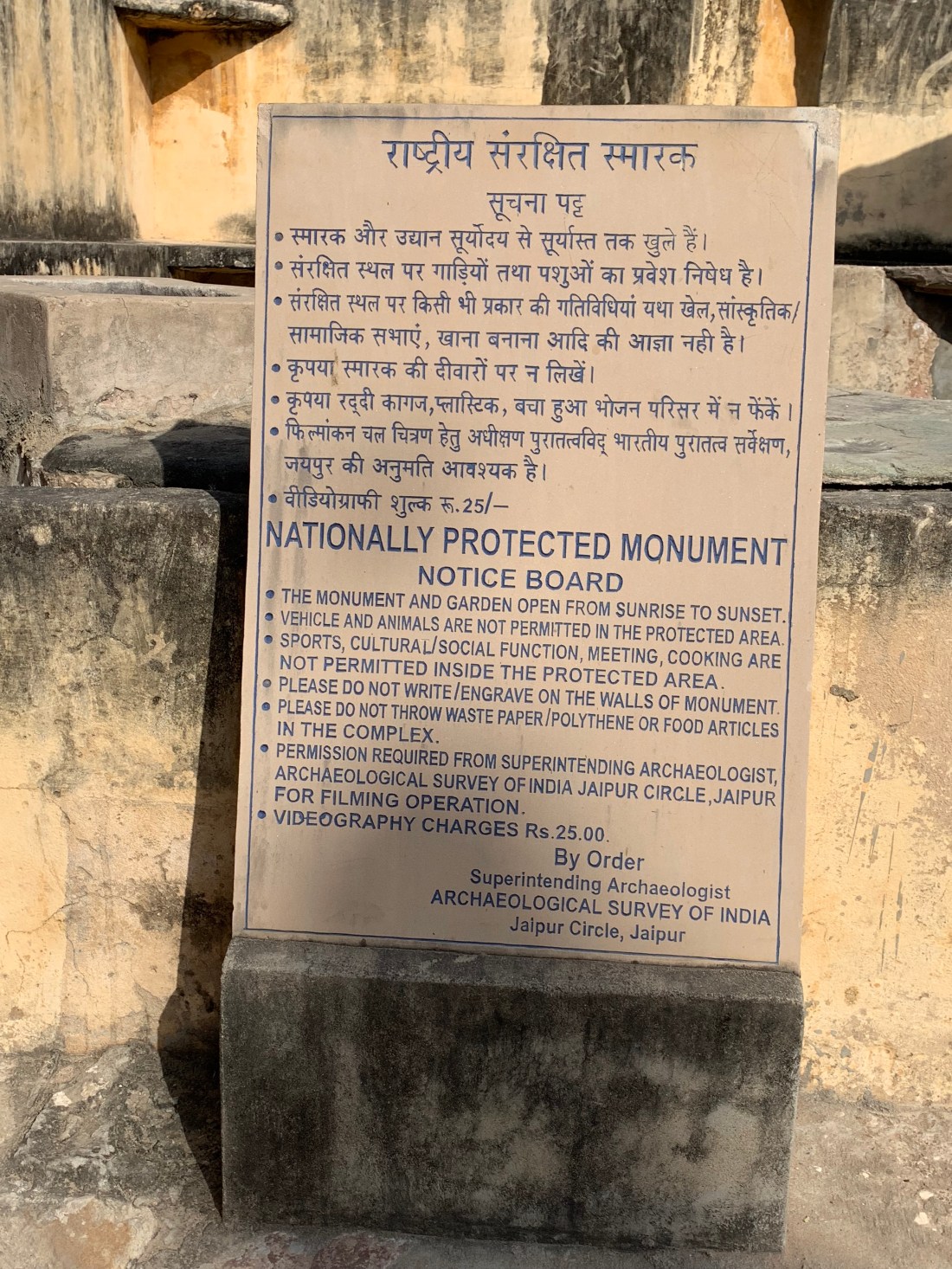
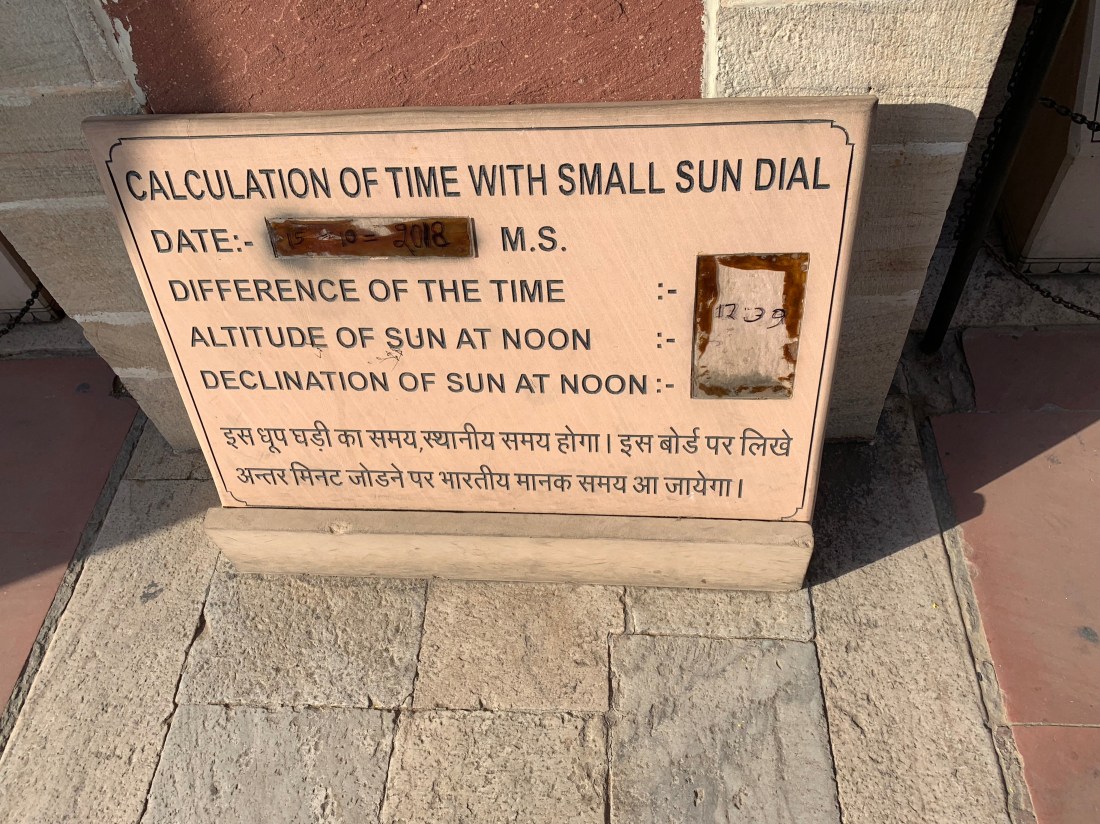
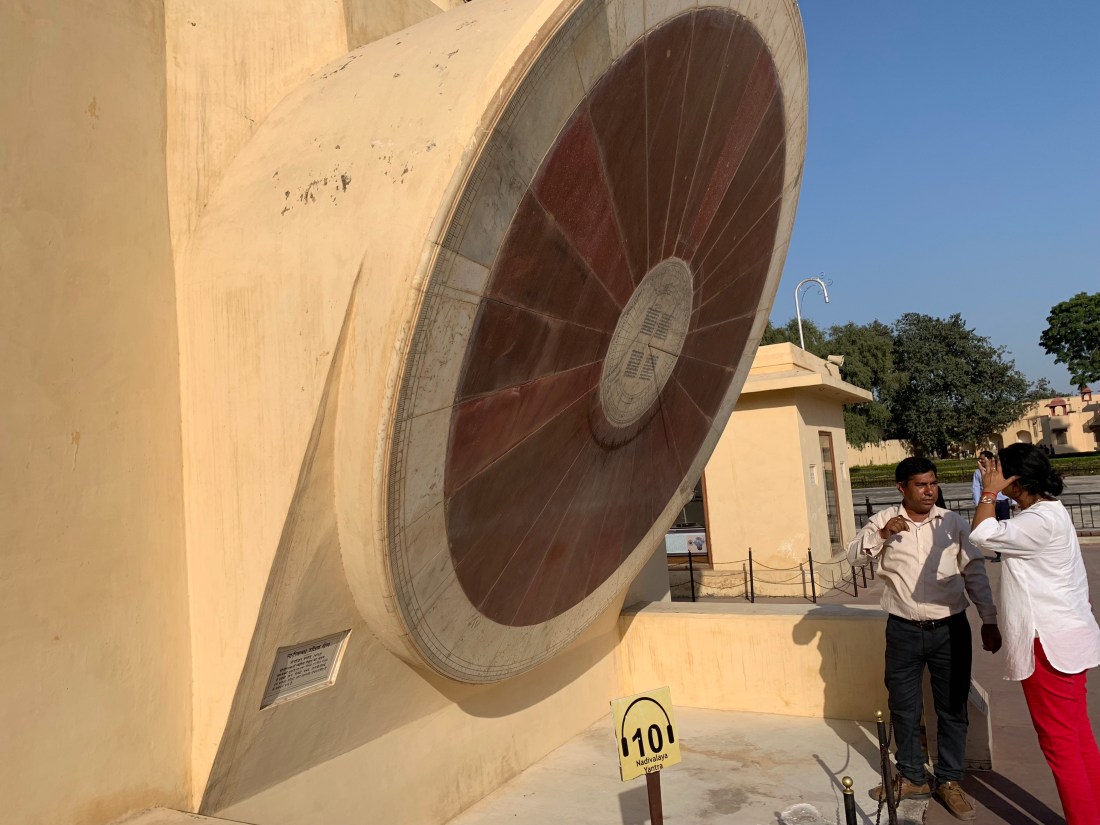
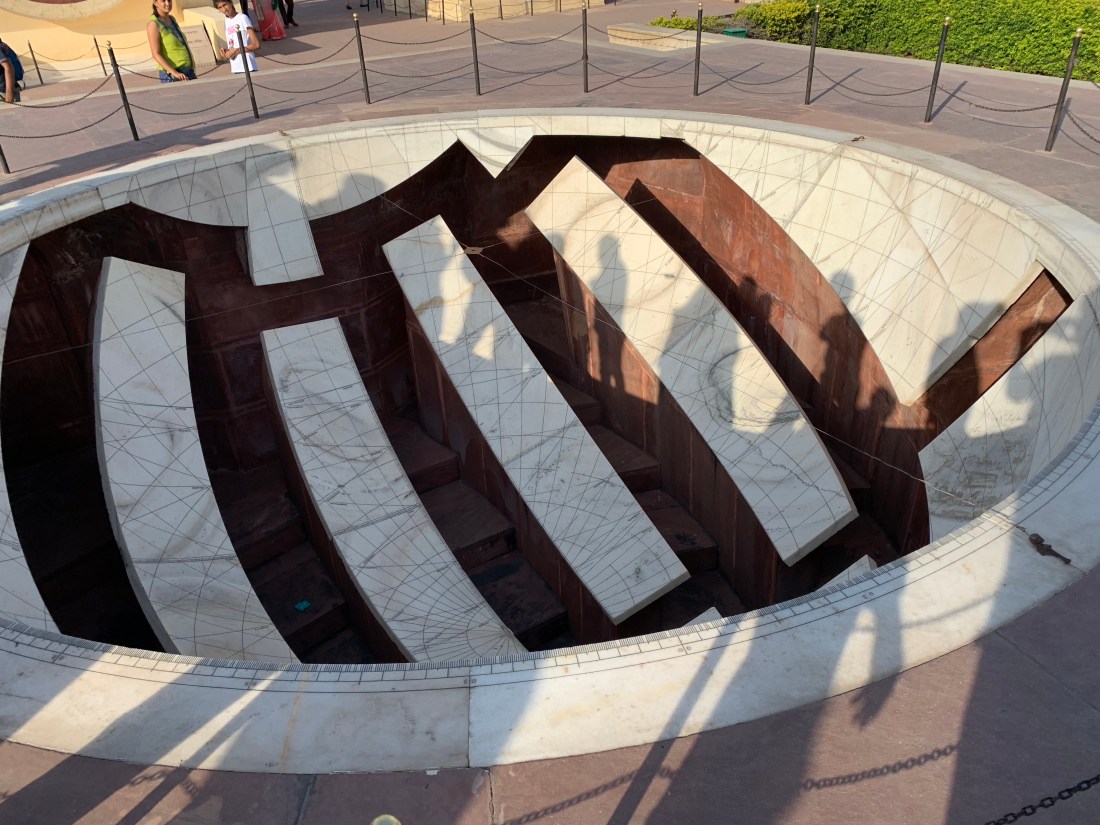
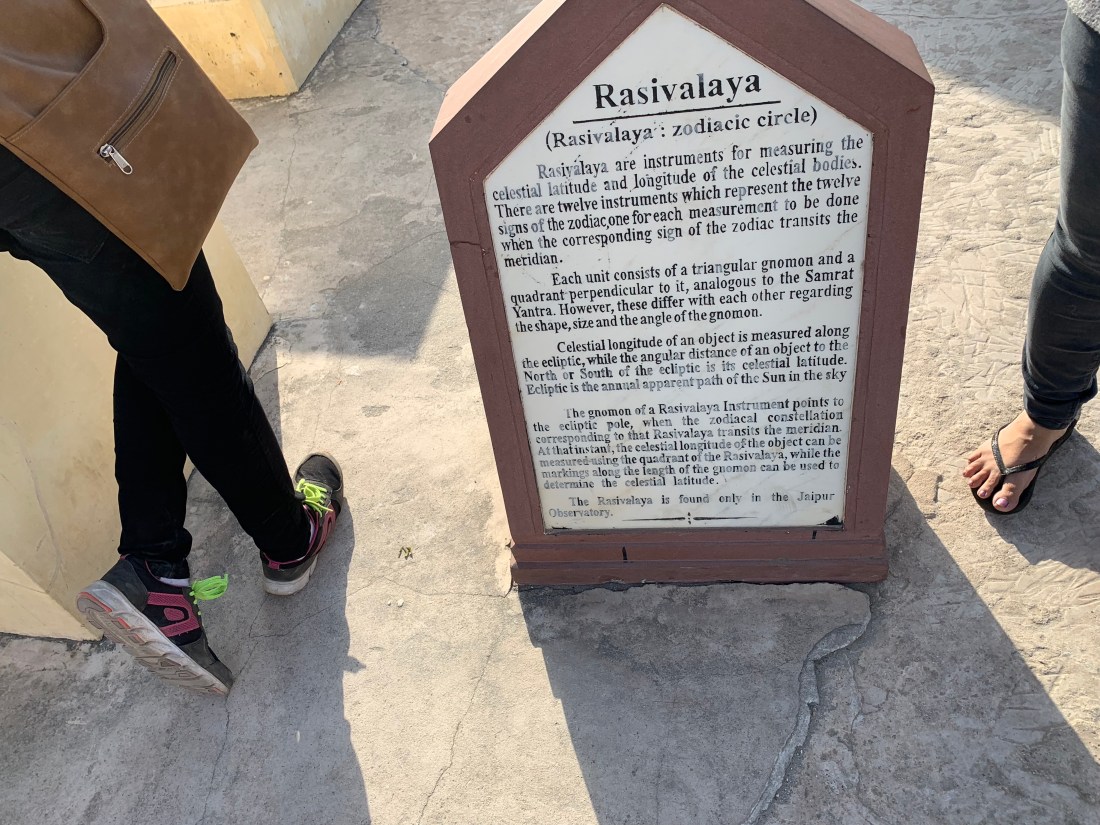
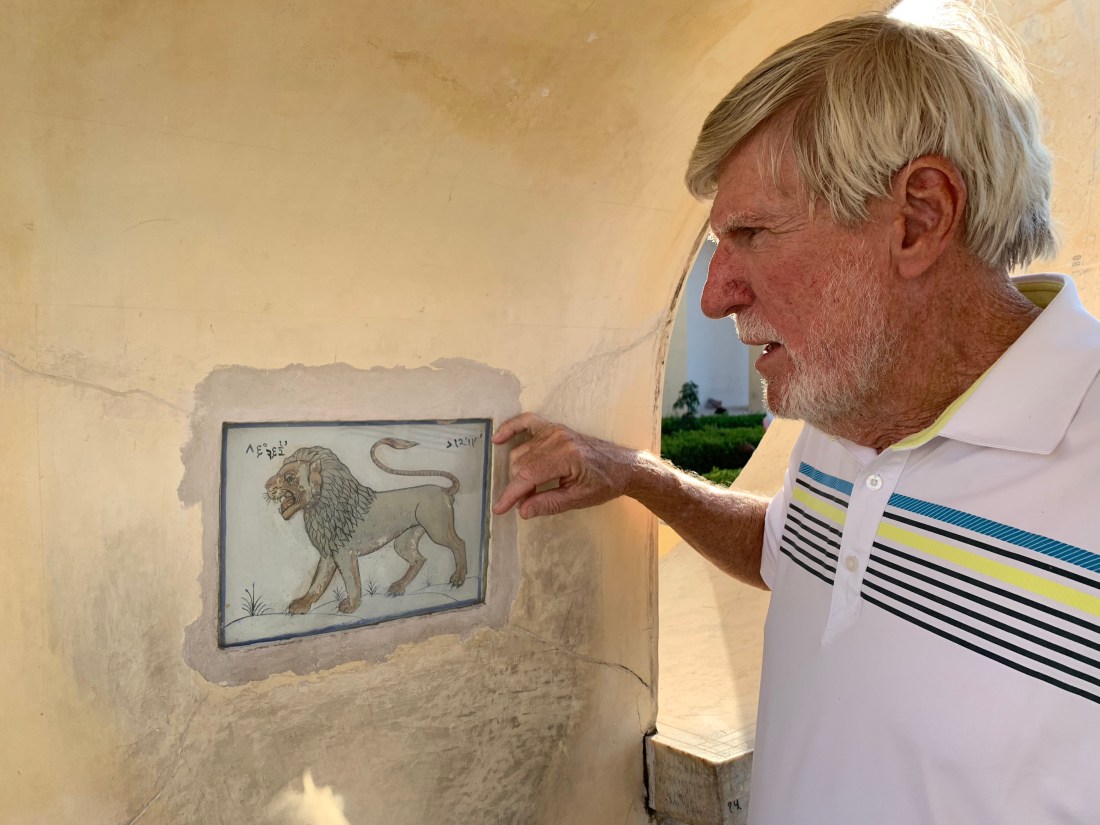
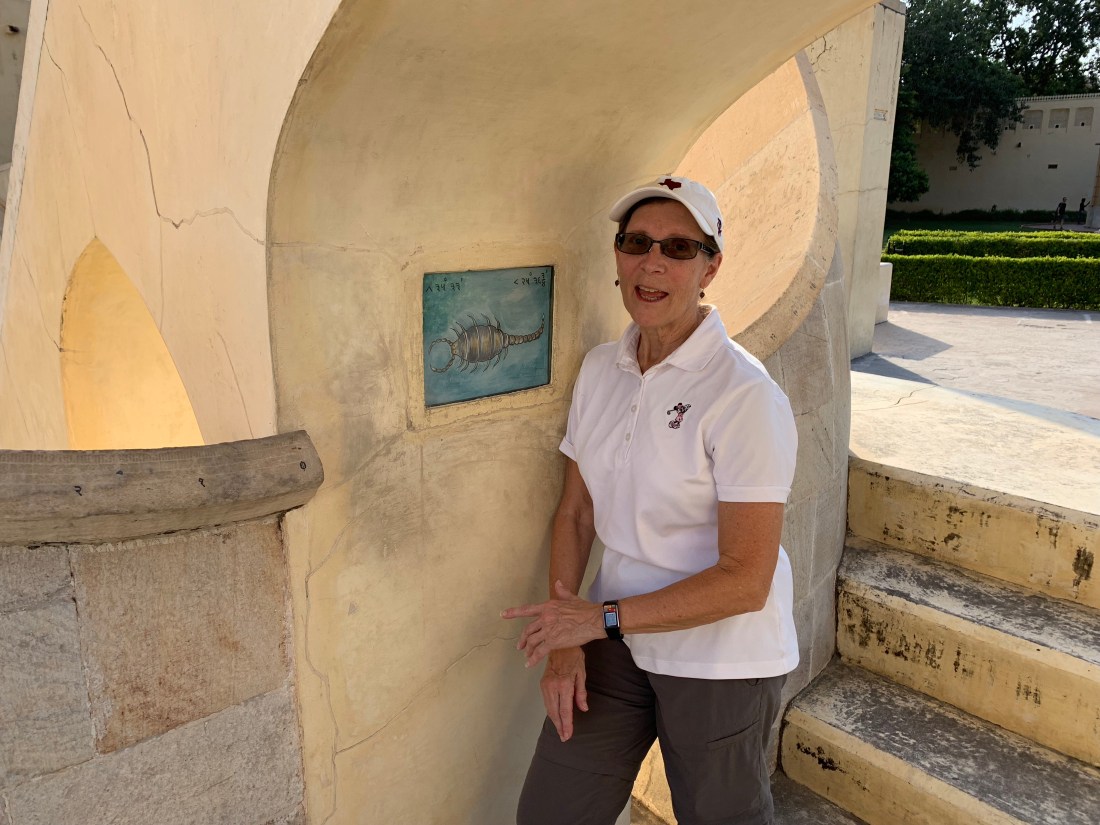
Jantar Mantar is a collection of architectural astronomical instruments, built between 1727 and 1734. The observatory consists of fourteen major devices for measuring time, predicting eclipses, tracking stars’s celestial altitudes.
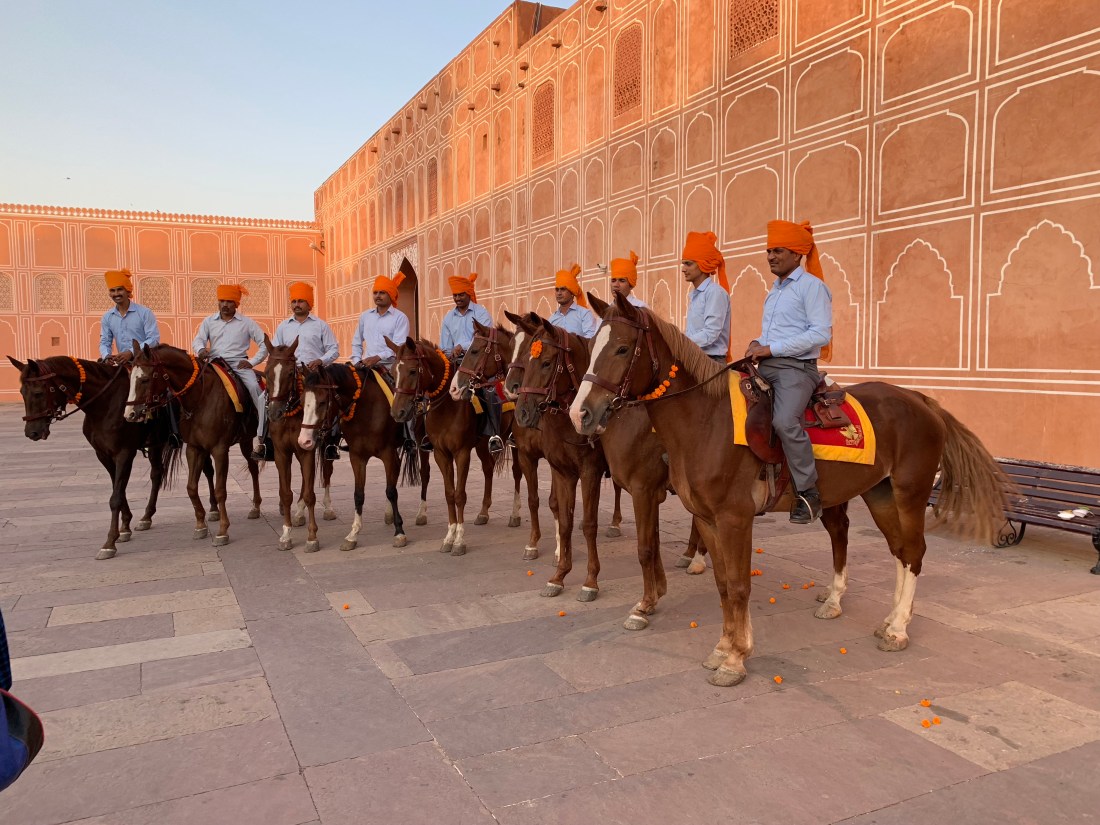
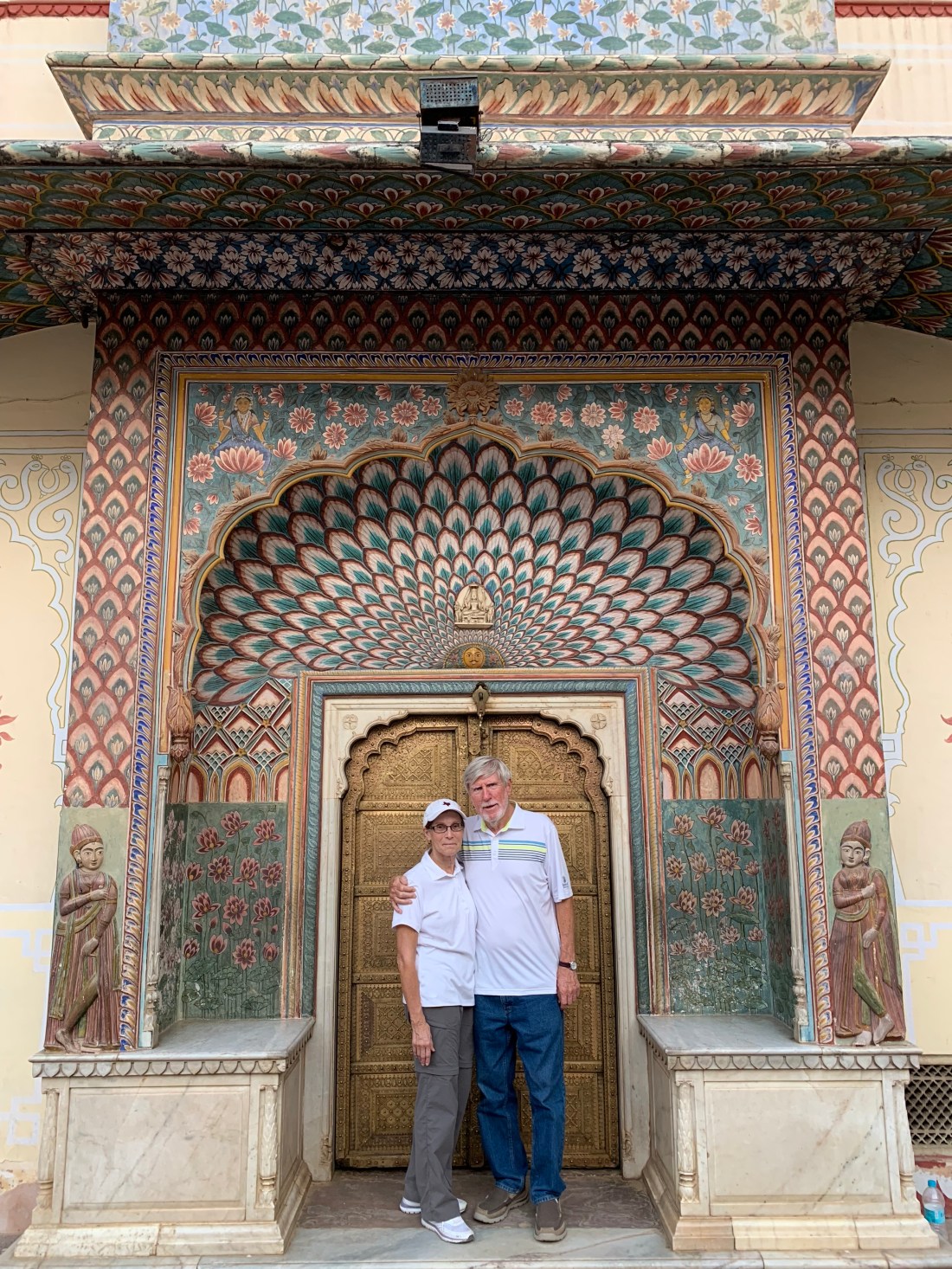
The City Palacewas built between 1729 and 1732. It lies in the middle of Jaipur City. It houses a museum which includes the costumes and armory of the Mughals and Rajputs. It is also the residence of the Jaipur Royal Family.













 billandmaryinindia.law.blog